Buying A Property In Pahrump: Local Details To Consider Before Signing A Deal
Key Takeaways
- Pahrump's median home price hovers around $370,000, and Nevada's zero state income tax makes it one of the most cost-effective places to buy near Las Vegas — but the sticker price only tells part of the story.
- Thousands of Pahrump parcels are classified as "zombie lots" — legally owned, actively taxed, and completely unbuildable under current Nye County rules — making a buildability check non-negotiable before any offer.
- Private wells and septic systems are the norm on rural properties here, and each comes with its own set of inspections, standards, and ongoing costs that buyers need to budget for upfront.
- A higher-than-average inventory of homes currently gives buyers real negotiating room — but only if they know how to use local market data effectively.
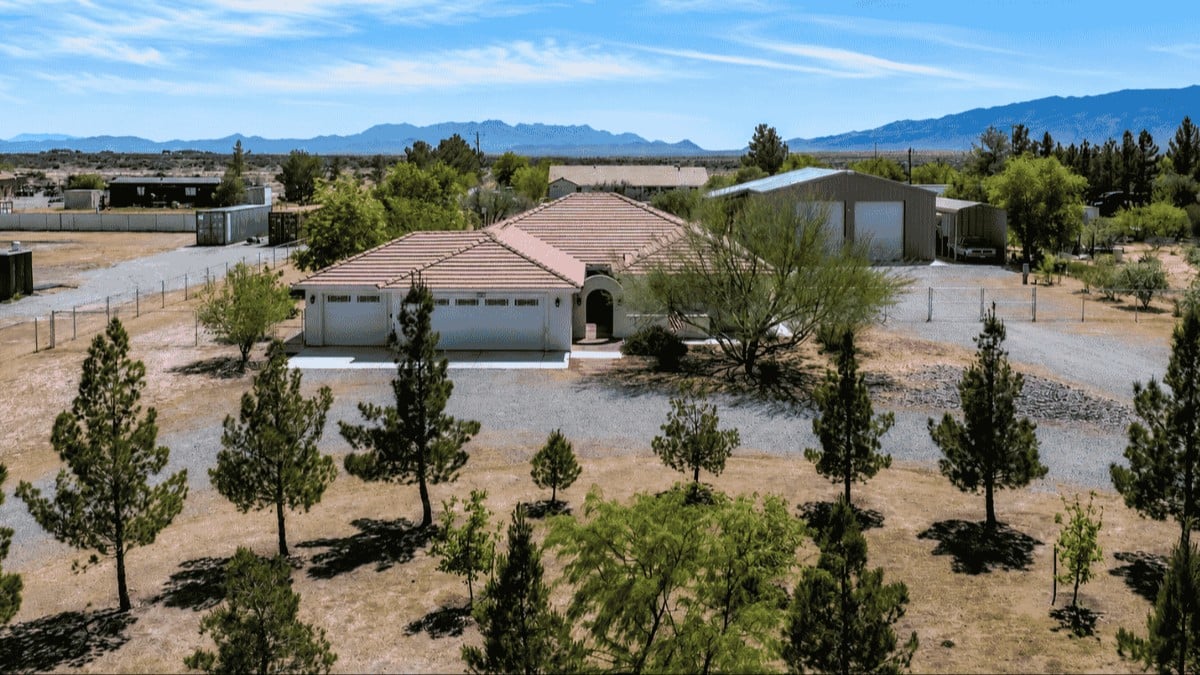
Pahrump sits about 60 miles west of Las Vegas in Nye County, tucked between the Spring Mountains and the Mojave Desert. It's the kind of place that draws people in with wide-open skies, big lots, and a price tag that feels almost too good to be true compared to the Vegas metro. And for many buyers, it genuinely delivers. But the town has a set of quirks that don't show up in a Zillow listing — and skipping over them can turn a great deal into a costly mistake. The local real estate experts at Draper Dream Team are sharing the details that matter most before signing anything.
Around $370K Median Price, No State Income Tax — Here's the Real Catch
On paper, Pahrump checks a lot of boxes. The median home price sits around $370,000, which is meaningfully lower than comparable square footage in the Las Vegas Valley. Nevada's lack of a state income tax adds another layer of savings, especially for retirees living on fixed income or remote workers whose paychecks aren't tied to a local employer. Average lot sizes run around one acre, compared to roughly 0.1 acres in Las Vegas — so buyers get actual space.
But here's what the listing price doesn't show: Pahrump's local job market is limited. Employment tends to concentrate in casinos, hospitality, healthcare support, and local government. Anyone working in a corporate or specialized field is most likely commuting to Las Vegas — a drive that typically takes 45 to 75 minutes each way over a mountain pass, depending on traffic and where in Vegas the destination is. That mountain route is worth driving a few times before committing to it daily.
Amenities are also worth setting expectations around. Pahrump has grocery stores, big-box retailers, pharmacies, and a solid mix of chain and local restaurants. What it doesn't have is the sprawling medical infrastructure, entertainment venues, or specialty services of a major city. For many residents, Las Vegas functions as an extension of the backyard — they live the quiet life in Pahrump and make the drive when they need something bigger. For buyers with ongoing medical needs or young kids involved in competitive programs, that tradeoff deserves a hard, honest look before closing. The team at Draper Dream Team at Top Dog Real Estate works specifically in this market and regularly helps buyers weigh exactly these kinds of lifestyle trade-offs before making an offer.
Wells, Septic, and Water Rights
Municipal Hookup vs. Private Well
Many properties in and around Pahrump — particularly those on larger rural lots — are not connected to municipal water. Instead, they rely on private wells drilled into the aquifer below.
Before making an offer on any well-dependent property, get a well water test done — this checks for bacteria, nitrates, and other contaminants that don't show up visually. Find out the well's depth, its age, and when the pump was last serviced. Properties closer to Pahrump's commercial corridors may have access to municipal water service through the Pahrump Valley Water District — confirming this at the specific address (not just the general area) is a quick step that prevents big surprises later.
Septic Inspections: State Standards Enforced by Nye County
No municipal sewer connection means a septic system — and a septic system means a dedicated inspection before closing, full stop. Nye County enforces state health standards for septic systems, and a failing or undersized tank can become a five-figure repair that lands entirely on the new owner if it isn't caught before the sale.
A qualified inspector will check the tank's capacity and condition, confirm the drain field is functioning, and verify that the system meets Nye County health code requirements. It's also worth asking how recently the tank was last pumped — routine pumping every three to five years is standard. For buyers coming from urban areas where sewer service is invisible and automatic, the mental model shift here matters: a septic system is a mechanical component of the home, the same as the HVAC or the roof, and it requires the same kind of pre-purchase scrutiny.
Always Run a Buildability Check Before You Offer
1. Verify Zoning Classification Under Nye County Code Title 17
The starting point for any vacant land purchase in Pahrump is confirming the zoning classification through Nye County Code Title 17. A parcel zoned Village Residential carries the Village Residential infrastructure requirement — full stop. This information is publicly accessible through the Nye County Planning Department, but interpreting what a given classification means for buildability requires knowing what questions to ask. A local agent familiar with the Pahrump Regional Planning District can pull this information quickly and flag any concerns before an offer is drafted.
2. Check Whether Municipal Water and Sewer Are Available
Zoning alone doesn't tell the whole story. The next question is whether municipal water and sewer service are actually available at the specific parcel — not just in the general vicinity. Being adjacent to a serviced area doesn't automatically mean a connection is available or affordable. Contacting the Pahrump Valley Water District directly to confirm service availability at a specific APN (Assessor's Parcel Number) is the most reliable approach. This one step can confirm whether a parcel has a viable path to development or not.
3. Confirm Lot Size Meets Separation Requirements If Relying on a Private Well and Septic
If municipal utilities aren't available and the plan is to develop using a private well and septic system, the lot must be large enough to support both under Nevada state standards. The separation distance requirement effectively means the parcel needs to be at least one acre — and in some cases more, depending on soil conditions and configuration. A parcel that is 0.5 acres, zoned Village Residential, and outside utility service areas fails all three tests simultaneously. That combination is the defining profile of a zombie lot, and it's exactly what a pre-offer buildability check is designed to catch.
More Inventory, More Negotiation Room
The Pahrump real estate market has seen a significant increase in housing inventory in recent years, which has shifted negotiating dynamics meaningfully in buyers' favor. More supply relative to demand means sellers are more likely to accept offers below asking price, contribute to closing costs, or accommodate buyer contingencies that would have been harder to win in a tighter market.
That said, negotiation room only works when it's backed by accurate local data. Pahrump's market moves differently than the broader Las Vegas metro, and using regional comps without filtering for Pahrump-specific sales can skew price expectations in either direction. Tracking recent closed sales — specifically days on market, list-to-sale price ratios, and price reduction frequency — gives a clear picture of what sellers are actually accepting versus what they're initially asking.
For buyers looking at vacant land specifically, the inventory picture is even more favorable — there's no shortage of parcels listed for sale. The challenge, as covered above, is that a meaningful portion of that inventory is non-buildable. A higher listing count doesn't help if the lots themselves can't be developed. That's precisely why market conditions and buildability checks need to be evaluated together, not separately.
A Local Agent's Buildability Check Costs You Nothing — Skipping It Could Cost Everything
A buildability check covers zoning classification, utility service availability, and minimum lot size requirements — the three factors that determine whether a parcel can legally be developed. For a buyer, this check costs nothing: in Nevada, buyer's agent representation is typically covered by the seller through negotiated closing concessions, though it is now a directly negotiated item between the buyer and their agent rather than being advertised on the MLS. The work gets done, and the bill doesn't land on the buyer's side of the closing statement.
What does have a price is skipping it. A buyer who closes on a zombie lot owns a piece of land they cannot build on, cannot easily sell (without full disclosure), and must continue paying property taxes on indefinitely — unless county-level policy changes open a path forward. As of early 2026, no formal resolution has been adopted. The Nye County Water District placed the issue on its agenda in late 2024, and advocacy groups continue to push for zoning overlay changes, but the timeline for any fix remains uncertain.
Pahrump genuinely offers what a lot of buyers are looking for: space, affordability, desert quiet, and proximity to Las Vegas without the Las Vegas price tag. The town rewards buyers who do their homework and carries real risk for those who don't.
Draper Dream Team at Top Dog Real Estate
City: PAHRUMP
Address: 1210 E Basin Ave # 6, Pahrump
Website: https://www.draperdreamteam.com/
Phone: +1 405 834 4255
Email: hello@draperdreamteam.com


Comments
Post a Comment