Best Chainsaw Chain for Firefighters: Key Features to Consider
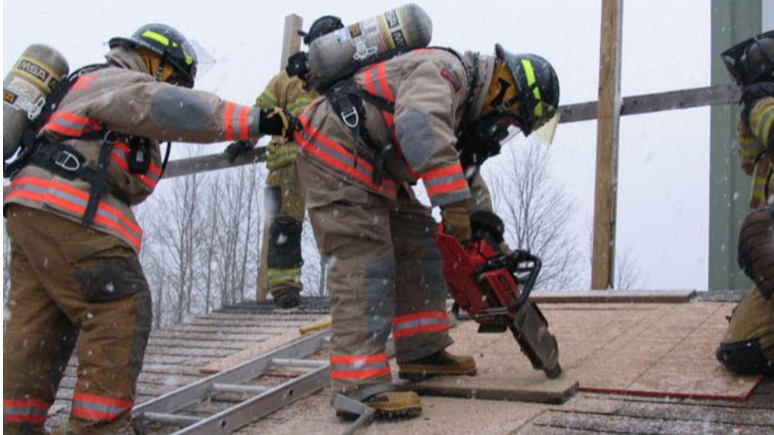
Roof ventilation and forcible entry place unusual demands on chainsaw chains. Fire crews often cut through shingles, plywood, embedded nails, and occasionally metal flashing, all under time pressure. A chain that performs well in ordinary wood cutting can fail quickly under these conditions. Understanding the features that matter most helps departments choose equipment suited to the realities of structural firefighting rather than general-purpose cutting.
Cutter Material and Durability
Standard steel chains are built for clean wood and dull rapidly when they contact nails, tar paper, or other embedded debris common on residential roofs. Carbide-tipped chains use a harder cutting material at the tooth, which allows them to maintain a sharp edge through repeated contact with these obstacles. For departments that perform ventilation cuts on aging or unpredictable roof structures, chain material has a direct effect on how many cuts can be completed before the chain needs replacement or sharpening.
Cutter Design and Cutting Style
Chainsaw chains generally use one of two cutter shapes: chisel or chamfer. Experts from Rapco Industries explain that chisel cutters have a squared corner that cuts aggressively and works well in cleaner materials, but the sharp edge is more prone to chipping on impact. Chamfer cutters have a rounded corner that trades some cutting speed for greater resistance to chipping when the chain strikes debris. For roof ventilation work, where nails and mixed materials are common, a more impact-resistant cutter design often holds up better over repeated use than a purely speed-focused one.
Chain Pitch and Gauge
Pitch and gauge determine whether a chain fits a given saw and bar, and they also affect cutting behavior. A smaller pitch generally allows for smoother, more controlled cuts, while a larger pitch removes more material per pass but requires more power. Gauge affects how the chain fits into the guide bar groove and influences overall chain strength. Departments should confirm pitch and gauge specifications against their saw model before ordering replacement chain, since a mismatch can affect both performance and safety.
Power Source Compatibility
Fire departments increasingly use both gas-powered and battery-powered chainsaws for ventilation work. Gas saws typically offer more sustained power, while battery-powered models are lighter, quieter, and produce no exhaust fumes, making them useful in enclosed or interior spaces where ventilation is limited. When selecting a chain, it is worth confirming that it is rated for the specific saw type in use, since not all chain designs are built to handle the torque characteristics of both power sources equally well.
Reliability Under Repeated Use
Ventilation cuts are rarely a single, clean pass. Crews may need to make multiple cuts through layered roofing materials in quick succession, often without time to stop and resharpen mid-operation. A chain that dulls quickly partway through a job can slow down an already time-sensitive task. Reliability under sustained, repeated use, rather than performance in a single test cut, is often the more meaningful measure for this kind of work.
Matching Chain Choice to Department Needs
No single chain design is best for every department or every call. A chain suited to demolition-heavy training exercises may not be the ideal choice for routine ventilation drills, and departments operating in areas with older housing stock or unusual roofing materials may have different needs than those in newer construction zones. Reviewing chain specifications, including cutter type, pitch, gauge, and power source compatibility, against the specific conditions crews are likely to encounter is a more reliable approach than relying on general assumptions about what performs best. Departments that take stock of these variables before purchasing are better positioned to equip their crews with chains that hold up when it matters most.
Rapco Industries Inc.
City: Vancouver
Address: 6000 NE 88th St d104
Website: https://rapcoindustries.com/
Phone: +1 800 959 6130
Email: sales@rapcoindustries.com


Comments
Post a Comment