Best Bamboo Work Socks for Women: Picks for Office, Trade & Long Shifts
Key Takeaways
- Bamboo fabric wicks moisture away from skin rather than absorbing it - a key difference from cotton that makes a real impact over a long shift.
- Natural antimicrobial properties in bamboo fiber help control odor without chemical treatments, making bamboo socks well-suited for demanding work environments.
- Blending bamboo with nylon and spandex significantly improves durability without sacrificing breathability or softness.
- Mason Workwear's bamboo work socks collection covers options for office wear, active trade roles, and everything in between - read on to find out which style fits your workday best.
- Seamless toe construction and proper fabric composition are the two most important factors to look for before buying.
Foot comfort is one of those things nobody thinks about until it goes wrong. After 10 hours on a hard floor or hunched over a desk in stiff shoes, the wrong pair of socks can turn a tough day into a miserable one. Bamboo work socks have quietly become a go-to solution for women across a wide range of jobs - and the reasons go well beyond just feeling soft.
Bamboo Beats Cotton - Here's the Real Difference
Cotton has been the default sock material for decades, and it does have genuine strengths: it's breathable, widely available in many weave styles, and familiar to most wearers. But cotton has one significant flaw for workwear - it absorbs moisture and holds onto it. A sweaty foot inside a cotton sock stays damp, and that dampness leads to friction, blisters, and odor.
Bamboo works differently. Rather than soaking up sweat, bamboo fiber moves moisture away from the skin and allows it to evaporate. The fiber's micro-porous structure contributes to its natural breathability, producing a sock that feels cool and dry even when conditions aren't. For anyone spending hours on their feet - in steel-capped boots, dress flats, or running shoes - that distinction matters enormously.
Bamboo fiber comes in two main forms: bamboo rayon (viscose) and bamboo lyocell. Rayon is more common and more affordable; lyocell uses a closed-loop processing method that's gentler on the environment and produces a slightly stronger, smoother fiber. Both retain the core properties - softness, moisture management, and odor resistance - that make bamboo a standout for work socks. Mason Workwear's bamboo work socks range brings these properties together in styles designed specifically for working women.
Moisture-Wicking That Actually Works
How Bamboo Moves Sweat Away From Skin
The mechanics behind bamboo's moisture management are straightforward. Bamboo fiber's micro-porous structure creates capillary action - pulling moisture outward from the skin surface and pushing it toward the outer layer of the fabric where it can evaporate. This is fundamentally different from cotton, which absorbs and retains moisture like a sponge. The result is a noticeably drier feel throughout the day, driven by wicking and evaporation rather than simple absorption.
One Reddit user summed it up well: "The bamboo fibre wicks away the sweat without absorbing it. It's like cotton but instead of getting damp and then evaporating, it just evaporates." That's the practical experience matching the material science.
How Breathability Keeps Feet Cool All Day
Moisture-wicking and breathability work together, but they're not the same thing. Breathability refers to how well air can circulate through the fabric, which directly affects temperature regulation. Bamboo's natural structure allows airflow that keeps feet from overheating during active workdays. This is particularly valuable in enclosed footwear like work boots, where heat and humidity can build quickly. Podiatrists often recommend moisture-wicking, antibacterial socks for patients prone to foot sweat or fungal infections - and bamboo's properties address both concerns at once.
Odor Resistance Through Long Shifts
Antimicrobial Properties, Explained
Foot odor comes from bacteria feeding on sweat. The faster moisture is removed and the less hospitable the environment for bacterial growth, the less odor develops. Bamboo fiber naturally inhibits the growth of odor-causing bacteria - not through chemical additives, but as an inherent property of the material itself.
This is one area where bamboo has a clear edge over cotton, which offers no inherent antibacterial benefit. Many users report that bamboo socks stay fresher through a full shift, even in a hot kitchen, a trade site, or a busy hospital ward - a real-world reflection of what the material science suggests.
Durability: What to Realistically Expect
Why Nylon-Spandex Blends Make a Difference
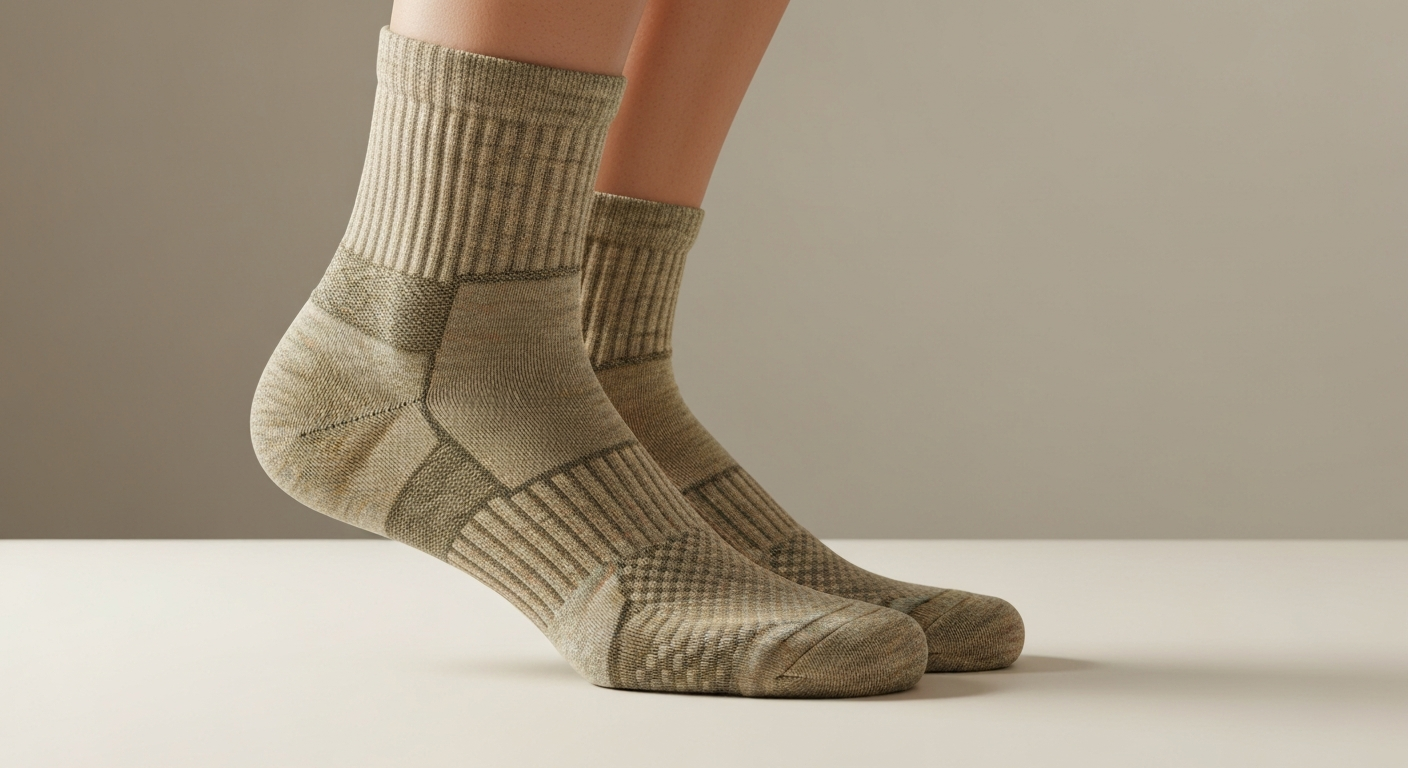
Pure bamboo fiber is soft but relatively delicate on its own, which is why most quality bamboo work socks use a blend. A typical high-performance composition looks something like 80% bamboo, 17% nylon, 3% spandex. Nylon adds tensile strength and resistance to wear at high-friction points like the heel and toe - and is widely favored in sock construction for its superior abrasion resistance and elasticity. The spandex contributes shape retention, helping the sock stay in place through a long day of movement.
This blend formula has become something of an industry standard for good reason - it delivers comfort and practicality without compromise. The breathability and softness remain largely intact, while the sock gains enough structural integrity to handle demanding work environments.
How Bamboo Blends Compare to Cotton Over Time
Cotton socks tend to lose cushioning and structure relatively quickly with frequent washing and wear. Bamboo blends hold their shape better and resist the flattening that makes older cotton socks feel thin underfoot. Merino wool remains the gold standard for long-term durability in premium socks, but bamboo blends offer a compelling middle ground - softer than wool, far more moisture-capable than cotton, and with a lifespan well suited for everyday workwear rotation. Some long-term bamboo sock wearers report pairs lasting three to four years with minimal wear under regular use.
Best Bamboo Work Socks for Each Environment
Office and Long Desk Days
For office environments, the priority is all-day comfort without bulk. A mid-weight bamboo blend in a crew or ankle cut works best - light enough for dress shoes or casual footwear, but substantial enough to provide cushioning after hours of sitting and occasional walking. The antimicrobial properties are just as useful in an office setting as anywhere else, especially during warmer months or when commuting in closed shoes. Look for a smooth knit with minimal seams to avoid irritation against the shoe lining.
Trade Jobs and Active Roles
Tradeswomen, healthcare workers, retail staff, and anyone else on their feet for 8-12 hour shifts need something more robust. A heavier-weight bamboo-nylon blend with reinforced heel and toe construction handles the added physical demand. The moisture-wicking becomes essential here - feet generate significantly more sweat during active movement, and a sock that can't manage that load quickly becomes uncomfortable. Cushioning at the sole also reduces fatigue over long hours on hard floors or concrete. Thick bamboo socks worn inside work boots have become a favourite for workers in physically demanding trades, offering the kind of all-day comfort that standard cotton socks simply can't deliver.
What to Look for Before You Buy
Fabric Composition
The bamboo percentage matters, but so does what it's blended with. Aim for at least 70-80% bamboo to retain the core benefits. Nylon is a strong choice as the secondary fiber, valued for its abrasion resistance and durability. A small percentage of spandex (2-5%) ensures a secure fit that doesn't slip or bunch. Avoid socks where bamboo is listed last on the composition label, as that typically means the beneficial fiber content is minimal.
Seamless Toe and Fit Features
Seams at the toe are one of the most common causes of blisters and irritation, particularly over long shifts or in tight footwear. Seamless toe construction eliminates the raised ridge that rubs against skin, making it a non-negotiable feature for anyone prone to friction issues. Beyond that, look for a sock with a defined heel cup - it keeps the sock positioned correctly so the cushioning stays where it's needed. Compression bands around the arch can also reduce fatigue by providing light support throughout the day.
Bamboo Work Socks Are Worth the Switch
The case for bamboo work socks is built on how the fiber actually behaves. Moisture moves out instead of staying in. Bacteria don't thrive. Feet stay cooler and more comfortable across a full shift. With the right nylon-spandex blend, durability is no longer the trade-off it once was with pure bamboo.
For women in demanding work environments - whether that's a corporate office, a construction site, a hospital, or a long retail floor - the difference between the right sock and the wrong one adds up over the course of a day. Bamboo blends address the core problems of dampness, odor, and fatigue without sacrificing comfort or wearability. The switch is low-risk and high-reward. Once feet experience a properly made bamboo work sock through a full shift, going back to cotton feels like a genuine step down.
Find the full range of women's workwear essentials at Mason Workwear, where comfort-forward design meets the demands of real working days.
Mason Workwear
City: United States
Address: 5830 E 2nd St Casper WY 82609
Website: https://masonclothing.com/
Phone: +1 (760) 286-4266
Email: support@masonclothing.com


Comments
Post a Comment