What Causes Little League Elbow? Symptoms & Tips To Prevent It From Coming Back
Key Takeaways
- Little League Elbow refers to stress or irritation affecting the growth plate on the inner side of the elbow in young throwing athletes
- It most commonly affects players between roughly ages 8 and 14, before the growth plate closes
- Parents often first notice recurring elbow soreness, discomfort after pitching, or changes in a child's willingness to throw
- Throwing volume can play an important role, especially when athletes participate on multiple teams or play year-round
- Understanding recovery, workload, and recurring patterns can help families make informed decisions throughout the season
If you're the parent of a young baseball player, you've probably had a moment like this. The game is over, everyone is packing up, and on the drive home your child casually mentions that their elbow feels sore.
At first, it doesn't seem like a big deal. Baseball involves throwing - and throwing can make an arm feel tired. Most parents have heard similar complaints after a busy weekend of games or tournaments. But what happens when that soreness keeps coming back?
This post is designed to help parents understand what Little League Elbow actually refers to, what causes it, what symptoms to watch for, and — if your child has already dealt with it — how to reduce the chances of it coming back.
What Is Little League Elbow?
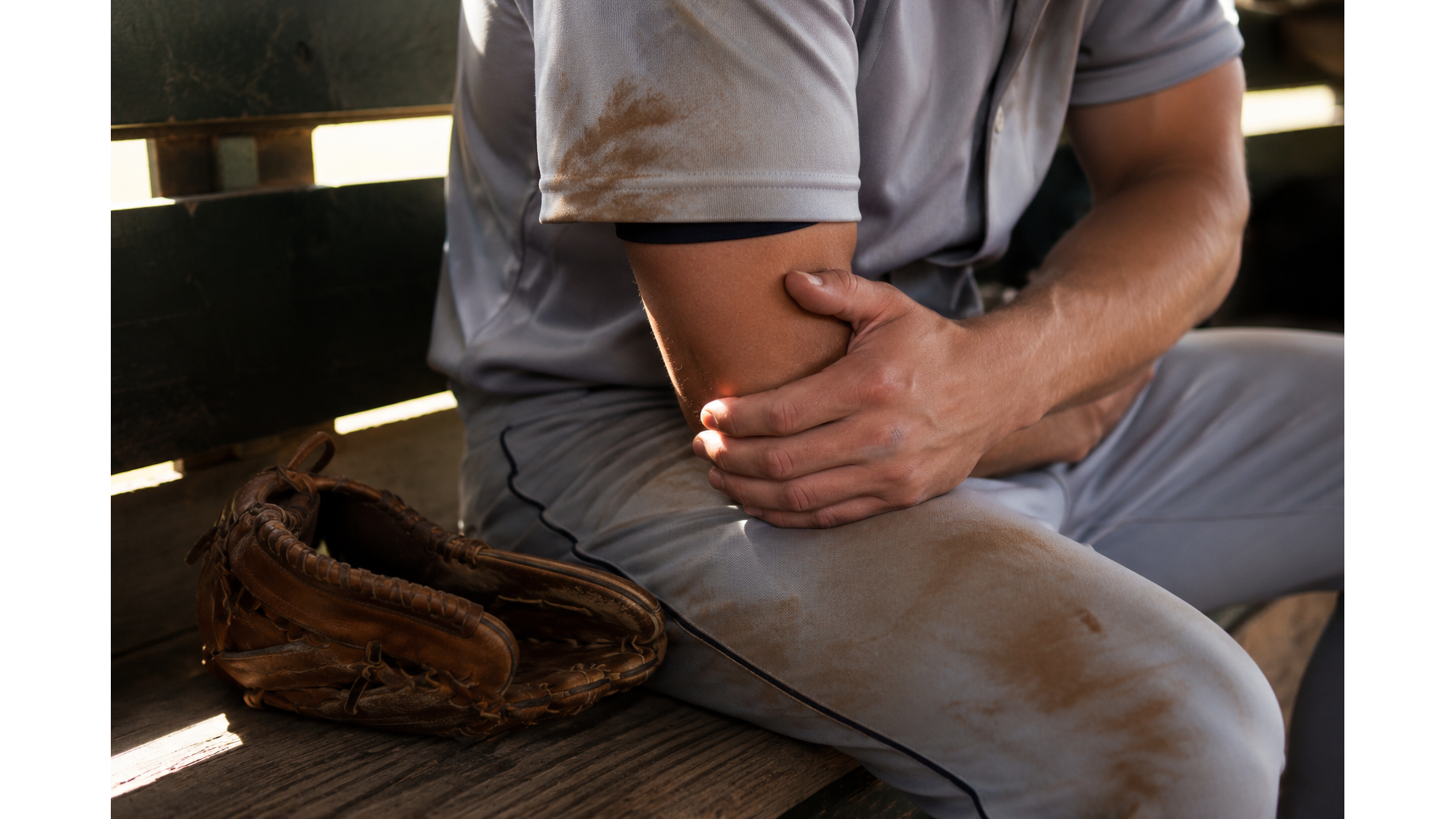
Little League Elbow is a term used to describe stress or irritation involving the growth plate on the inner side of the elbow.
It is most commonly associated with young throwing athletes, particularly baseball players whose bones are still developing.
The condition is generally discussed in relation to athletes between roughly 8 and 14 years old, before the growth plate has fully closed. During these years, the growth plate can be more vulnerable to repetitive stress than the surrounding structures.
That age range matters because once growth plates close, the injury picture changes. Older teenage pitchers and adult athletes may face different elbow issues altogether. Little League Elbow is specifically connected to a stage of development when the elbow is still growing.
Understanding that distinction helps parents place the conversation in the proper context.
What Causes It?
Little League Elbow develops from cumulative stress on the elbow, not from a single throw or one bad outing.
The repetitive motion of throwing creates pulling forces on the inside of the elbow, where the forearm muscles attach near the growth plate. Each throw adds a small amount of stress. With adequate rest between outings, the body can recover and adapt. But when throwing volume is high, rest is insufficient, or a young athlete throws year-round without a break, that stress accumulates faster than the body can manage.
Over time, the growth plate becomes irritated and inflamed. In more severe cases, the growth plate can begin to separate — though most cases don't progress that far if addressed early.
The research supports the connection between workload and injury risk. The American Sports Medicine Institute found that youth pitchers who throw more than 100 innings per year are roughly 3.5 times more likely to eventually require elbow surgery. That's a significant increase in risk tied directly to volume.
This isn't about one factor in isolation. It's the combination of how much a child throws, how often they throw, how much rest they get between outings, and whether they take time off from throwing during the year.
Symptoms Parents Should Recognize
The most common symptom is pain on the inside of the elbow during or after throwing. Your child might mention that their elbow hurts when they pitch, or that it's sore after games and takes a while to feel normal again.
Other signs to watch for include tenderness when pressing on the inside of the elbow, mild swelling in the area, difficulty fully straightening the arm, or complaints that throwing doesn't feel quite right — less accurate, less comfortable, or like something is "off."
Some children will mention these things directly. Others won't — either because they don't want to miss playing time, because they assume soreness is normal, or because they don't have the words to describe what they're feeling. Asking directly after games and practices can help surface concerns that might otherwise go unmentioned.
Mid-season soreness that resolves with a day or two of rest is one thing. Pain that shows up consistently, lingers between outings, or gets worse over time is worth paying closer attention to.
What Happens If A Provider Has Raised This Concern
If a healthcare provider has mentioned Little League Elbow as a possibility, the typical recommendation is rest from throwing. The duration depends on severity, but several weeks is common. The goal is to give the growth plate time to calm down and heal without the continued stress of throwing.
Ice may be recommended to help with inflammation, and physical therapy is sometimes part of the plan — particularly to address any strength or flexibility issues that could be contributing to the problem.
The most important thing during this period is allowing adequate time before returning to throwing. Coming back too soon — before the growth plate has fully recovered — is one of the most common reasons the condition returns.
It can be difficult to hold a child back when they feel better and want to play. But the growth plate doesn't heal as visibly as a cut or a bruise. Feeling better doesn't always mean the tissue is ready for full stress again.
Why It Sometimes Comes Back
Little League Elbow often recurs because the underlying factors that caused it in the first place haven't changed.
A child may rest for a few weeks, feel better, and return to the same schedule — multiple games per week, pitching for two teams, throwing year-round. The arm feels fine at first, but over time the same stress accumulates again, and the symptoms return.
Prevention isn't about one adjustment or one rest period. It's about managing workload in a sustainable way across the entire season and year.
If your child has dealt with this condition once, it's worth looking honestly at what their throwing workload looked like before the injury — and whether anything needs to change going forward.
Tips To Prevent It From Coming Back
Preventing recurrence comes down to workload management. Here's what that looks like in practice:
Follow pitch count guidelines. Little League and other youth baseball organizations publish age-appropriate pitch count recommendations. These aren't arbitrary — they're based on research into what young arms can reasonably handle.
Build in rest between pitching appearances. Rest days between outings matter as much as pitch counts during outings. A child who pitches the maximum allowed pitches every few days is still accumulating significant stress.
Be cautious about playing on multiple teams simultaneously. When a child pitches for a travel team on Saturday and a rec league team on Tuesday, workload adds up quickly — even if each team is following pitch counts individually. Communication between teams (and honest tracking by parents) helps prevent overuse.
Take time off from throwing each year. Most recommendations suggest at least two to three consecutive months away from throwing annually. This gives the arm a chance to recover from the cumulative stress of the season.
Pay attention to early complaints. Soreness that doesn't resolve with normal rest is worth addressing before it becomes a bigger problem. Catching things early often means a shorter recovery.
Communicate with coaches. Coaches don't always know what happened in yesterday's game for another team or last week's showcase. Keeping them informed about your child's recent workload helps everyone make better decisions.
When To Seek Evaluation
If your child has persistent inner elbow pain that doesn't improve with a few days of rest, if the pain is getting worse rather than better, or if there's noticeable swelling or significant difficulty moving the elbow, evaluation by a healthcare provider is appropriate.
Early attention typically means a shorter recovery and less disruption to the season. Waiting until the problem is severe often means a longer time away from play—and a higher risk of more serious damage.
You know your child better than anyone. If something seems off, trust that instinct.
Final Thoughts
Little League Elbow is one of the most common overuse injuries in young throwers. It's not a sign that something is fundamentally wrong with your child's arm or their future in the sport. With appropriate rest and thoughtful workload management, most children recover fully and return to play without lasting issues.
The key for parents is recognizing early signs, allowing adequate recovery time when needed, and making sustainable adjustments to prevent the condition from becoming a recurring pattern.
Understanding what Little League Elbow actually is — and what causes it — puts you in a better position to advocate for your child's long-term arm health, even when there's pressure to get back on the field quickly.
VeloRESET
City: Fresno
Address: 8930 North 6th Street
Website: https://www.veloreset.com/


Comments
Post a Comment