Virtual Contrast Supervision State Legislation: 2026 Updates & Practice Impact
Key Takeaways
- CMS permanently authorized virtual direct supervision for diagnostic tests starting January 1, 2026, requiring real-time two-way audiovisual communication instead of physical presence
- State-specific legislation creates additional compliance layers beyond federal requirements, with California, Ohio, Alabama, and Tennessee each taking different regulatory approaches
- Imaging facilities must implement HIPAA-compliant technology platforms, updated protocols, and staff training before offering virtual supervision
- Dual compliance with both federal CMS rules and individual state regulations determines legal operation, creating potential compliance gaps for unprepared facilities
- Technology infrastructure must support dedicated bandwidth, backup connectivity, and auditable documentation to meet regulatory standards
CMS Made Virtual Contrast Supervision Permanent January 1, 2026
The Centers for Medicare & Medicaid Services eliminated years of regulatory uncertainty by making virtual direct supervision of diagnostic tests a permanent fixture in healthcare delivery. This landmark change replaced temporary pandemic-era flexibilities with a stable, long-term framework that fundamentally redefines how imaging facilities can operate.
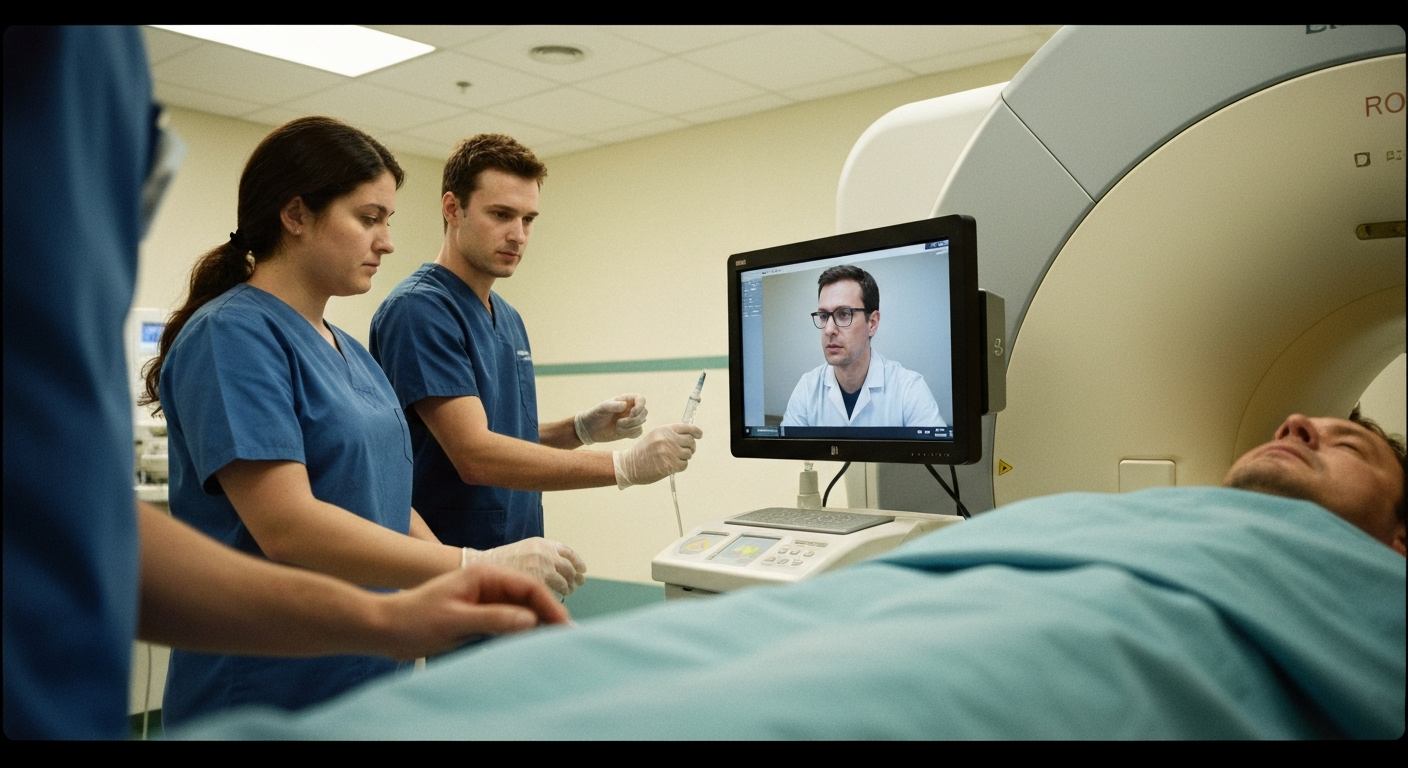
Under the new permanent rule, direct supervision no longer requires a physician to be physically present in the same office suite or building. Instead, supervising practitioners can fulfill their "immediately available" obligation through real-time, interactive audiovisual communication technology. The physician must remain trained in the supervised procedure and ready to provide assistance without delay.
This regulatory shift addresses a critical operational challenge many imaging facilities faced during the transition from emergency provisions to permanent policy. ContrastConnect's analysis of the 2026 rule changes highlights how facilities that prepared for this transition gained immediate competitive advantages in service delivery and operational flexibility.
The technology requirements embedded in CMS's permanent rule are specific and non-negotiable. Virtual supervision platforms must support real-time, two-way audio and visual communication throughout the entire procedure. Asynchronous communication methods like recorded video, text messaging, or delayed check-ins fail to meet the regulatory standard and create compliance risk for facilities attempting to use them.
State Laws Create Compliance Complexity Beyond Federal Requirements
Federal authorization through CMS doesn't automatically override state-level supervision requirements, creating a dual compliance environment that imaging facilities must navigate carefully. States operate parallel regulatory frameworks that can either complement or complicate federal standards, depending on their specific legislative approach.
This complexity means facilities must satisfy both CMS requirements and their individual state's supervision statutes simultaneously. A facility operating under CMS authority but violating state law faces potential regulatory action from state licensing boards, regardless of federal compliance status.
California AB 460 Explicitly Authorizes Virtual Supervision
California took a proactive approach by enacting AB 460, which amended the state's Radiologic Technology Act to explicitly recognize real-time audiovisual technology as legally sufficient for direct supervision during contrast administration. The legislation took effect January 1, 2026, perfectly aligning with CMS's permanent rule implementation.
Before AB 460, California facilities operating under CMS's temporary flexibility existed in regulatory gray areas under state law. The new legislation closes this gap by establishing that supervising physicians can meet direct supervision requirements through real-time, two-way, interactive audiovisual connections while remaining immediately available throughout the procedure.
California's requirements mirror federal standards on technology specifications. The audiovisual connection must maintain real-time, interactive communication, and the supervising physician must demonstrate immediate availability for hands-on intervention if circumstances require direct physical presence.
Ohio HB 479 Still Pending Legislative Approval
Ohio's approach through HB 479 demonstrates the legislative process many states face in modernizing their supervision frameworks. The proposed bill aims to resolve current ambiguity by explicitly allowing radiologists to satisfy direct supervision requirements through real-time, two-way audiovisual communication.
During HB 479's review process, legislators addressed safety concerns by maintaining every substantive obligation that existed under previous physical presence requirements. The supervising physician must still possess appropriate training, remain immediately available, and maintain capability to provide hands-on assistance when required.
Until HB 479 receives final approval, Ohio facilities operate in a more complex regulatory environment. These facilities should consult legal counsel to understand how CMS's federal flexibility intersects with Ohio's existing state statutes while implementing appropriate risk management protocols.
Alabama and Tennessee Use Administrative Rule Changes
Not every state requires legislative action to update virtual supervision frameworks. Alabama and Tennessee demonstrate how administrative rule amendments and formal regulatory interpretations can achieve similar outcomes without lengthy legislative processes.
Alabama issued a formal ruling that explicitly authorizes remote contrast supervision, giving in-state imaging facilities clear state-level authorization that doesn't require physical physician presence during contrast administration. This ruling established specific conditions under which virtual supervision satisfies Alabama's regulatory oversight requirements.
Tennessee's approach involves proposed amendments to existing X-ray supervision rules currently working through the administrative review process. The proposed changes target outdated language in state imaging oversight regulations and would update Tennessee's definition of adequate supervision to include real-time virtual presence, aligning state requirements with CMS's 2026 permanent rule.
Technical Requirements for CMS-Compliant Virtual Supervision
Successful virtual supervision implementation requires more than basic video calling capabilities. The technical infrastructure must meet specific regulatory standards while supporting reliable clinical operations in real-world imaging environments.
Real-Time Two-Way Audiovisual Communication Standards
The technology backbone for compliant virtual supervision centers on real-time, interactive audiovisual communication that maintains continuous connection quality throughout each procedure. This requirement eliminates consumer-grade platforms like standard Zoom or FaceTime, not due to video quality limitations, but because of security, reliability, and clinical-grade performance requirements.
Dedicated bandwidth allocation ensures consistent connection stability during critical supervision moments. Imaging facilities must implement network infrastructure that prioritizes supervision traffic and maintains backup connectivity protocols to prevent service interruptions during active procedures.
Connection monitoring systems provide real-time visibility into communication quality, allowing immediate intervention if technical issues arise. These systems typically include automated alerts for connection degradation, bandwidth utilization tracking, and failover capabilities that maintain supervision continuity.
HIPAA Security and Business Associate Agreement Requirements
Every virtual supervision session involves protected health information transmission, creating strict HIPAA compliance obligations for the technology platform and operational procedures. Virtual supervision platforms must operate under signed Business Associate Agreements and demonstrate technical security controls that meet federal privacy requirements.
End-to-end encryption protects all communication streams during supervision sessions, ensuring patient information remains secure during transmission between supervising physicians and facility technologists. Access controls limit platform usage to authorized personnel and maintain audit trails of all user activity.
Platform vendors must provide HIPAA compliance documentation, including technical security assessments, administrative safeguards descriptions, and physical security controls that protect patient information throughout the virtual supervision process.
Documentation and Audit Trail Obligations
Regulatory compliance extends beyond the supervision technology to documentation requirements that support audit readiness and claims verification. Electronic Health Record documentation must explicitly describe how direct supervision was provided virtually, including specific technology methods and timing information.
Supervision session logs capture detailed records of each virtual supervision event, including participant identities, session duration, connection quality metrics, and any technical issues encountered. These logs provide evidence during regulatory audits or claims reviews.
Timestamp documentation proves physician availability and engagement during specific procedure timeframes. This documentation must demonstrate continuous supervision availability rather than intermittent check-ins or after-the-fact reviews of completed procedures.
Facility Implementation Checklist for Dual Compliance
Implementing virtual supervision requires systematic preparation across technology, personnel, and operational domains. Facilities that approach implementation systematically avoid common compliance pitfalls and operational disruptions.
Technology Infrastructure and Backup Systems
Network infrastructure assessment identifies bandwidth requirements, connectivity redundancy needs, and quality-of-service configurations necessary for reliable virtual supervision. Most facilities require dedicated network capacity that prioritizes supervision traffic during peak imaging volumes.
Backup connectivity systems prevent supervision interruptions during primary network outages or degraded performance periods. These systems typically include secondary internet connections, cellular backup options, and automatic failover capabilities that maintain supervision continuity without manual intervention.
Hardware specifications must support high-quality audiovisual communication while integrating seamlessly with existing imaging workflow systems. Camera placement, audio equipment selection, and display configurations directly impact supervision effectiveness and regulatory compliance.
Staff Training and Protocol Updates
Staff training ensures every team member understands their specific responsibilities during virtual supervision procedures. Training programs must cover technology operation, communication protocols, emergency procedures, and documentation requirements.
Protocol development defines exact workflows for initiating, maintaining, and concluding virtual supervision sessions. These protocols specify technologist responsibilities, physician obligations, acceptable connection standards, and escalation procedures for technical failures or clinical emergencies.
Regular competency assessments verify ongoing staff proficiency with virtual supervision systems and procedures. These assessments help identify additional training needs and ensure consistent performance standards across all imaging staff.
State-Specific Legal Verification Process
Legal compliance verification involves reviewing current state statutes, administrative rules, and regulatory interpretations that affect virtual supervision authorization in specific jurisdictions. This review should include consultation with healthcare attorneys familiar with state imaging regulations.
State licensing board communication helps clarify any ambiguous regulatory language and ensures facility understanding of current enforcement priorities. Many state boards provide informal guidance that helps facilities navigate complex or evolving regulatory environments.
Ongoing monitoring systems track regulatory changes at both state and federal levels, ensuring facilities maintain compliance as rules evolve. This monitoring typically includes subscription to regulatory update services and participation in professional association communications.
Third-Party Providers Deliver CMS-Compliant Virtual Supervision at Scale
Implementing virtual supervision internally requires significant technology investment, extensive staff training, and ongoing compliance management that strains many facility resources. Purpose-built virtual supervision services eliminate these implementation barriers while providing immediate access to regulatory-compliant operations.
These platforms include built-in audit documentation, regulatory compliance monitoring, and staff training support that reduces facility administrative burden while ensuring consistent regulatory adherence. As state legislation continues evolving, providers adapt their infrastructure to new requirements without disrupting facility operations.
ContrastConnect
City: Las Vegas
Address: Las vegas
Website: https://www.contrast-connect.com/


Comments
Post a Comment