Projection Mapping for Events: What Is It & Key Considerations Before Planning
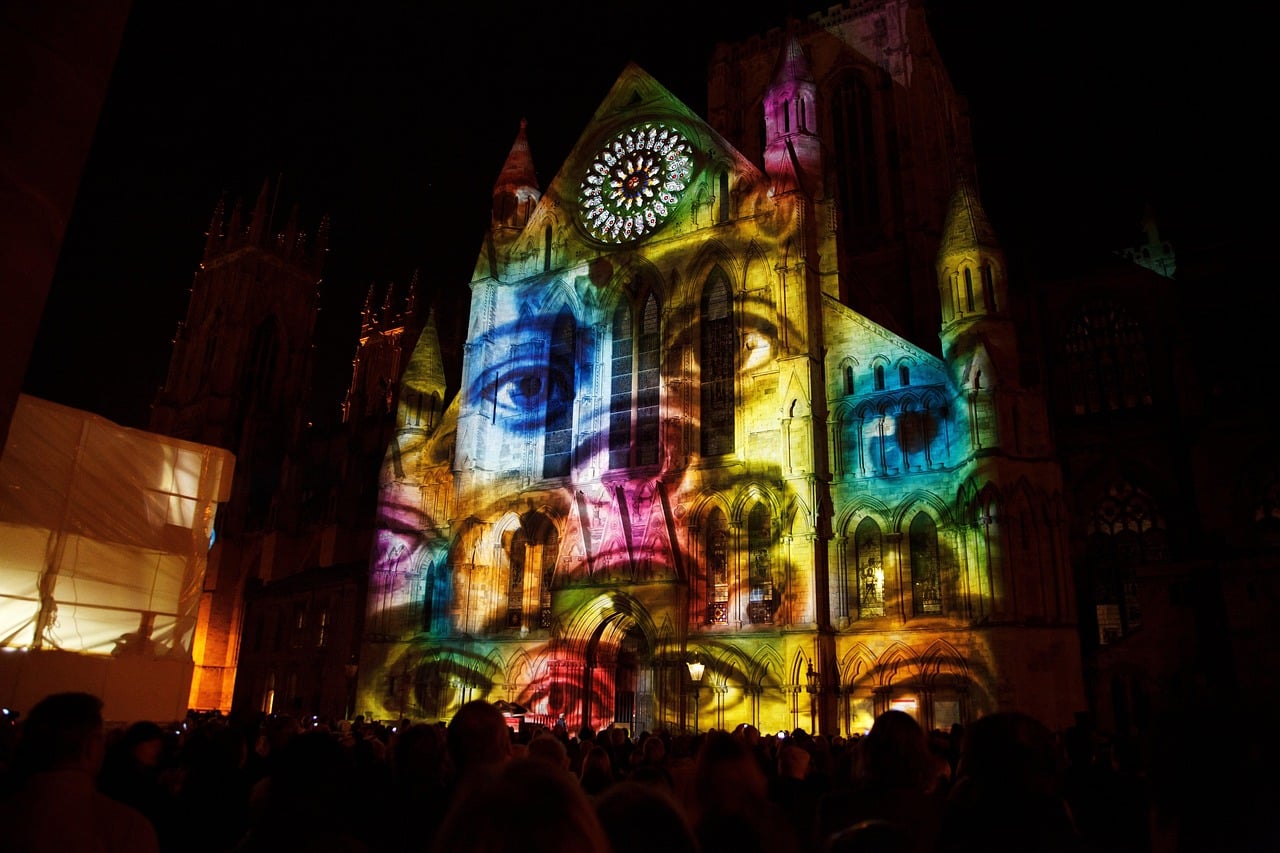
Corporate events are under increasing pressure to deliver more than a well-organized agenda. Attendees arrive with higher expectations, attention is harder to hold, and the bar for what qualifies as a memorable experience continues to rise. Projection mapping has emerged as one of the most effective tools for meeting that standard, but for businesses considering it for the first time, understanding what it involves is the essential starting point.
What Is Projection Mapping?
Projection mapping projects digital visuals onto physical surfaces in a way that accounts for the shape, texture, and geometry of those surfaces. Unlike standard projection onto a flat screen, it turns walls, ceilings, stage sets, architectural features, and products into dynamic visual canvases that appear to move or transform without any permanent alteration to the space.
The technology relies on three components: high-output projectors, specialist software that warps content to fit the surface geometry, and custom visual content designed specifically for the mapped environment.
How Projection Mapping Is Used in Corporate Settings
Projection mapping is applied across several corporate event formats, each with a different objective. Product launches use it to turn a reveal into a cinematic moment, building anticipation through coordinated visuals, motion, and sound rather than a standard stage setup. Conferences and general sessions use it to transform venue walls or stage backdrops into dynamic environments that hold audience attention and reinforce the event theme.
Brand activations and trade shows benefit from it in competitive environments where standard booth setups fail to differentiate: a mapped surface draws attention and creates shareable moments that extend visibility beyond the room. Moreover, corporate galas and milestone events use it to create atmosphere and emotional impact, shifting the environment across the evening to reflect the narrative of the occasion.
The Business Case
The value of projection mapping in a business context comes down to three outcomes. Engagement increases when the environment becomes dynamic: attendees are pulled into the space rather than simply occupying it, which reduces the passive observation that characterizes most standard event formats.
Social sharing follows naturally from this, as attendees record and post content when something feels visually distinct, turning a single event into extended brand visibility across platforms without additional effort. Additionally, brand perception is shaped directly by the quality of the environment. A space that feels premium and intentional communicates those qualities about the brand itself, and in competitive markets, that perception difference carries tangible commercial weight.
Key Considerations Before Planning
Several practical factors determine whether a projection mapping installation delivers on its potential. Lead time is one of the most critical, as the process requires surface scanning, content design, software calibration, and crew coordination. Engaging a production partner early allows content to be designed for the specific venue rather than adapted at the last minute.
AV integration is equally important, as projection mapping produces its strongest results when visuals, lighting, and audio operate as a unified system where transitions feel intentional, and the environment feels cohesive rather than assembled from separate elements.
Content is what ultimately drives the outcome. Generic visuals on a mapped surface produce a generic result, and content built specifically around the event's brand, messaging, and surface geometry is what creates moments people remember and share.
Finally, venue suitability affects what is achievable from the outset. Ambient light levels, ceiling height, surface color, and projector placement positions all influence the result, and a site survey before content production begins prevents costly redesigns later in the process.
Making It Work for Your Business
Projection mapping works best when treated as a strategic layer integrated with the full event environment, not a visual upgrade added late in the planning process. Businesses that see the most return from it are those that plan it alongside the event concept from the start, align it with clear objectives, and build content that reflects the brand rather than filling space with generic motion graphics. When those conditions are in place, the outcomes are consistently measurable. For businesses that compete on experience, projection mapping is one of the more direct investments in how an event is perceived, remembered, and talked about long after it ends.
Sphere Audio Video
City: Birmingham
Address: 504 Cahaba Park Circle
Website: https://sphereav.com


Comments
Post a Comment