Indoor Hydroponic Garden: Can It Really Reduce Your Grocery Dependence?
Key Takeaways
- Indoor hydroponic gardens allow year-round harvesting of herbs, leafy greens, and vegetables regardless of season, outdoor space, or weather conditions.
- Growing produce at home reduces dependence on supply chains that are increasingly vulnerable to weather events, transportation delays, and price volatility.
- A harvest-as-needed approach means produce stays growing until it's actually required, cutting down on the spoilage that comes with bulk supermarket purchases.
- Hydroponic systems use significantly less water than conventional farming, as moisture circulates within a closed system rather than being lost to runoff.
- Automated LED lighting, self-watering reservoirs, and pre-seeded pod systems have made indoor gardening accessible to beginners with no prior experience.
- While indoor gardens are not a replacement for grocery shopping, they offer a meaningful layer of food resilience and fresher ingredients for everyday cooking.
Why More Households Are Growing Food Indoors
Food security has become an important topic as households face higher grocery bills, supply chain disruptions, and more frequent climate-related impacts on agriculture. Droughts, floods, heatwaves, and conflict-related transportation delays have all demonstrated how vulnerable conventional food systems can be, particularly for fresh produce that often travels hundreds or even thousands of miles before reaching store shelves.
While commercial agriculture remains essential, many consumers are looking for practical ways to supplement their grocery shopping with food grown closer to home. Indoor hydroponic gardening has emerged as one of the most accessible solutions, allowing fresh herbs, leafy greens, and vegetables to be grown year-round regardless of weather, outdoor space, or gardening experience.
Modern indoor gardening systems have transformed what was once a specialist hobby into an everyday household activity. Automated lighting, watering, and nutrient delivery allow plants to flourish with minimal maintenance, making home food production realistic even for apartment dwellers and busy families.
Understanding Food Security At Home
Food security refers to consistent access to sufficient, safe, and nutritious food that supports an active, healthy life. Although the concept is often discussed on a national or global scale, household food security is equally important.
Fresh fruits and vegetables are among the most vulnerable food categories during supply disruptions because they have relatively short shelf lives and depend upon efficient transportation networks. Weather events, labor shortages, transportation delays, and changing growing conditions can all affect both availability and price.
Growing even a small portion of household produce indoors helps reduce reliance on these external factors. Fresh herbs, lettuce, spinach, kale, tomatoes, peppers, and other crops can be harvested when needed instead of depending entirely on retail availability. While indoor gardening is not intended to replace grocery shopping altogether, it provides an additional source of fresh food that improves resilience during periods of disruption.
The Food and Agriculture Organization of the United Nations has repeatedly emphasized the importance of developing more resilient food systems that can withstand environmental and economic pressures. Household food production represents one practical contribution to that broader objective.
How Hydroponic Gardening Works
Unlike traditional gardening, hydroponics grows plants without soil. Instead, plant roots receive carefully balanced water, oxygen, and nutrients through specially designed growing media and irrigation systems.
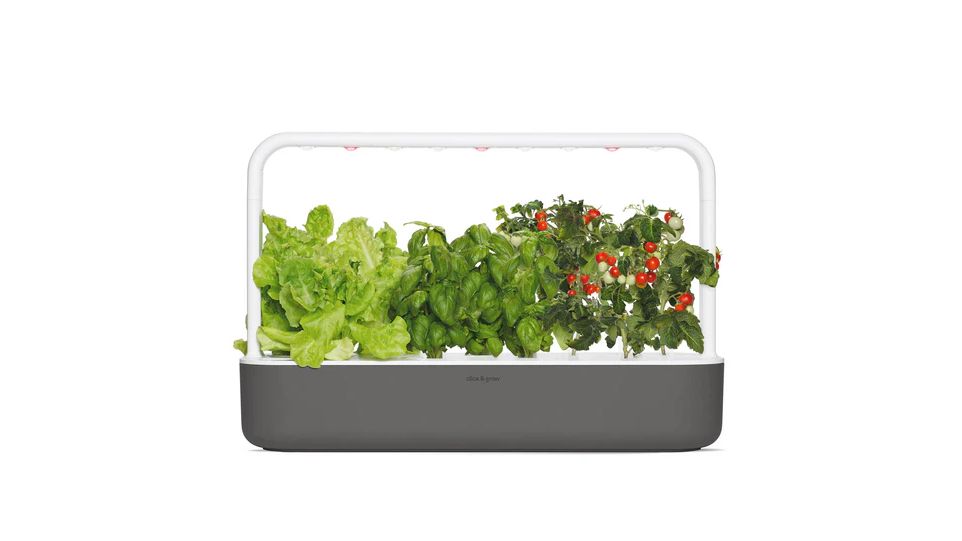
Modern indoor hydroponic gardens automate much of this process. Energy-efficient LED lighting supplies the wavelengths plants require for photosynthesis, while self-watering reservoirs provide a consistent supply of moisture and nutrients. This controlled environment removes many of the variables associated with outdoor gardening, including changing weather, seasonal limitations, and poor soil quality.
Because growing conditions remain stable throughout the year, many herbs and leafy vegetables mature more predictably than they would outdoors. Automated systems also eliminate much of the trial and error that discourages beginner gardeners, making fresh food production accessible to people without previous horticultural experience.
Supporting Cleaner Eating Habits
Growing food at home offers benefits that extend beyond convenience. Many consumers are increasingly interested in understanding where their food comes from and how it has been produced.
Indoor hydroponic systems allow growers to harvest produce immediately before use, reducing the time between harvest and consumption. Fresh herbs can be picked moments before cooking, while leafy greens retain their flavor and texture without spending days in transportation, storage, or supermarket displays.
Controlled indoor environments also reduce exposure to many pests commonly encountered outdoors, minimizing or eliminating the need for many conventional pesticides. Some indoor gardening companies also test their growing media against hundreds of commonly used agricultural chemicals as part of their quality assurance process.
For households seeking fresher ingredients and greater confidence in how food is produced, indoor gardening provides a straightforward way to complement existing healthy eating habits.
Reducing Household Food Waste
Food waste remains one of the largest sustainability challenges throughout the food supply chain. Fresh vegetables frequently spoil before they are consumed, particularly when purchased in quantities larger than immediate household needs.
Indoor gardening changes this dynamic by allowing produce to remain growing until it is ready to be harvested. Rather than purchasing an entire package of herbs or lettuce, only the quantity needed for a particular meal is picked, while the remainder continues growing.
This harvest-as-needed approach helps reduce unnecessary waste while also ensuring greater freshness. The environmental benefits extend beyond individual households, reducing the resources required to produce, package, transport, refrigerate, and ultimately discard unused food.
Environmental Benefits Beyond The Kitchen
Indoor hydroponic gardening also supports broader sustainability goals through efficient resource use.
Many hydroponic systems consume significantly less water than conventional agriculture because water continuously circulates within the growing system instead of being lost through runoff or evaporation. The controlled indoor environment also eliminates many weather-related losses that affect outdoor crops.
Growing produce at home can also reduce transportation requirements. Much of the fresh produce sold in supermarkets travels considerable distances before reaching consumers, requiring refrigerated transportation, packaging materials, and storage infrastructure. Producing herbs and vegetables where they will ultimately be eaten shortens this supply chain considerably.
Although indoor gardens are not intended to replace commercial agriculture, they demonstrate how decentralized food production can complement existing food systems while reducing pressure on natural resources.
Making Home Food Production More Accessible
Historically, successful gardening required outdoor space, favorable weather, and significant horticultural knowledge. Today's indoor systems have dramatically lowered those barriers.
Automated gardens now handle many of the routine tasks that once discouraged beginners, including lighting schedules, watering cycles, and nutrient management. Compact designs fit comfortably into kitchens, apartments, condominiums, and other urban living spaces where conventional gardening may not be practical.
Smart systems combine automated LED lighting, self-watering technology, and pre-seeded Plant Pods to simplify year-round cultivation. The result is an indoor gardening experience that requires relatively little maintenance while producing fresh herbs, leafy greens, tomatoes, peppers, and numerous other edible plants.
By removing much of the complexity traditionally associated with gardening, automated hydroponic systems allow more households to participate in local food production regardless of previous experience.
Small Gardens Can Make A Meaningful Difference
Indoor gardening is unlikely to replace supermarkets or large-scale agriculture, but that has never been its purpose. Instead, it provides households with greater flexibility, improved access to fresh produce, and an opportunity to supplement traditional grocery shopping with homegrown ingredients.
As climate change, supply chain uncertainty, and rising food costs continue to shape consumer behavior, small-scale food production offers practical benefits that extend beyond the harvest itself. Fresher ingredients, reduced food waste, greater awareness of how food is produced, and increased resilience all contribute to healthier, more sustainable lifestyles.
The continued development of automated indoor gardening technology means that growing fresh food is becoming accessible to more people than ever before. Whether the goal is improving clean eating habits, reducing grocery dependence, or simply enjoying the satisfaction of harvesting fresh herbs for dinner, indoor hydroponic gardening represents an increasingly practical addition to modern homes.
Click & Grow LLC
City: San Francisco
Address: 2443 Fillmore Street
Website: https://www.clickandgrow.com


Comments
Post a Comment