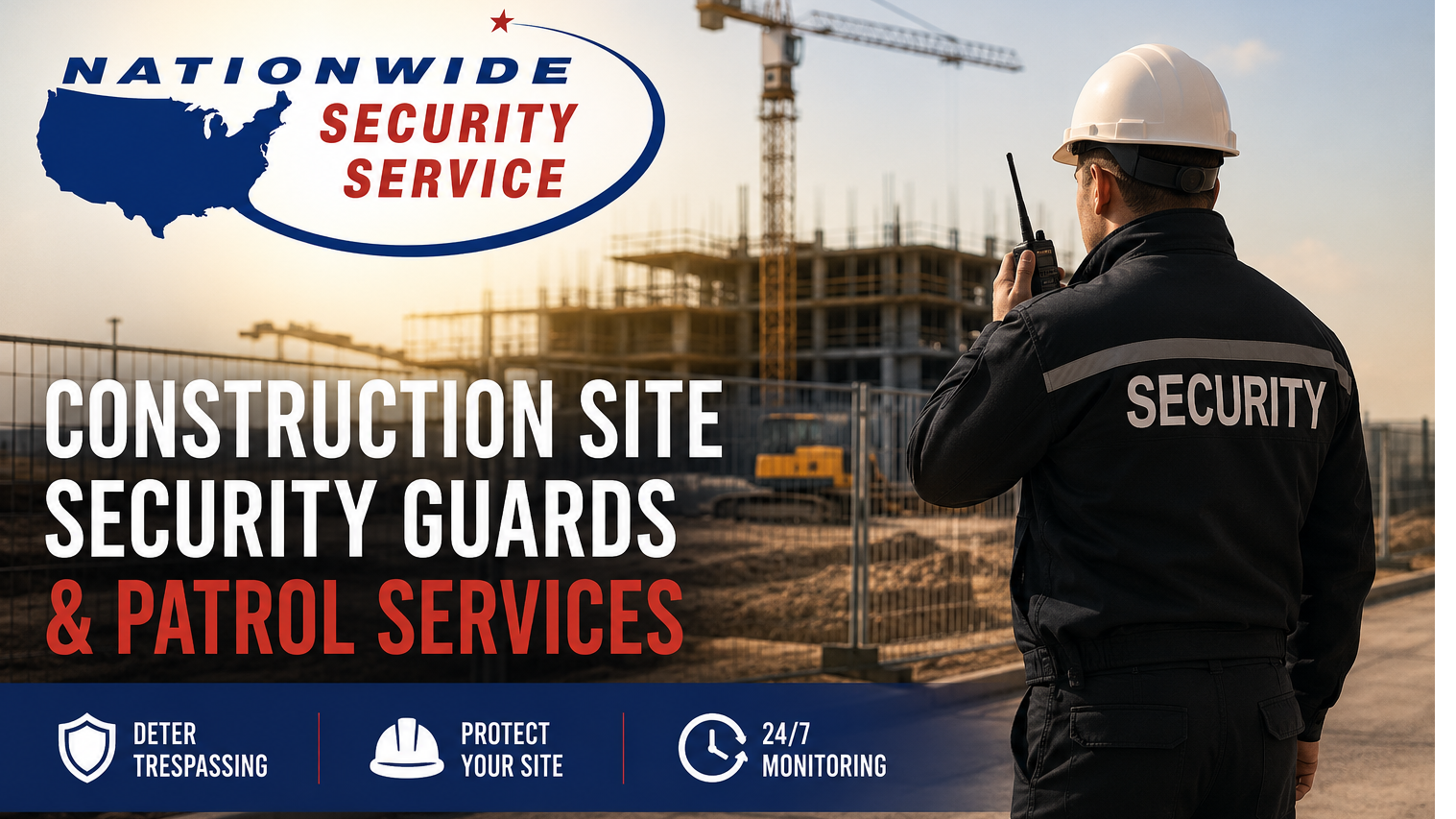
Construction Site Security Guard & Patrol Services: Theft Prevention
Key Takeaways
- Construction site theft costs the U.S. industry between $300 million and $1 billion annually for equipment, with additional losses from material theft
- Mobile patrol security provides effective deterrence through constant monitoring and rapid response capabilities
- Professional access control and credential verification help prevent project delays caused by unauthorized entry
- Armed vs. unarmed security selection depends on equipment value, site location, and industry-specific risks
- Hidden costs of theft include project delays, rental replacements, and increased insurance premiums that multiply the actual financial impact
Construction project managers face an escalating security crisis that threatens both profitability and project timelines. Understanding the complete approach to construction site protection becomes vital for maintaining operational efficiency and protecting valuable assets.
Construction Site Theft Costs Between $300 Million and $1 Billion Annually
The construction industry loses between $300 million and $1 billion annually due to equipment and material theft, with fewer than 25% of stolen machines ever recovered. This staggering financial impact extends far beyond the initial loss, creating ripple effects throughout entire project lifecycles.
Recent industry surveys reveal that 64% of construction professionals report increased theft incidents over the past five years, while 61% have experienced rising vandalism rates. The National Equipment Register estimates that each theft incident averages approximately $30,000 in direct costs, though this figure may vary depending on equipment type and data source. The actual financial damage often reaches several times higher when factoring in operational disruptions.
Copper theft alone accounts for approximately $1 billion in annual losses from construction sites nationwide. Nationwide Security Service Inc. provides specialized construction site security solutions designed to combat these escalating threats through complete protection strategies.
Mobile Patrols Provide Constant Site Monitoring
Mobile patrol security transforms construction site protection through dynamic, unpredictable coverage that deters criminal activity while providing rapid emergency response capabilities. This approach offers distinct advantages over static security measures by creating uncertainty for potential thieves regarding patrol timing and routes.
Real-Time Equipment and Material Monitoring
Mobile security teams conduct thorough inspections of high-value equipment, material stockpiles, and vulnerable access points throughout their patrol cycles. This real-time monitoring identifies security breaches, equipment tampering, or unauthorized access attempts before they escalate into significant losses. The visible presence of uniformed mobile security guards creates a strong psychological deterrent that reduces the likelihood of security incidents.
GPS Tracking with Hourly Check-Ins
Modern mobile patrol systems integrate GPS tracking technology with mandatory hourly check-ins to ensure continuous site coverage. Security personnel use mobile applications to document their presence at predetermined checkpoints, creating detailed audit trails for project managers. This technology-driven approach provides accountability while enabling rapid deployment of additional resources when suspicious activity occurs.
Rapid Emergency Response Capabilities
Mobile patrol units serve as first responders for construction site emergencies, providing immediate assessment and coordination with local emergency services when needed. Studies show that increased patrol presence can reduce crime rates, with some areas experiencing up to a 30% drop in vandalism and petty theft after implementing regular patrol coverage.
Access Control Deters Unauthorized Entry
Effective access control measures create the first line of defense against construction site security breaches by establishing clear boundaries and monitoring all entry points. These systems combine physical barriers, identification protocols, and visitor management to maintain site integrity throughout all project phases.
Gatehouse Security and Credential Verification
Professional security guards stationed at gatehouse access points manage entrance procedures, verify worker credentials, and maintain detailed logs of all personnel entering the construction site. This human-centered approach enables real-time decision-making regarding access authorization while creating a visible security presence that deters unauthorized entry attempts.
Security personnel conduct thorough credential verification processes that include checking identification documents, confirming contractor authorization, and cross-referencing visitor appointments with project management. This multi-layered verification process prevents unauthorized individuals from gaining access to valuable equipment and sensitive project areas.
Visitor and Delivery Management
Complete visitor management systems track all non-construction personnel entering the site, including delivery drivers, inspectors, and client representatives. Security guards document arrival and departure times, escort visitors to designated areas, and ensure proper safety protocol compliance throughout their site presence.
Delivery management protocols verify scheduled material arrivals, inspect incoming vehicles for security threats, and coordinate with project supervisors to ensure proper material placement and documentation. This systematic approach prevents theft opportunities while maintaining efficient project operations.
Armed vs. Unarmed Guard Selection
Choosing between armed and unarmed security personnel requires careful consideration of site-specific risk factors, equipment values, and regulatory requirements. This decision significantly impacts both security effectiveness and operational costs, making proper evaluation necessary for optimal protection strategies.
High-Value Equipment Protection
Construction sites housing equipment worth more than $100,000 typically benefit from armed security presence, particularly during overnight and weekend periods when criminal activity peaks. Armed guards provide stronger deterrent value against organized theft operations that target expensive machinery, tools, and materials with established resale markets.
The psychological impact of armed security extends beyond immediate deterrence, signaling to potential criminals that the site maintains serious security protocols. This perception often redirects criminal activity toward less protected targets, reducing overall site vulnerability.
Remote Site Requirements
Construction projects in remote locations face unique security challenges due to delayed emergency response times and limited local law enforcement presence. Armed security personnel provide immediate threat response capabilities while maintaining communication with local authorities during security incidents.
Remote sites also experience higher risks of vandalism and copper theft due to reduced natural surveillance from neighboring properties. Armed guards offer better protection for these vulnerable locations while providing project managers with confidence in their asset protection strategies.
Oil & Gas Construction Considerations
Oil and gas construction projects require specialized security approaches due to hazardous materials, expensive specialized equipment, and regulatory compliance requirements. These sites often mandate armed security personnel to address elevated risk profiles associated with energy infrastructure development.
The rapid expansion of natural gas infrastructure across Texas, Louisiana, and other energy-producing states has created increased demand for professional security services capable of protecting pipeline construction, LNG facilities, and drilling operations from theft and sabotage attempts.
Hidden Costs of Equipment Theft
The financial impact of construction site theft extends far beyond the replacement value of stolen items, creating cascading effects that multiply project costs and damage contractor reputations. Understanding these hidden expenses helps justify security investments.
Project Delays and Rental Replacements
Equipment theft immediately halts construction progress, forcing project managers to locate replacement machinery while crews remain idle. Construction industry reports indicate that approximately 20% of construction leaders report project delays due to security incidents, with each delay day costing thousands of dollars in lost productivity and extended overhead expenses.
Emergency equipment rental rates significantly exceed standard pricing, often doubling or tripling normal costs due to immediate availability requirements. These inflated rental expenses continue throughout equipment replacement periods, creating substantial budget overruns that impact project profitability.
Insurance Premium Increases
Multiple theft claims trigger insurance premium increases that affect contractor rates for several years following incidents. Insurance companies view repeated theft losses as indicators of inadequate security measures, leading to higher deductibles and reduced coverage limits for future projects.
Some insurance providers require specific security measures following theft claims, mandating professional security services as policy conditions. These requirements often exceed the cost of proactive security investments, making prevention strategies more economically attractive than reactive responses.
Professional Security Mitigates $30,000 Average Loss Per Incident
Professional construction site security services provide complete protection strategies that address multiple risk factors simultaneously while offering measurable return on investment through loss prevention. The National Equipment Register's approximately $30,000 average theft cost calculation demonstrates that even modest security investments generate positive financial returns.
Successful security programs combine mobile patrols, access control, and emergency response capabilities to create layered protection systems that deter criminal activity while maintaining operational efficiency. These integrated approaches address both opportunistic theft and organized criminal operations through varying security measures.
Professional security providers offer scalable services that adapt to changing project requirements, from initial site preparation through final completion phases. This flexibility ensures appropriate protection levels while controlling security costs throughout project lifecycles.
For complete construction site security solutions that protect your equipment, materials, and project timeline, contact Nationwide Security Service Inc. for professional security guard and patrol services.
Nationwide Security Service Inc.
City: Malden
Address: 208 Broadway
Website: https://nationwidesecurityservice.com/


Comments
Post a Comment