88% of Consumers Choose Brands They Trust — Not Just the Most Qualified
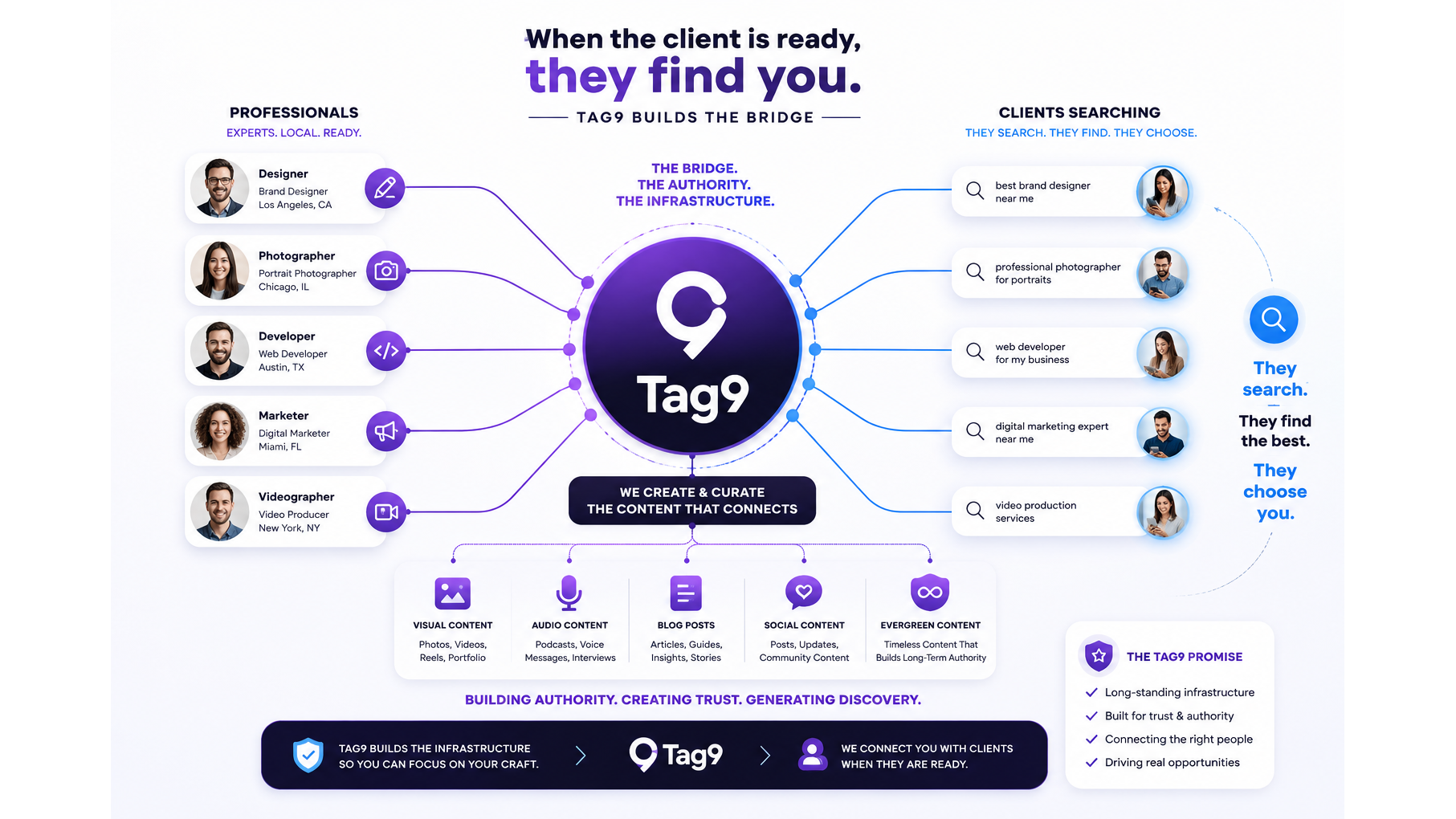
- Trust — not credentials — is the single biggest factor that determines whether a potential client chooses to hire you.
- According to the 2023 Edelman Trust Barometer, 81% of consumers say they must trust a brand before making a purchase.
- Competence is now the baseline expectation in professional services — it no longer sets anyone apart.
- The way clients research and decide who to hire has fundamentally changed, and most of that decision happens before a single conversation ever takes place.
- There are four concrete, repeatable behaviors that build the kind of trust that turns prospects into long-term clients — and they're covered in detail below.
There's a quiet frustration shared by many service-based business owners: doing everything right — building the skills, earning the certifications, refining the process — and still losing clients to someone who, on paper, looks less qualified. It doesn't feel fair. But it makes sense once the real reason clients choose who they hire becomes clear.
81% of Consumers Choose Brands They Trust — Not Just the Most Qualified
The numbers make a compelling case on their own. The 2023 Edelman Trust Barometer found that 81% of consumers say they must trust a brand before they'll make a purchase. Separate research consistently puts similar figures even higher when narrowed to service-based decisions, where perceived risk is greater and outcomes are harder to guarantee upfront.
What this means in practice: a prospective client comparing two service providers rarely picks the one with the longer résumé. They pick the one who made them feel safe. Trust lowers the perceived risk of hiring someone — and in a market full of qualified options, that emotional calculus is what closes the gap between a prospect and a signed contract.
This isn't a soft, feel-good insight. It has a direct and measurable impact on revenue, retention, and referrals — three of the most important levers for any service business. The team at TAG 9 INC has built its work around this exact reality: that in professional services, being trusted is a more valuable asset than simply being credentialed.
Qualifications Get You in the Room. Trust Closes the Deal.
Earning a credential, a degree, or a certification is meaningful work. It signals that a professional has met a defined standard. But here's the uncomfortable truth — so has almost every competitor vying for the same clients.
Competence Is Now the Baseline, Not the Differentiator
In today's professional services market, competence, expertise, and strategic thinking are the minimum entry requirements — not the factors that win business. Clients assume a certain level of skill before they even reach out. What they're actively evaluating, consciously or not, is whether they feel they can trust the person on the other side of the table.
Research into client decision-making in competitive service markets confirms this shift: firms perceived as trustworthy consistently outperform technically comparable competitors — not just in initial client acquisition, but in the length and value of those client relationships over time. Being good at what you do is the ticket to the game, not the strategy that wins it.
Credibility Lives in the Head; Trust Lives in the Heart
There's an important distinction worth drawing here. Credibility is cognitive — it's what someone thinks about a professional's competence based on evidence like credentials, case studies, and testimonials. Trust is emotional — it's how safe someone feels putting their problem in another person's hands.
David Maister's widely referenced Trust Equation captures this well. It holds that trust is a function of credibility, reliability, and intimacy — divided by self-orientation. The variables that most professionals overlook are intimacy (the sense of personal connection and genuine understanding) and low self-orientation (a clear focus on the client's needs, not the provider's agenda). These are the elements that shift a relationship from "I believe you're qualified" to "I trust you with this." And that shift is where business is won or lost.
How Today's Clients Actually Decide Who to Hire
The path a client takes from "I have a problem" to "I'm signing with this person" looks very different than it did even five years ago. The traditional decision funnel — awareness, consideration, conversion — has been replaced by something far less linear.
The 4S Behaviors Have Replaced the Traditional Decision Funnel
Research from Boston Consulting Group, highlighted by Google's Think with Google team in early 2025, identifies four behaviors that now define how consumers engage with brands and make decisions: streaming, scrolling, searching, and shopping. These aren't sequential steps — they happen simultaneously, across devices, and in no fixed order.
For service-based businesses, this means a potential client might discover a professional through a YouTube video, scroll their Instagram for social proof, search their name on Google, and read a review — all before sending a single inquiry. Each of those touchpoints is a trust-building opportunity. Or a trust-breaking one. The 4S framework makes it clear that trust isn't built in one conversation — it's assembled across dozens of micro-impressions, most of which happen without any direct involvement from the professional being evaluated.
Clients Research You Before You Ever Speak to Them
Personal referrals remain the leading source of new leads for consulting and professional service firms — and that statistic is itself a trust story. A referral is essentially a trust transfer: someone who already trusts a professional vouches for them to someone who doesn't yet. That borrowed trust dramatically shortens the decision timeline and raises the likelihood of conversion.
But even referrals get researched. Once a name is recommended, most prospects will independently verify what they've been told. They'll check a website, scan reviews, read content, and assess whether the overall impression matches the recommendation. A strong digital presence reinforces trust; a weak or inconsistent one quietly erodes it — often before any direct conversation has a chance to happen.
Trust Is Built in Actions, Not Claims
Saying "I'm trustworthy" does almost nothing. Trust is built through a pattern of behavior, observed over time. The good news: it's highly learnable, and the behaviors that build it are specific and repeatable.
1. Follow Through Consistently — Every Time
Reliability is one of the foundational pillars of trust, and it's built from the smallest details. Showing up on time. Sending the follow-up when promised. Delivering work by the agreed deadline. None of these feel dramatic — but their cumulative effect is powerful. Clients notice when professionals do what they say they'll do, every time. And they notice just as quickly when they don't.
Inconsistency is trust's most common enemy. A single missed promise doesn't ruin a relationship on its own, but it plants a seed of doubt that's difficult to uproot. Reliability, practiced consistently, does the opposite — it compounds into a reputation that clients feel before they can even articulate why they feel it.
2. Communicate With Transparency Before Problems Arise
One of the fastest ways to deepen trust is to address a potential issue before the client discovers it themselves. Proactive communication — flagging a delay, resetting an expectation, sharing a concern early — signals that the professional's loyalty is to the client's outcome, not to their own comfort.
This kind of transparency is disarming. Most clients expect service providers to manage their own image. When a professional leads with honesty instead, it creates a markedly different impression — one that builds lasting confidence rather than fragile goodwill. Research on professional services relationships consistently identifies honest, transparent communication as one of the most significant drivers of long-term client retention.
3. Share Knowledge Generously to Demonstrate Credibility
Expertise that stays hidden doesn't build trust. Expertise that's shared openly does. Publishing useful content — articles, insights, practical guidance — gives potential clients a way to evaluate a professional's thinking before committing to anything. It shifts the dynamic from "trust me, I know what I'm doing" to "here's how I think, judge for yourself."
This is especially effective because generosity signals low self-orientation — one of the key variables in Maister's Trust Equation. A professional who freely shares knowledge demonstrates that their priority is client success, not protecting proprietary information. That impression sticks. And it tends to attract exactly the kind of client who values quality over lowest price.
4. Exceed Expectations to Turn Clients Into Advocates
Meeting expectations maintains a relationship. Exceeding them transforms it. When a client receives more value than they anticipated — a faster turnaround, an unexpected insight, a proactive suggestion that saved them money — they don't just stay loyal. They talk about it.
Word-of-mouth referrals are the most cost-efficient source of new business available to any service firm, and they're almost exclusively generated by clients who felt genuinely surprised by the quality of their experience. Exceeding expectations once is memorable. Doing it consistently builds the kind of reputation that no advertising budget can manufacture.
The Business Case: Trust Pays More Than Talent
Trust isn't just a relationship concept — it's a financial one. The economics of running a trusted practice are measurably different from running one that competes on credentials alone.
Trusted Clients Stay Longer and Spend More
Client relationships built on trust are significantly more durable. Research into professional services consistently shows that trusted relationships are "sticky" — meaning clients are far less likely to shop around, switch providers, or question fees when they have a high level of trust in who they're working with.
This durability has direct financial implications. Retention is almost always more cost-effective than acquisition. A client who stays for three years and expands the scope of work is worth multiples of a one-time engagement — and that kind of relationship is a product of trust, not technical superiority. When perceived risk is low, clients also become less price-sensitive. Trust enables premium pricing in a way that credentials alone simply cannot justify.
Reputation Drives Organic Growth Your Marketing Budget Can't Buy
A strong reputation, built on consistent trust, creates a self-reinforcing growth engine. Positive word-of-mouth referrals drive new leads without paid acquisition costs. High-quality reviews improve search visibility and conversion rates. A recognizable, trusted name in a market attracts inbound interest that cold outreach can't replicate.
The inverse is equally true. Negative reputational content — a poor review, a broken promise that went public, inconsistent follow-through that clients started discussing — can significantly drag down the performance of every other marketing effort. A damaged reputation doesn't just cost clients; it reduces the return on every marketing dollar spent. Investing in trust, then, is a form of marketing protection as much as it is a growth strategy.
Stop Competing on Credentials — Start Compounding on Trust
The professionals winning the most clients in competitive markets aren't always the most decorated. They're the most trusted. They show up consistently. They communicate honestly. They share what they know without fear. They make clients feel genuinely seen — and that feeling becomes the story those clients tell everyone they know.
Credentials open doors. Trust keeps them open. Over time, the compounding effect of a trust-first reputation — in referrals, in retention, in pricing power, and in reduced acquisition costs — creates a business that grows not because it spent more on marketing, but because it delivered something more valuable than a certificate on the wall.
The shift isn't complicated. It's consistent. Start with one kept promise, one proactive conversation, one piece of genuinely useful content shared without expectation. Then do it again. That's how trust compounds — and that's how service businesses grow.
To learn more about building a practice where trust drives sustainable growth, visit TAG 9 INC — a team focused on helping service-based businesses grow through strategy grounded in credibility, reputation, and real client relationships.
TAG 9 INC
City: MIAMI
Address: 1501 Biscayne Blvd
Website: https://tag9inc.com/
Phone: +1-888-639-9287


Comments
Post a Comment