Why Cyanuric Acid in Pool? Houston Pool Service Expert Explains
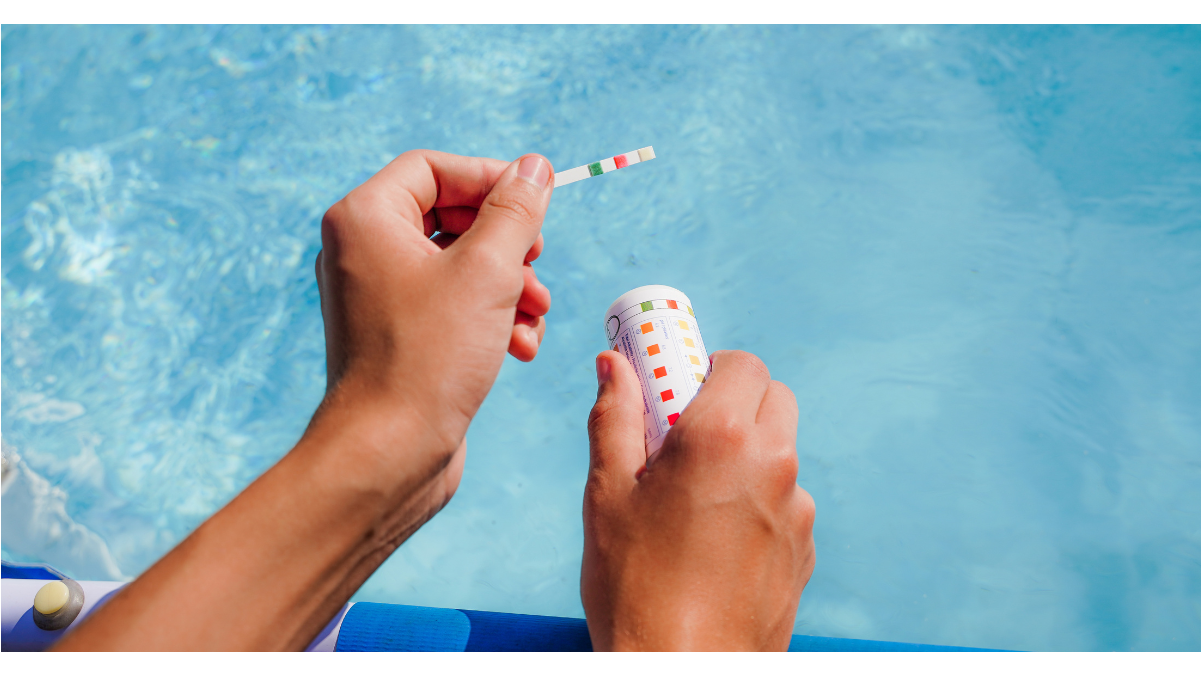
Clear water in a Houston pool does not always mean clean water. Every summer, ABC Home & Commercial Services responds to homeowners whose pools turned green seemingly overnight, even though their chlorine readings looked perfect the day before. The hidden culprit in most of these cases is a chemical that rarely gets tested: cyanuric acid.
Key Takeaways
- Cyanuric acid acts like sunscreen for pool chlorine — without it, ultraviolet light destroys half of unprotected chlorine in just seventeen minutes.
- The ideal range is 30 to 50 parts per million for traditional chlorine pools and 60 to 80 parts per million for saltwater pools.
- Low cyanuric acid causes chlorine to dissipate quickly; high cyanuric acid causes chlorine lock, where chlorine reads within range but cannot sanitize.
- Trichlor chlorine tablets are roughly half cyanuric acid by weight, which is why levels quietly climb all summer.
- The only reliable way to lower cyanuric acid is partial drainage and refill — it does not evaporate or break down.
- Cyanuric acid is not the same chemical as muriatic acid, despite the similar name.
The full breakdown of how cyanuric acid works is available in ABC's guide to cyanuric acid in pool water, but the short version is this: cyanuric acid is the sunscreen that protects chlorine from UV light. Without it, unprotected chlorine breaks down by roughly half in just seventeen minutes under the direct Houston sun. With too much of it, chlorine becomes chemically locked and stops sanitizing the water altogether.
Why Cyanuric Acid Matters in Houston Pools
The Pool & Hot Tub Alliance ANSI standard places cyanuric acid in two ranges, depending on pool type. Traditional chlorine pools should have a chlorine level between 30 and 50 parts per million. Salt water pools, because of how the salt cell generates chlorine, perform best in the 60 to 80 parts per million range.
Houston's swim season runs longer than almost anywhere else in Texas. From late March through October, the sun is hitting the pool water hard and steadily. That means cyanuric acid is not optional in this region — it is the only thing keeping the chlorine doing its job between treatments.
Low Cyanuric Acid: Chlorine That Vanishes
When cyanuric acid drops below 30 parts per million, chlorine burns off faster than it can be replaced. Pool owners often notice the problem in stages. First, the water starts looking slightly dull. Then a faint algae tint appears in the corners. Then, on a humid Houston morning, the entire pool is green.
Shock treatment feels like the obvious answer, but the chlorine just burns off again within a day or two if cyanuric acid is not restored to the proper range first. This is why so many DIY shock treatments fail in mid-July — the underlying stabilizer problem never got addressed.
High Cyanuric Acid: Chlorine That Cannot Work
The opposite problem is more common and more frustrating. Cyanuric acid does not evaporate, break down, or get filtered out. Once it is in the water, it stays, and Trichlor chlorine tablets keep adding more. Trichlor is roughly half as much cyanuric acid by weight, so each tablet dissolved in a floater raises the stabilizer level a little more.
Over the course of a Houston summer, this adds up. By August, many residential pools test at 100, 150, or even 200 parts per million of cyanuric acid. At those levels, the chlorine reading on a test strip can look perfectly fine while the water is steadily growing algae. The CDC's Model Aquatic Health Code recognizes the chlorine lock phenomenon and recommends maintaining cyanuric acid at the ranges set by the Pool & Hot Tub Alliance.
The Only Fix: Drain and Dilute
Pool owners often ask the ABC team whether anything can be added to the water to reduce cyanuric acid levels. The honest answer is no. Partial drainage and refill with fresh water is the only reliable method. Reverse osmosis is a technical alternative, but it is rarely cost-effective for residential pools.
A typical Houston drain-down involves turning off all pool equipment, draining a calculated portion of the water based on current versus target cyanuric acid levels, refilling without interruption to the tile line, and rebalancing the full chemistry once the pool is full again. Running a pump dry during operation can damage the motor seal, which is why the proper sequence matters so much.
Cyanuric Acid Is Not Muriatic Acid
A frequent point of confusion: cyanuric acid and muriatic acid are completely different chemicals with completely different jobs. Muriatic acid is hydrochloric acid used to lower pool pH and alkalinity. Cyanuric acid is the chlorine stabilizer that protects the sanitizer from sunlight. The two are not interchangeable, and adding muriatic acid will not lower cyanuric acid levels.
Testing and Houston-Specific Recommendations
The ABC pool team recommends testing cyanuric acid at the start of each swim season and again every four to six weeks through active months. Most quality test strip kits include a cyanuric acid panel, though dedicated drop tests provide more precise readings when levels approach the upper limit.
For salt water pool owners, the higher target range exists because salt cells produce chlorine more continuously but at lower instantaneous concentrations. The extra stabilizer helps maintain a usable residual chlorine level between cell cycles.
Professional Pool Service in Houston
Cyanuric acid problems compound over time. A pool that has been on Trichlor tablets for two or three Houston summers without testing is almost certainly out of range. The earlier the problem is caught, the less drain-down is required to fix it.
ABC Home & Commercial Services has been the pool cleaning service Houston homeowners have trusted since 1986. The company's pool team handles weekly cleaning, chemical assessments, equipment repairs, plaster resurfacing, and full pool remodeling for homeowners throughout the Houston metro. With a BBB A+ rating and more than 3,575 five-star reviews, ABC remains the longest-tenured family-owned home services provider in the region.
Frequently Asked Questions About Cyanuric Acid in Pools
What is cyanuric acid in a pool? Cyanuric acid is a chemical stabilizer added to pool water to protect chlorine from being destroyed by ultraviolet sunlight. Without it, sunlight breaks down chlorine within minutes, leaving the pool unsanitized. With proper levels, chlorine stays active far longer and uses fewer chemicals overall.
What level of cyanuric acid should a pool have? Traditional chlorine pools should maintain cyanuric acid between 30 and 50 parts per million, according to the Pool & Hot Tub Alliance ANSI standard. Saltwater pools should aim for 60 to 80 parts per million because of how salt cells generate chlorine continuously.
How do you lower cyanuric acid in a pool? The only reliable method is partial drainage and refill with fresh water. Cyanuric acid does not evaporate, break down, or get filtered out. Reverse osmosis treatment exists as an alternative, but it is rarely cost-effective for residential pools. No chemical additive will reduce cyanuric acid levels.
Why is my pool green when chlorine reads high? This is almost always a chlorine lock caused by high cyanuric acid. When cyanuric acid climbs above 100 parts per million, the chlorine reading on a test strip can look perfectly fine while the chlorine itself is chemically locked and unable to sanitize. The fix is dilution, not more shock.
Are cyanuric acid and muriatic acid the same thing? No. Despite the similar names, the two are completely different chemicals. Muriatic acid is hydrochloric acid used to lower pool pH and alkalinity. Cyanuric acid is the chlorine stabilizer that protects the sanitizer from sunlight. The two are not interchangeable in any application.
How often should pool cyanuric acid be tested? The ABC pool team recommends testing cyanuric acid at the start of each swim season and again every four to six weeks during active months. In Houston, this means testing in March, then monthly through October. Catching drift early avoids needing a larger drain-down later.
Why does my cyanuric acid keep going up? Trichlor chlorine tablets are roughly 50 to 55 percent cyanuric acid by weight, so every tablet that dissolves adds more stabilizer to the water. Switching to non-stabilized chlorine, like liquid chlorine or cal-hypo shock, can help slow the accumulation while still maintaining proper sanitation.
Is high cyanuric acid dangerous to swimmers? The chemical itself is not directly harmful at typical pool levels. The danger is indirect — high cyanuric acid prevents chlorine from killing bacteria and pathogens, leaving the water unsanitized. That creates a health risk for swimmers even when the pool looks clean.
Content strategy provided by national digital marketing agency ASTOUNDZ.
ABC Home & Commercial Services Houston
City: Cypress
Address: 11934 Barker Cypress Rd
Website: https://www.abchomeandcommercial.com/houston


Comments
Post a Comment