What Multi-Age Childcare Is & How It Boosts Children's Social & Language Skills
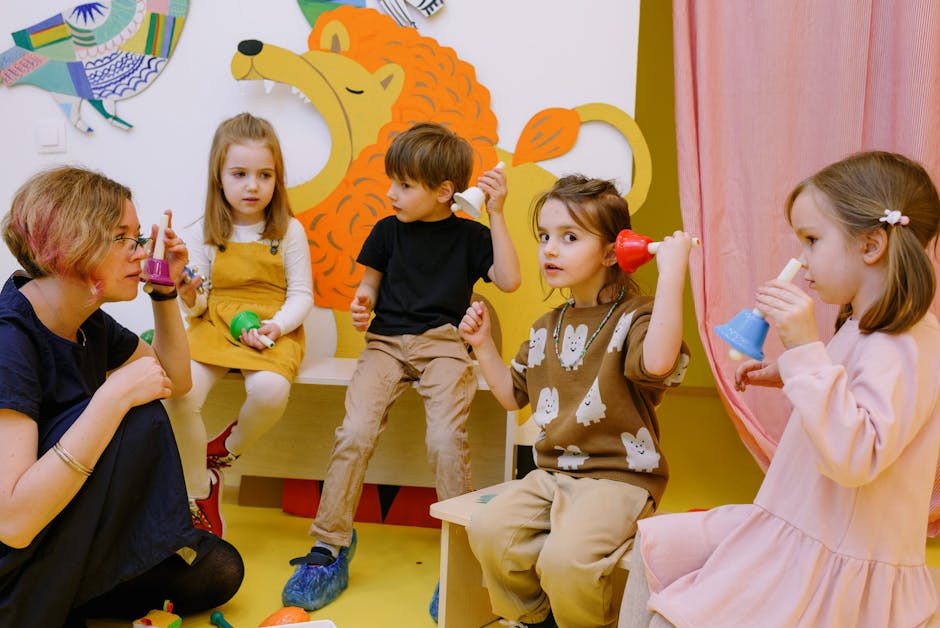
Why Age Mix Matters More Than You'd Think
When parents are looking for childcare, the age grouping of the children involved isn't always the first thing on the list. You might focus on location, hours, cost, or the caregiver's qualifications — all reasonable priorities. But the age mix of the group your child joins can have a significant impact on how they develop socially, emotionally, and even linguistically in those important early years.
Most traditional childcare centers group children by age, keeping toddlers with toddlers and preschoolers with preschoolers. However, family childcare settings often bring together children of different ages in a smaller, more home-like environment — and there's a growing body of evidence suggesting this approach has some real advantages that are worth understanding before you make a decision.
What the Research Says
Early childhood researchers have found that children in mixed-age settings tend to show stronger social competence and reduced aggressive behavior compared to peers in same-age classrooms.
One consistent finding is that older children naturally take on informal mentoring roles, which builds empathy and patience — skills that carry well beyond the childcare years. These benefits have been documented across multiple studies.
Language Skills Get a Boost
The language development benefits are particularly notable. Younger children who spend time around older peers are constantly exposed to more advanced vocabulary, longer sentences, and more varied conversation.
They absorb this naturally — through observation and interaction, not formal instruction. This kind of age-diverse language exposure can accelerate vocabulary acquisition in ways that a room full of same-age peers simply can't replicate.
Older Kids Benefit Too
It's easy to assume the advantages mostly flow to younger children, but older kids gain just as much. Explaining something to a younger child means finding simpler words and thinking through what you already know — and that process reinforces your own understanding.
Research on cross-age learning shows children in mixed groups tend to be more cooperative than competitive, a valuable quality at any age.
Continuity of Care Also Plays a Role
One often-overlooked benefit of mixed-age family childcare is continuity of care. When children stay with the same caregiver across several years rather than transitioning between age-grouped classrooms, they build deeper, more secure attachments.
Early childhood research suggests that this kind of stability supports healthy emotional development and helps children feel confident enough to explore, take risks, and engage more fully in learning.
The Role of Small Group Size
Mixed-age grouping works best alongside small group sizes, which is what family childcare homes are built around. In a large center, even a dedicated caregiver can struggle to give every child sufficient attention.
In a smaller group, the caregiver can respond to individual cues and tailor activities to where each child is developmentally. That responsiveness is a widely recognized marker of quality early care.
Finding the Right Fit
Not every child thrives in the same environment, and mixed-age settings aren't the right fit for every family. But it's worth asking whether the childcare you're considering groups children by age or across ages, and how that might align with your child's temperament and stage.
For families actively exploring early childhood care options, the case for mixed-age learning is stronger than it first appears.
RisingStars Childcare
City: Plainsboro Township
Address: 35 Knox Ct
Website: https://risingstarseducationplainsboro.com/


Comments
Post a Comment