Structured Reflection vs Long Exercises: Quick Clarity for Professionals
Key Takeaways
- Structured reflection tools provide faster clarity than lengthy journaling sessions for busy professionals
- Five-minute reflection sessions can trigger breakthrough moments and reduce decision-making stress
- Leadership card decks offer an effective framework for quick professional reflection
- Short, targeted prompts consistently outperform open-ended exercises for sustainable results
- Real-world case studies show measurable improvements in decision speed and job satisfaction
Modern professionals face a constant challenge: finding time for meaningful reflection while managing demanding schedules. Traditional reflection methods often require extensive time commitments that busy leaders simply cannot maintain. However, emerging research reveals that structured, brief reflection exercises deliver superior results compared to lengthy, unstructured approaches.
Why Traditional Reflection Fails Busy Professionals
Long-form journaling and extensive reflection exercises create significant barriers for working professionals. Time constraints represent the primary obstacle, with most leaders struggling to dedicate 30-60 minutes daily to reflection practices. These extended sessions often feel overwhelming, leading to inconsistent implementation and eventual abandonment of reflective habits altogether.
Research indicates that professionals who attempt traditional reflection methods experience a high dropout rate, with some sources suggesting around 73% within the first month. The demanding nature of executive roles leaves little room for extensive self-examination, creating a paradox where those who need reflection most have the least time to practice it effectively.
Additionally, unstructured reflection often lacks clear direction, leaving professionals unsure where to begin or how to extract actionable insights from their thinking. This ambiguity compounds the time problem, making reflection feel inefficient and counterproductive. The Clear Path Cards address this challenge by providing structured prompts that guide focused thinking within minutes rather than hours.
The Science Behind Quick Structured Reflection
Cognitive science research reveals that targeted reflection prompts trigger insights more efficiently than extensive free-form exercises. The brain processes focused questions differently, activating specific neural pathways that lead to rapid clarity and decision-making improvements.
Micro-Reflection Can Trigger 'Aha!' Moments and Improve Insightful Thinking
Breakthrough moments don't require hours of contemplation. Structured prompts can facilitate rapid insights and clarity, often leading to "aha!" moments, even within brief reflection periods by directing attention to specific aspects of a challenge. This targeted approach helps professionals identify core issues and potential solutions more quickly than broad, unguided reflection.
The key lies in prompt design. Effective reflection questions focus thinking on specific elements like assumptions, stakeholder perspectives, or potential consequences. This precision allows busy professionals to achieve meaningful insights without extensive time investment, making reflection both practical and sustainable.
Five-Minute Sessions Reduce Stress and Improve Problem-Solving
Brief, daily structured reflection sessions demonstrate measurable benefits for stress reduction and problem-solving capabilities. Research in high-pressure professional environments shows that even ten minutes of targeted reflection daily improves decision quality while reducing anxiety around complex choices.
These short sessions work because they provide mental clarity without overwhelming already stretched schedules. Professionals report feeling more centered and confident in their decision-making when incorporating brief reflection practices, contrasting sharply with the stress often associated with finding time for lengthy exercises.
How Leadership Card Decks Work
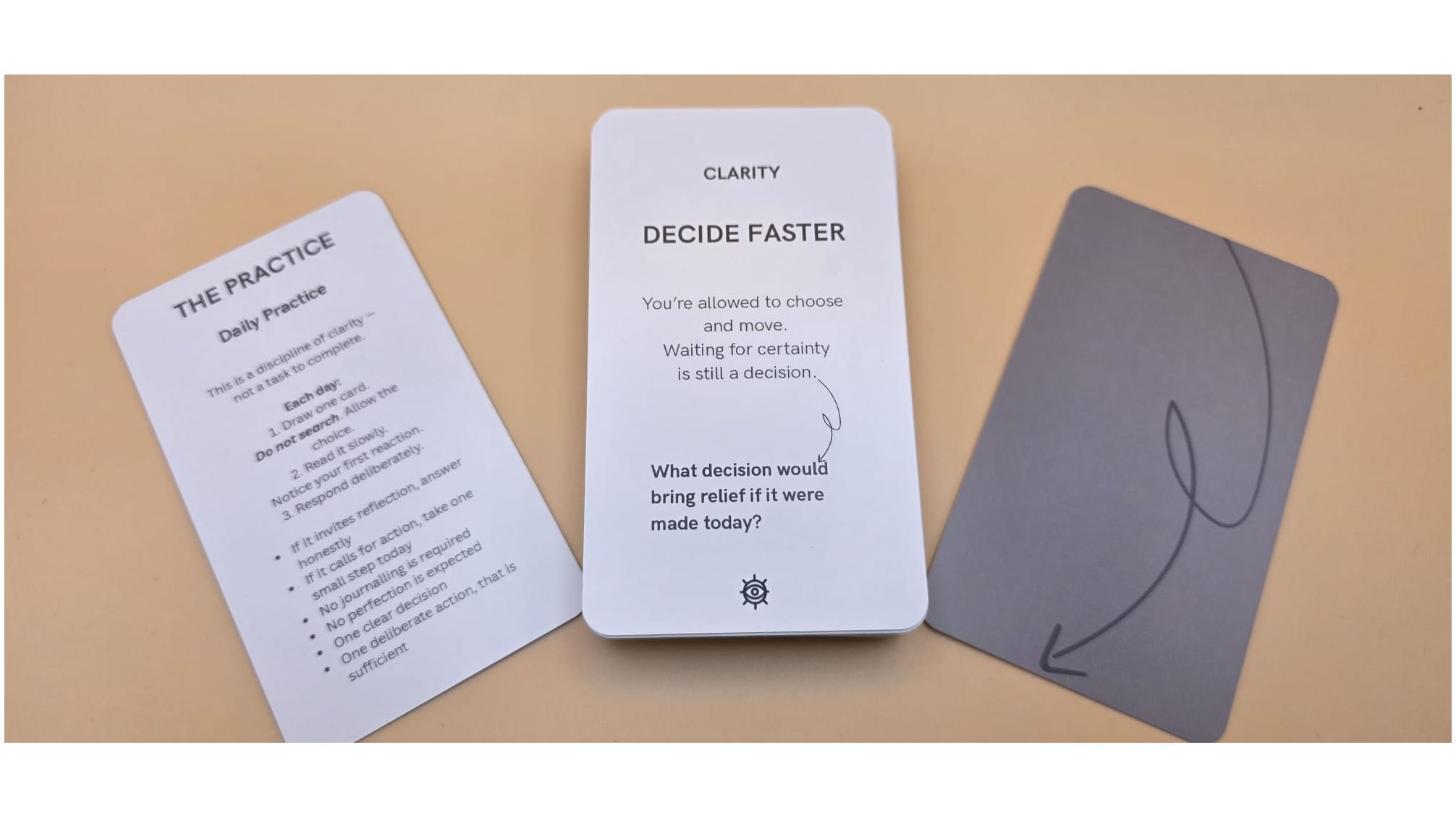
Leadership card decks represent a practical solution to the reflection time challenge. These tools contain carefully crafted prompts designed to facilitate quick insights and actionable outcomes. The process remains simple yet effective, requiring only minutes while delivering substantial value.
Draw One Card
The process begins by selecting a single card from the deck. This random element introduces serendipity into reflection, often surfacing unexpected perspectives on current challenges. The single-card approach prevents overwhelm while ensuring focus on one specific area of thinking.
Read the Prompt Slowly
Each card contains a targeted question or statement designed to guide thinking toward clarity. Reading slowly allows the prompt to register fully, preparing the mind for focused reflection. This deliberate pace creates mental space for genuine consideration rather than rushed responses.
Reflect on the Question
The reflection phase typically lasts three to five minutes. During this time, professionals consider how the prompt relates to their current situation, challenges, or decisions. The structured nature of the question provides clear direction for thinking while allowing personal interpretation and application.
Identify the Next Action
Effective reflection concludes with actionable insights. The final step involves identifying one specific action or decision based on the reflection. This action orientation transforms abstract thinking into concrete steps, ensuring reflection translates into meaningful professional progress.
Real-World Results From Structured Reflection
Documented case studies demonstrate the practical benefits of structured reflection tools for professional development and organizational performance. These real-world applications provide compelling evidence for the effectiveness of quick, targeted reflection practices.
Structured Reflection Can Lead to Improved Decision-Making in Organizations
Organizations implementing daily structured reflection exercises for their leadership teams have shown improvements in decision-making speed and reductions in project roadblocks. Team members report greater confidence in their choices and improved collaboration during complex problem-solving sessions.
Companies using five-minute morning reflection sessions before team meetings, focusing on current priorities and potential obstacles, help leaders identify issues earlier and respond more strategically to emerging challenges. This demonstrates how minimal time investment can yield significant operational improvements.
Higher Job Satisfaction and Reduced Burnout
Workplace wellness studies reveal that professionals engaging in structured reflection report higher job satisfaction and reduced burnout symptoms. The practice helps individuals gain clearer understanding of their work priorities and personal values, leading to better alignment between professional activities and personal goals.
These benefits stem from reflection's ability to provide perspective on daily challenges and long-term objectives. When professionals regularly examine their assumptions and decisions through structured prompts, they develop greater resilience and maintain motivation even during demanding periods.
Professional Applications for Maximum Impact
Leadership card decks and structured reflection tools integrate seamlessly into various professional contexts. Understanding specific applications helps professionals maximize the impact of their reflection practice while maintaining consistency in demanding work environments.
Daily Focus Setting
Many executives begin their day by drawing a card and reflecting on the prompt for five minutes. This practice helps establish clear priorities and mental frameworks for approaching the day's challenges. The morning reflection creates intentional space for strategic thinking before reactive tasks consume attention.
Daily focus setting through structured prompts proves particularly valuable during periods of high uncertainty or significant organizational change. The consistent practice provides stability and clarity when external circumstances create confusion or competing priorities.
Executive Coaching Sessions
Executive coaches increasingly incorporate structured prompts into their client sessions. Professional coaches often find targeted questions effective for facilitating quicker insights and actionable outcomes. Card-based prompts provide excellent conversation starters and help maintain session focus.
The structured approach allows coaches to address specific leadership challenges efficiently while ensuring clients develop independent reflection capabilities. This combination of guided and self-directed reflection supports sustained professional development beyond formal coaching relationships.
Decision-Making Exercises
Complex business decisions benefit significantly from structured reflection approaches. Leadership teams use card prompts to examine decisions from multiple perspectives, ensuring thorough consideration of stakeholder impacts, potential risks, and implementation challenges.
This application proves especially valuable for strategic planning sessions and crisis response situations where quick clarity is needed. The structured format prevents decision paralysis while ensuring thoughtful consideration of key factors.
Quick Clarity Beats Long Exercises for Sustainable Results
The evidence strongly supports structured, brief reflection over lengthy, unstructured approaches for busy professionals. Sustainability emerges as the critical factor - practices that fit naturally into demanding schedules maintain consistency over time, while time-intensive methods typically fail within weeks.
Leadership development programs now prioritize micro-reflection techniques that accommodate executive schedules while delivering meaningful results. The shift reflects growing understanding that reflection effectiveness depends more on structure and consistency than duration and depth.
Professionals seeking sustainable reflection practices find card-based prompts particularly effective because they remove the common barrier of "not knowing where to start." The predetermined questions eliminate decision fatigue while providing clear direction for productive thinking. This combination of accessibility and effectiveness makes structured reflection tools valuable resources for modern leadership development.
The research consistently demonstrates that brief, targeted reflection sessions produce superior outcomes compared to extensive exercises for working professionals. As time constraints continue challenging professional development efforts, structured tools like leadership card decks represent practical solutions that honor both effectiveness and efficiency.
For professionals ready to implement structured reflection practices, The Clear Path Cards provide expertly crafted prompts designed for quick clarity and actionable insights.
The clear path cards
City: Purley
Address: 3 Monahan Avenue
Website: https://theclearpathcards.com/


Comments
Post a Comment