Particle Pollution Levels Are Rising: How To Keep Air Clean Inside Your Home
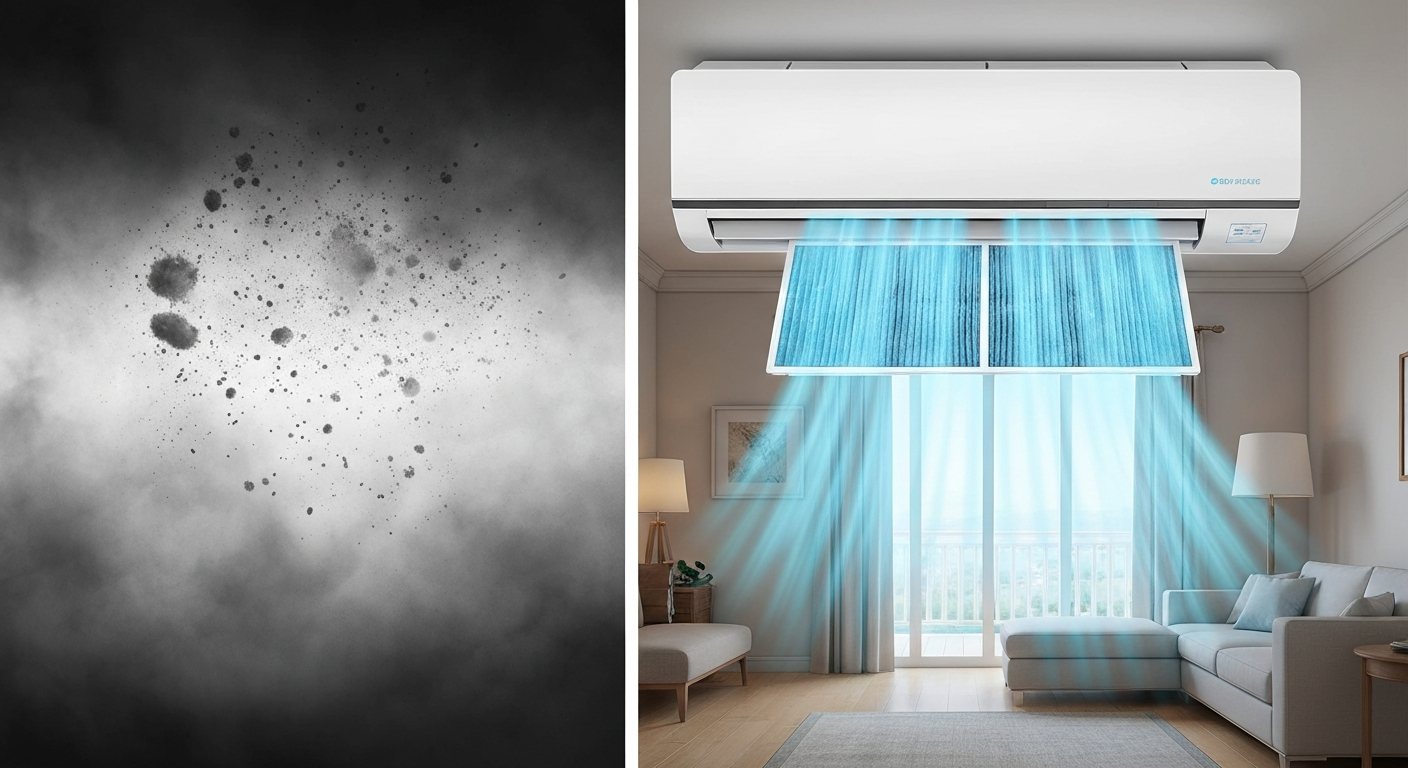
The air quality crisis is at the front door. What was once considered an outdoor problem now threatens the sanctuary of home itself, as particle pollution levels surge worldwide and infiltrate indoor spaces with unprecedented intensity.
PM2.5 Pollution Reaches Crisis Levels Worldwide
The numbers paint a stark picture of deteriorating air quality across the globe. Last year, only 9% of countries met the World Health Organization's annual PM2.5 guideline of 5 μg/m³, revealing how widespread elevated pollution levels have become. These microscopic particles, measuring less than 2.5 micrometers in diameter—approximately 30 times smaller than human hair—pose the greatest threat to human health among all air pollutants.
Air pollution now ranks as the largest environmental threat to human health globally, with PM2.5 specifically contributing to over 4.9 million premature deaths worldwide each year. Research indicates that air pollution exposure generally reduces life expectancy, with PM2.5 serving as a major contributor to this alarming statistic. As a result, HVAC professionals like those at Engle Services are seeing increased demand for air quality solutions as homeowners recognize the urgent need for protection.
Unlike larger particles that settle quickly, PM2.5 remains suspended in the air for extended periods, creating persistent exposure risks. These particles originate from vehicle emissions, industrial processes, wildfires, and power generation, creating a complex mixture of solid and liquid droplets that penetrate even well-sealed buildings.
Why Indoor Air Quality Matters More Than Ever
1. Indoor Air Can Be 100 Times More Polluted Than Outdoors
The assumption that homes provide refuge from outdoor pollution proves dangerously false. Indoor air quality can be 2 to 5 times worse than outdoor air, and in extreme cases, more than 100 times more polluted. This occurs through multiple pathways: outdoor pollution infiltration, indoor source generation, and inadequate ventilation systems that trap contaminants.
Modern homes built for energy efficiency often create airtight environments that concentrate pollutants. Without proper filtration and ventilation strategies, cooking activities, cleaning products, furniture off-gassing, and tracked-in particles accumulate to dangerous levels. The problem intensifies during wildfire seasons or high outdoor pollution days when windows remain closed for extended periods.
2. Fine Particles Penetrate Deep Into The Bloodstream
PM2.5 particles possess a unique ability to bypass the body's natural defense mechanisms. Their microscopic size allows them to travel deep into the respiratory tract, reaching the lungs' smallest air sacs (alveoli) where gas exchange occurs. From there, these particles can cross into the bloodstream, circulating throughout the body and affecting multiple organ systems.
Unlike larger particles that the nose and upper respiratory system can filter out, PM2.5 particles slip through these barriers undetected. Once in the bloodstream, they trigger inflammatory responses and can accumulate in vital organs, including the heart, brain, and liver. This systemic distribution explains why particle pollution affects far more than just respiratory health.
3. Long-Term Exposure Links to Serious Health Conditions
Scientific research has established clear connections between prolonged PM2.5 exposure and severe health consequences. Long-term exposure increases the risk of cardiovascular diseases, respiratory illnesses, and neurological disorders. Studies document increased rates of chronic bronchitis, reduced lung function, and elevated mortality from lung cancer and heart disease among populations with sustained exposure.
Daily PM2.5 exposure correlates with increased respiratory and cardiovascular hospital admissions, emergency department visits, and premature deaths. Children, elderly individuals, and those with pre-existing breathing or heart conditions face particularly elevated risks. When PM2.5 levels reach 35.5 μg/m³ during a 24-hour period, air becomes classified as unhealthy for sensitive groups, with general population health risks beginning at 65.5 μg/m³.
HEPA Filtration: The Home's First Line of Defense
How HEPA Filters Remove 99.97% of Dangerous Particles
High-Efficiency Particulate Air (HEPA) filters represent the gold standard for particle removal in residential settings. These sophisticated filtration systems capture at least 99.97% of airborne particles 0.3 micrometers in diameter, including PM2.5, pollen, dust mites, and pet dander. The 0.3-micrometer specification represents the most penetrating particle size—particles both smaller and larger are captured with even greater efficiency.
HEPA filters work through multiple mechanisms: impaction, interception, and diffusion. Larger particles collide directly with filter fibers (impaction), medium-sized particles pass close enough to fibers to be captured (interception), and the smallest particles move erratically due to Brownian motion, increasing their chance of contact with filter material (diffusion). This multi-layered approach ensures thorough particle removal across the entire size spectrum.
Upgrading HVAC Systems with MERV 13+ Filters
The Environmental Protection Agency recommends using air filters with a Minimum Efficiency Reporting Value (MERV) rating of 13 or higher in HVAC systems to effectively capture fine particles. MERV 13+ filters can remove 90% or more of particles in the 1.0 to 3.0-micrometer range, providing significant protection against PM2.5 infiltration.
Upgrading to high-MERV filters requires consideration of HVAC system compatibility. Higher-efficiency filters create more resistance to airflow, potentially straining older systems not designed for increased pressure drops. Professional assessment ensures proper filter selection that maximizes particle removal while maintaining system performance and efficiency.
Maintenance and Inspection Ahead of Summer Smoke Season
Wildfire seasons and summer pollution spikes demand a proactive approach to filter maintenance. High-efficiency filters require more frequent replacement during heavy pollution periods, as their superior capture ability means faster loading with particles. Clogged filters reduce airflow, decrease filtration efficiency, and force HVAC systems to work harder.
Pre-season inspections should include filter condition assessment, ductwork sealing, and system airflow testing.
DIY Air Purification Solutions That Work In An Emergency
1. Box Fan Filter Setup Using High-MERV Filters
The box fan air purifier represents one of the most cost-effective DIY air cleaning solutions available. This setup combines a standard 20-inch box fan with a high-quality furnace filter (MERV 13 or higher) to create an improvised but effective air cleaning system. Construction involves taping the filter directly to the fan's intake side, ensuring the arrow indicators on the filter align with airflow direction.
This configuration can significantly reduce indoor PM2.5 concentrations in single rooms, particularly during high outdoor pollution events.
2. Portable Air Purifiers for Single Rooms
Standalone HEPA air purifiers offer targeted protection for specific spaces, particularly bedrooms, home offices, or rooms where family members spend extended time. Health organizations recommend portable units with HEPA filtration during high pollution events, as they can dramatically reduce local particle concentrations.
Avoid ozone-generating air purifiers, as ozone itself poses health risks and can react with other indoor pollutants to create additional harmful compounds.
3. When to Close Windows vs. Use Strategic Ventilation
Managing indoor air quality requires balancing particle exclusion with adequate ventilation for moisture control and indoor pollutant removal. During high outdoor pollution periods (PM2.5 above 35 μg/m³), windows should remain closed and outdoor air intake minimized. However, completely sealed homes can develop problems with humidity, carbon dioxide buildup, and indoor pollutant accumulation.
Strategic ventilation involves using controlled mechanical ventilation systems with filtration during moderate pollution periods, and switching to recirculation-only modes during severe pollution events. Energy-efficient homes with heat recovery or energy recovery ventilators can maintain air exchange while filtering incoming air through HEPA or high-MERV filtration systems.
Common Household Sources Making Your Air Worse
Cooking and Burning Activities Create Hidden Dangers
Indoor activities contribute significantly to particle pollution levels, often surpassing outdoor sources during cooking, cleaning, or combustion activities. Gas stoves, in particular, generate substantial quantities of fine particles, nitrogen oxides, and other pollutants that can significantly impact indoor air quality. Burning candles, incense, or fireplace use adds additional particle loads to indoor environments.
Source Control Strategies That Reduce Indoor Pollution
Effective source control begins with recognizing and modifying pollution-generating activities. Using exhaust fans during cooking, switching to induction cooking methods, and choosing low-emission cleaning products significantly reduce indoor particle generation. Range hoods should vent directly outdoors rather than recirculating air through simple grease filters.
Additional strategies include using door mats to reduce tracked-in particles, selecting furniture and materials that don't off-gas volatile compounds, and maintaining optimal humidity levels (30-50%) to prevent dust mite proliferation and mold growth.
HVAC Systems Provide the Ultimate Protection
Complete indoor air quality protection requires integrated approaches that address whole-home air treatment, not just individual rooms or temporary solutions. Professional HVAC systems equipped with advanced filtration, proper ventilation controls, and monitoring capabilities provide the most effective defense against rising particle pollution levels.
Modern systems incorporate multiple protection layers: high-efficiency filtration for particle removal, humidity control to prevent biological growth, and sophisticated controls that adjust ventilation based on indoor and outdoor air quality conditions. These systems can automatically switch between fresh air intake and recirculation modes based on real-time pollution monitoring, ensuring optimal indoor conditions regardless of outdoor air quality fluctuations.
Engle Services
City: Sylacauga
Address: 40300 U.S. 280
Website: https://engleservicesheatingandair.com/


Comments
Post a Comment