Can Learning Ashiatsu Barefoot Massage Extend Your Career? A Look At The Science
Key Takeaways
- Various sources report the average massage therapy career lasts 5-7 years due to physical strain, but Ashiatsu barefoot massage may help therapists work longer without injury
- Using feet instead of hands distributes pressure over larger surface areas while gravity does the heavy work, reducing stress on wrists, thumbs, and backs
- Therapists practicing Ashiatsu report being able to see more clients without fatigue while maintaining deep tissue capabilities throughout their careers
- Proper training in body mechanics and safety protocols is necessary for successful implementation of barefoot massage techniques
Most Massage Therapy Careers Face Early Burnout
The harsh reality facing massage therapists today is sobering: various sources report most careers in this field last 5-7 years, though it's possible to have a successful career that lasts a few decades. The physically demanding nature of traditional massage work takes a devastating toll on therapists' bodies, forcing many talented professionals to abandon the career they love far too early.
Traditional deep tissue massage requires therapists to use significant hand, wrist, and elbow strength to achieve the pressure clients need. This repetitive strain leads to chronic pain, injury, and eventual burnout. Therapists find themselves caught in a difficult cycle—clients demand deep, effective bodywork, but delivering it consistently damages the very tools therapists need to work.
The financial impact compounds the problem, as injured or exhausted therapists must reduce their client load or take time off for recovery. Many massage professionals are exploring Ashiatsu barefoot massage techniques as a potential way to mitigate injury and career limitations.
How Ashiatsu Barefoot Massage Reduces Physical Strain
1. Using Gravity Instead of Hand Strength
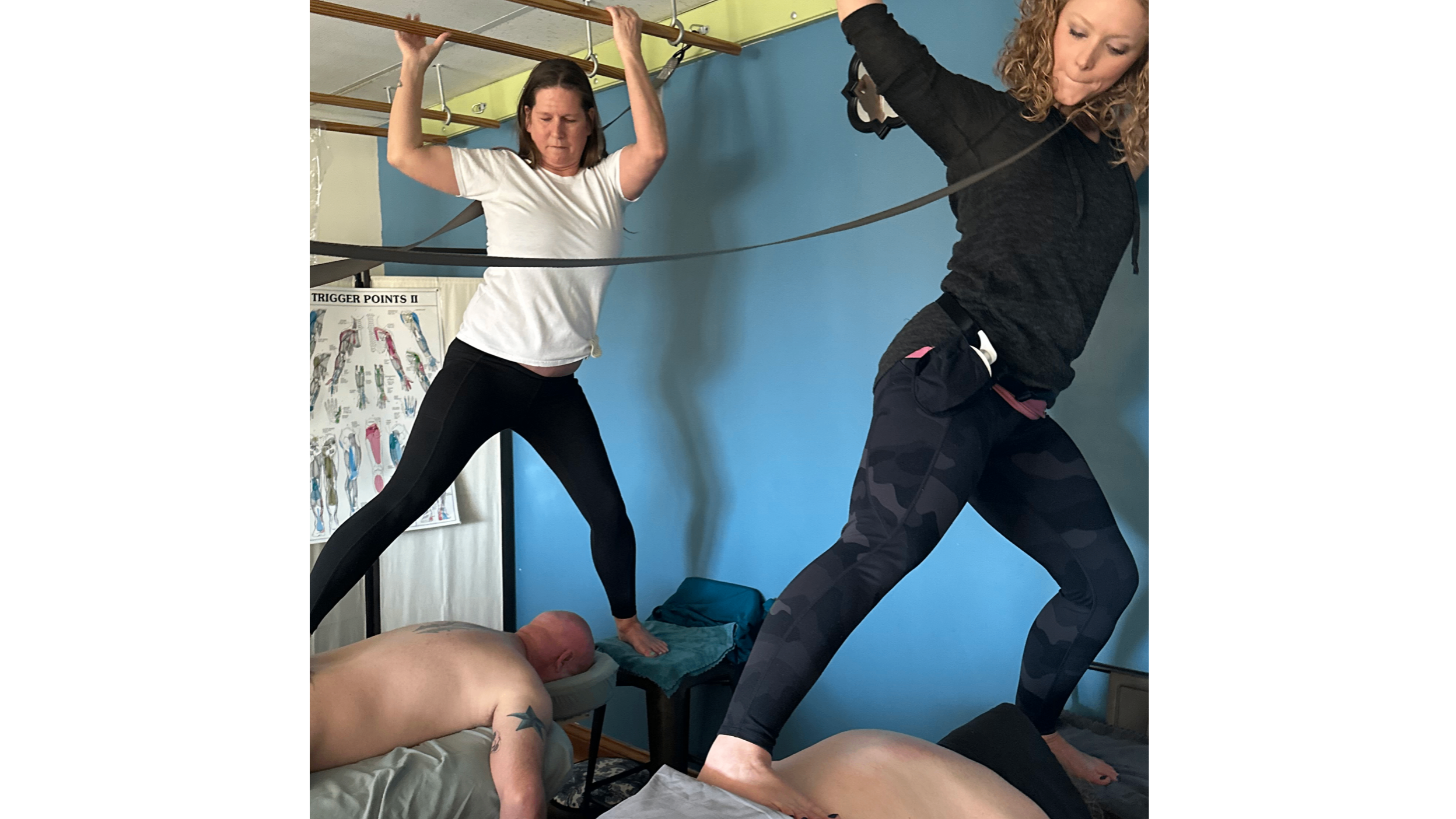
Ashiatsu Barefoot Massage fundamentally changes how therapeutic pressure is applied by harnessing gravity as the primary force. Instead of muscling through deep tissue work with hands and elbows, therapists use overhead bars for support and allow their body weight to create consistent, deep pressure. This approach eliminates the need for therapists to strain their upper extremities while still delivering the intense pressure that deep tissue clients require.
The technique allows therapists to stand tall and use natural body movement along with gravity to apply light to very deep pressure. This biomechanical advantage means therapists can work as many hours as they want without the physical wear and tear associated with traditional massage methods.
2. Larger Surface Area Means Less Joint Stress
Because the foot's surface area is larger than the hand, pressure is distributed more broadly. For example, the heel alone is much wider than a thumb, which means the same amount of force is spread over a broader area. This larger contact surface feels more comfortable for clients while simultaneously reducing the concentrated stress that typically damages therapists' joints.
This broader pressure distribution allows for deeper tissue work without the sharp, uncomfortable sensations that pointy elbows can create. Clients receive profound relief through consistent pressure that penetrates deeper layers of soft tissue, while therapists avoid the joint compression that leads to repetitive stress injuries.
3. Better Body Mechanics and Posture
Ashiatsu can potentially build full body strength and improve posture for therapists, creating long-term physical benefits beyond just injury prevention. The technique requires therapists to engage their core and maintain proper alignment while using overhead bars, which strengthens the entire kinetic chain rather than isolating small muscle groups.
This full-body engagement takes stress off the lower lumbar region and eliminates the hunched posture that characterizes traditional massage work. Therapists develop better overall body awareness and strength, which prevents the chronic pain patterns that typically develop from repetitive hand and wrist use.
Potential Advantages of Using Feet Over Hands
Barefoot Massage May Allow for Deeper Pressure with Less Therapist Strain
The biomechanical advantages of using feet create opportunities for therapeutic depth that surpass traditional deep tissue massage. Therapists can potentially access deeper layers of soft tissue using gravity and leverage rather than muscular force, allowing them to work more effectively with less physical output.
The unique heel and ball-of-the-foot techniques provide consistent pressure that can be sustained throughout long sessions. This consistency means clients receive more thorough treatment while therapists preserve their energy and avoid the fatigue that typically accumulates during intensive deep tissue work.
Broader Pressure Distribution May Improve Client Comfort
The rounded surface of the foot creates a fundamentally different sensation compared to traditional massage tools. While elbows and thumbs create concentrated pressure points that can be uncomfortable or painful, feet distribute force across larger areas of tissue. This distribution allows gravity to drive pressure as deeply as tissues allow without causing pain or discomfort.
Clients may report that Ashiatsu feels both deeper and more relaxing than traditional deep tissue massage. The broader contact creates a sensation that many describe as "melting" tension rather than forcing it out, leading to better client satisfaction and retention.
How Career Extension Could Impact Income
Seeing More Clients Without Physical Fatigue
The reduced physical strain of Ashiatsu creates direct financial benefits by allowing therapists to increase their client capacity without sacrificing their health. When therapists aren't fighting fatigue and pain after each session, they can maintain higher energy levels throughout longer work days and see more clients per week.
This increased capacity translates to higher income potential without the typical trade-off of increased injury risk. Therapists report being able to maintain full schedules without the mental and physical exhaustion that characterizes traditional massage work, leading to more consistent earnings over time.
Maintaining Deep Tissue Capabilities Longer
Career longevity in massage therapy often depends on a therapist's ability to continue providing effective deep tissue work as they age. Ashiatsu allows therapists to maintain these capabilities well into their careers without the cumulative damage that typically forces practitioners to reduce their intensity or specialize in lighter modalities.
The preservation of deep tissue skills means therapists can continue serving the higher-paying market segment throughout their careers. Instead of being forced to transition to gentler techniques due to injury, therapists can maintain their most valuable service offerings while protecting their long-term earning potential.
Training Requirements and Safety Considerations
Proper Ashiatsu training involves thorough instruction in body mechanics, equipment setup, and safety protocols that cannot be adequately learned through online resources alone. The technique requires developing new proprioceptive skills and balance awareness that are best acquired through hands-on instruction with experienced teachers.
Training programs typically include extensive practice on fellow students, instructors, and experienced guest clients who provide feedback on technique effectiveness. This multi-layered approach ensures therapists develop the sensitivity and skill necessary to work safely and effectively. Equipment setup, particularly the proper installation and adjustment of overhead bars, requires individualized instruction to match each therapist's workspace and body mechanics.
Safety considerations extend beyond basic technique to include contraindications, client assessment, and proper session structure. Qualified training programs address these requirements while providing ongoing support through graduate communities and continuing education opportunities.
Ashiatsu Barefoot Massage Training May Contribute to Career Longevity
The evidence suggests that learning Ashiatsu techniques represents more than just adding another modality—it may fundamentally transform a therapist's career trajectory. By replacing repetitive stress patterns with biomechanically sound movement, therapists can potentially extend their careers.
The technique's emphasis on using gravity and body weight rather than muscular force aligns with principles of injury prevention and ergonomic work design. Therapists who master these concepts often find they can apply similar principles to other aspects of their practice, creating overall improvements in how they approach their work physically.
The growing body of anecdotal evidence from practitioners suggests that Ashiatsu training doesn't just teach a new technique—it provides a framework for sustainable practice that can support therapists throughout extended careers. This perspective shift from surviving their work to thriving in it may represent the most significant benefit of barefoot massage training.
Ready to learn how Ashiatsu barefoot massage training could transform your massage therapy career? Learn Barefoot Massage offers training programs designed to help therapists master these career-extending techniques.
Learn Barefoot Massage
City: Mount Healthy
Address: 7813 Affinity Pl.
Website: https://www.learnbarefootmassage.com


Comments
Post a Comment