Brass Vs. Wood Kaleidoscope: From Ancient Egyptian Mirrors To Modern Art Pieces
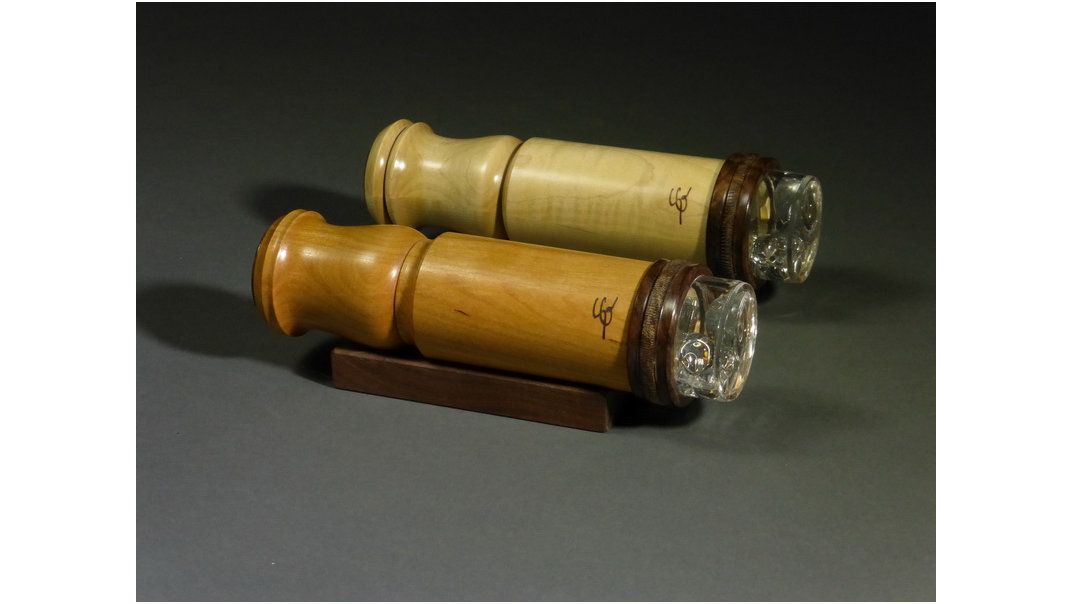
The kaleidoscope is often remembered as a childhood novelty, yet its true history tells a far more complex story. Long before it appeared in toy shops, the kaleidoscope emerged from centuries of scientific inquiry, material experimentation, and artistic ambition. From ancient mirror-making traditions to nineteenth-century optical science, and from industrial mass production to contemporary studio craftsmanship, the kaleidoscope has continually evolved. Central to that evolution is the question of materials. In particular, the contrast between brass and wood reveals how design choices influence not only appearance, but durability, tactile experience, and long-term artistic value.
Early Reflections: Ancient Mirrors and the Science of Light
The conceptual roots of the kaleidoscope extend back to ancient Egypt, where artisans mastered the polishing of copper and bronze mirrors. These reflective surfaces were practical tools used for personal grooming, ceremonial purposes, and architectural illumination. More importantly, they demonstrated an early understanding that light could be redirected, multiplied, and controlled through material surfaces.
Greek scholars such as Euclid later formalized the mathematics of reflection, while Ptolemy expanded on how angles and symmetry shape visual perception. Although no kaleidoscopes existed in antiquity, these early investigations established the principles that would later allow mirrored systems to generate repeating patterns. From the beginning, material choice mattered. Polished metals provided clarity and durability, setting an early precedent for the role of physical substance in optical devices.
Scientific Origins: Brewster’s Kaleidoscope
The kaleidoscope as a defined optical device emerged in 1816 with the work of Sir David Brewster. A physicist deeply engaged in the study of light polarization and reflection, Brewster designed the kaleidoscope as a scientific tool rather than a novelty. His device arranged mirrors at precise angles to generate symmetrical patterns from small fragments placed within an object chamber.
Brewster’s mathematical analysis demonstrated that even a modest number of reflective elements could produce an almost limitless number of pattern combinations. This insight positioned the kaleidoscope as both an analytical and creative instrument. Brewster envisioned it as a practical aid for designers, capable of inspiring textile motifs, architectural ornamentation, stained glass, and decorative arts.
Early kaleidoscopes often incorporated metal components, including brass fittings, because brass was durable, machinable, and associated with scientific instruments of the era. At this stage, brass symbolized precision and authority, reinforcing the kaleidoscope’s identity as a serious optical device.
Victorian Popularity and the Rise of Brass Construction
During the nineteenth century, kaleidoscopes gained popularity throughout Europe and North America, particularly in Victorian society. They were displayed in parlors alongside stereoscopes and microscopes, signaling education and cultural refinement. Brass played a prominent role in these designs. Its resistance to corrosion and its polished finish aligned well with Victorian tastes for mechanical elegance.
Manufacturers such as Charles G. Bush in the United States expanded the kaleidoscope’s capabilities by introducing liquid-filled object chambers that created continuously shifting patterns. These designs often combined brass hardware with wooden stands or accents, blending structural strength with decorative warmth. Even at this stage, wood and brass were already performing distinct roles: brass provided structural integrity and mechanical precision, while wood offered stability and visual balance.
Despite their popularity, kaleidoscopes gradually declined in cultural prominence in the early twentieth century. As new forms of entertainment emerged, production shifted toward inexpensive materials and simplified designs.
Mid-Century Decline and the Consequences of Mass Production
By the mid-1900s, kaleidoscopes were largely mass-produced using plastic and lightweight metals. While these versions introduced the device to wider audiences, they sacrificed durability and craftsmanship. Brass was often replaced by thin alloys, and wood was abandoned altogether in favor of molded components.
This period fundamentally altered public perception. The kaleidoscope became associated with disposability rather than longevity. Design considerations shifted away from material integrity, reinforcing the idea of the kaleidoscope as a fleeting amusement rather than an enduring object.
Revival and Reassessment: Kaleidoscopes as Art Objects
A significant revival began in the 1970s, driven by renewed interest in handmade objects and collectible art. Artists and collectors revisited historical designs, recognizing that the kaleidoscope’s expressive potential had been diminished by mass production. This reassessment brought material choice back into focus.
Brass reemerged as a material of historical continuity, valued for its connection to scientific instruments and Victorian craftsmanship. However, contemporary artists increasingly turned to wood as a primary material, not as an accent but as a defining structural and aesthetic element.
Brass in Contemporary Kaleidoscope Design
Brass continues to appeal to collectors who value tradition and visual polish. Its reflective surface, weight, and resistance to corrosion make it suitable for precision components. In kaleidoscope bodies, brass conveys a sense of permanence and mechanical refinement.
However, brass also presents limitations. It conducts temperature readily, often feeling cold to the touch, and its uniform surface lacks the individuality of natural materials. Over time, brass requires maintenance to prevent tarnishing, and its visual character remains largely unchanged.
Why Wood Has Become Central to Modern Kaleidoscopes
Wood offers qualities that brass cannot replicate. Each piece of hardwood carries unique grain patterns, color variations, and textures, ensuring that no two kaleidoscopes are identical. Properly finished wood resists temperature fluctuation and absorbs handling wear gracefully, developing character rather than degradation.
From a durability standpoint, hardwood provides excellent structural stability when crafted correctly. Unlike thin metal casings, wood can withstand repeated handling without denting, and minor surface wear often enhances rather than diminishes its appearance.
Design-wise, wood introduces warmth and tactility. The contrast between organic exterior surfaces and the precise symmetry of internal optics reinforces the kaleidoscope’s dual nature as both scientific instrument and artistic expression. This balance aligns closely with the original intent behind Brewster’s invention, even as it speaks to contemporary aesthetic values.
Contemporary Craftsmanship and the Role of Wood
Modern kaleidoscope artists increasingly emphasize woodworking as a core discipline rather than a secondary skill. The shaping, finishing, and balancing of wooden bodies require the same precision as optical alignment, integrating form and function into a unified object.
The work of contemporary kaleidoscupltors, like Steve Gray, exemplifies this approach. With a background in woodworking, Gray treats wood not merely as a housing material but as a central design element. His kaleidoscopes demonstrate how carefully selected and finished wood enhances durability, ergonomics, and visual identity.
In such pieces, the exterior becomes inseparable from the viewing experience. The weight, texture, and balance of the wood influence how the kaleidoscope is held, rotated, and revisited over time. This emphasis on material integrity distinguishes contemporary art kaleidoscopes from their mass-produced predecessors.
Durability, Longevity, and Collectibility
Handcrafted wooden kaleidoscopes are designed to endure. Unlike disposable novelty items, they are intended for repeated use, long-term display, and generational ownership. Collectors value this durability, recognizing that materials such as hardwood age with dignity rather than obsolescence.
While brass remains respected for its historical role, wood increasingly defines the modern kaleidoscope’s identity as an art object. Its resilience, individuality, and tactile appeal align with contemporary values that prioritize craftsmanship over convenience.
A Living Tradition of Optical Art
Organizations such as the Brewster Kaleidoscope Society continue to support this evolving art form, connecting artists and collectors across generations and continents. Annual conventions, exhibitions, and publications ensure that kaleidoscope history remains active rather than archival.
From ancient Egyptian mirrors to nineteenth-century brass instruments, and from mid-century plastic novelties to modern wooden art pieces, the kaleidoscope’s evolution reflects a broader dialogue between materials, science, and artistry. Today’s emphasis on wood signals a return to durability, individuality, and thoughtful design.
In favoring wood over brass for complete kaleidoscope bodies, contemporary artists reaffirm the kaleidoscope’s place not as a toy, but as an enduring exploration of perception—one shaped as much by material choice as by light itself.
Steve Gray Kaleidoscopes
City: Clarkdale
Address: 1140 Old Jerome Highway
Website: https://www.sgwoodstudios.com


Comments
Post a Comment