5 Most Common Molds | Tampa Bay Mold Inspector Identifies Each Species
Key Takeaways
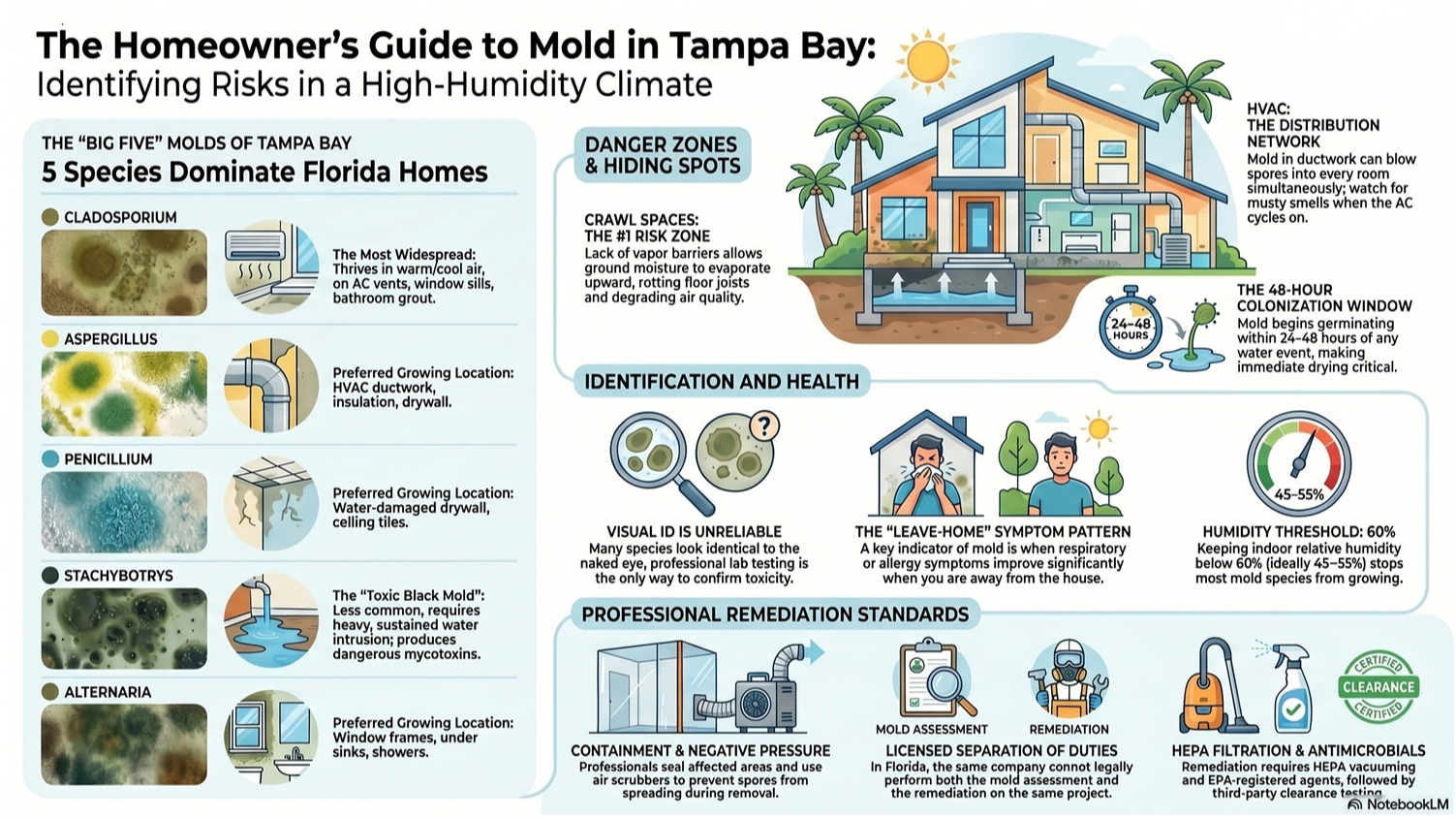
- Cladosporium, Aspergillus, Penicillium, Stachybotrys chartarum (black mold), and Alternaria are the five most common mold species found in Tampa Bay homes, each with distinct characteristics and health risks.
- Tampa Bay's humidity is consistently high, often exceeding 70% year-round and frequently reaching over 80% in summer months, creating perfect conditions for mold growth in homes throughout the region.
- Crawl spaces and HVAC systems serve as the primary breeding grounds for mold, often spreading contamination throughout entire homes before homeowners notice visible signs.
- Professional lab testing is the only reliable method to accurately identify mold species, as visual identification frequently leads to ineffective treatment approaches.
- Mold can begin colonizing wet surfaces within 24-48 hours after water damage, making rapid response critical for Tampa Bay homeowners.
Tampa Bay homeowners face a constant battle against mold growth due to the region's subtropical climate and persistently high humidity levels. Understanding which mold species commonly invade local homes—and where they tend to hide—represents the first line of defense in protecting both property value and family health.
Tampa Bay's Climate Creates Perfect Mold Conditions Year-Round
Florida's Gulf Coast climate doesn't give mold spores a single day off. Tampa Bay averages over 50 inches of rainfall annually, while summer relative humidity is consistently high, often exceeding 70% and frequently reaching over 80%. These conditions create an environment where mold spores—which are always present in outdoor air—need only moisture and an organic surface to establish thriving colonies.
Indoor humidity above 60% provides all the invitation mold requires. When air conditioning systems cycle off at night or ventilation fails, humidity levels spike rapidly, particularly in crawl spaces, attics, and interior walls. Many older homes in Tampa's building stock were constructed before modern moisture barrier standards were widely adopted, leaving these structures especially vulnerable to fungal invasion.
The combination of intense heat, near-constant humidity, and frequent tropical storms creates near-perfect indoor conditions for fungal growth throughout the year. Professional mold inspectors in Tampa consistently identify the same five species as the most prevalent threats to local homes, each requiring different identification and remediation approaches.
The 5 Most Common Mold Species in Tampa Bay Homes
Not all molds pose identical risks, and the specific species growing in any home determines the health threat level, appropriate remediation method, and urgency of response required. These five molds appear most frequently in Tampa Bay residential inspections.
1. Cladosporium: The Most Widespread Indoor Mold
Cladosporium is a very common mold species, often among the first homeowners discover due to its prevalence in visible areas. This fungus appears as olive-green, brown, or black clusters and commonly colonizes window sills, bathroom grout, air conditioning vents, and fabric surfaces including curtains and upholstered furniture. Unlike many other mold varieties, Cladosporium thrives in both warm and cool conditions, making it unusually persistent in air-conditioned Florida homes.
This widespread mold triggers respiratory irritation, allergic reactions, and asthma flare-ups in sensitive individuals. Its ability to grow on both porous and non-porous surfaces, combined with its tolerance for varying temperature conditions, explains why Cladosporium appears in nearly every type of indoor environment throughout the Tampa Bay region.
2. Aspergillus: The HVAC System Colonizer
Aspergillus encompasses a genus containing over 180 species, with several commonly found in Tampa Bay homes. This mold tends to colonize HVAC ductwork, insulation, and drywall—anywhere that combines dust, organic material, and moderate moisture levels. Aspergillus poses particular concern because certain species produce mycotoxins, toxic compounds capable of causing serious lung infections in people with weakened immune systems.
The fungus often appears yellow, green, or white and requires professional lab testing for accurate identification. Once established in HVAC systems, Aspergillus spreads spores throughout entire homes every time the air conditioning operates, making it one of the most problematic mold species for whole-home air quality.
3. Penicillium: Water-Damaged Material Specialist
Penicillium is known for its rapid spread, often colonizing surfaces quickly. This fungus produces a characteristic blue-green color with powdery texture and thrives on water-damaged materials—particularly drywall behind leaking toilets, under bathroom caulking, or on ceiling tiles following roof leaks. In Tampa's humid climate, minor plumbing drips provide sufficient moisture for Penicillium to establish visible colonies within days.
The aggressive spore release pattern means a small Penicillium patch in one bathroom can contaminate air quality throughout an entire house. This rapid spread capability, combined with the mold's preference for common building materials, makes Penicillium a frequent concern in Tampa Bay homes experiencing any water intrusion events.
4. Stachybotrys Chartarum: Understanding Black Mold Concerns
Stachybotrys chartarum—commonly called black mold—receives significant media attention despite being one of the less frequently encountered molds in Tampa homes. When this species does appear, however, the situation demands serious attention. Stachybotrys requires sustained, heavy moisture to grow, meaning its presence almost always signals significant water intrusion events such as roof leaks, flooding, or long-term plumbing failures.
This mold appears dark greenish-black with slimy texture and produces trichothecene mycotoxins linked to severe respiratory symptoms, neurological effects, and chronic fatigue. Black mold contamination requires professional containment and removal procedures—homeowner DIY attempts often worsen the contamination by disturbing colonies without proper containment protocols.
5. Alternaria: Storm-Related Moisture Opportunist
Alternaria ranks among Florida's most common outdoor molds but readily moves indoors following storms that push water through windows, doors, and roofing systems. This species appears dark green to brown with velvety or suede-like texture and tends to colonize window frames, areas under sinks, and inside shower enclosures. Tampa's active hurricane season creates predictable Alternaria exposure spikes following major rainfall events.
As one of the leading mold allergens worldwide, Alternaria strongly associates with asthma attacks and allergic rhinitis. The mold's ability to rapidly capitalize on storm-related moisture makes it a persistent concern for Tampa Bay homeowners throughout the region's extended wet season.
Where These Molds Hide in Tampa Bay Homes
Knowing which mold species commonly occur represents only half the identification challenge. Understanding where these fungi prefer to establish colonies helps homeowners focus inspection efforts on the highest-risk areas before visible growth appears.
Crawl Spaces: Tampa's Biggest Mold Risk Zone
Crawl spaces are significant mold risk zones in Tampa Bay homes, particularly in older constructions, serving as ground zero for mold development. Ground moisture evaporates upward while poor ventilation traps humid air, and without properly installed vapor barriers, wooden structural elements maintain persistent dampness. Florida's extreme humidity makes this problem dramatically worse than in drier climates.
Crawl space mold frequently remains undetected for years while quietly degrading floor joists, subfloor materials, and indoor air quality simultaneously. The combination of organic building materials, elevated moisture levels, and limited air circulation creates ideal conditions for multiple mold species to coexist and spread throughout the structural framework.
HVAC Systems Spread Spores Throughout Your Home
Air conditioning systems function as both mold risk zones and distribution networks. Tampa homes operate AC systems for most of the year, and the combination of condensation inside units, dust accumulation in ductwork, and organic debris creates ideal conditions for Aspergillus and Cladosporium specifically. Once mold establishes inside HVAC systems, every operational cycle distributes spores to every room in the house.
Key warning signs of HVAC system mold include persistent musty smells that intensify when air conditioning operates, visible dark spotting around supply vents, allergy symptoms that worsen indoors but improve outside, unexplained respiratory irritation affecting multiple household members, and any history of water pooling around air handlers or drain pan overflow.
Annual professional HVAC inspections prove especially critical in Tampa Bay's climate. Standard maintenance visits that clean coils, check drain pans, and inspect accessible ductwork can detect early mold colonization before whole-home air quality problems develop.
High-Moisture Areas Beyond the Obvious
Bathrooms and kitchens represent the most obvious high-moisture zones, but Tampa Bay homeowners often underestimate how quickly these spaces become mold hotspots. Penicillium and Cladosporium are frequently found in these areas, thriving in locations such as behind toilets, under sink cabinets, inside grout lines, around tub surrounds, and beneath kitchen mats.
Poorly performing bathroom fans, which can be undersized, clogged with dust, or improperly vented into attics rather than outside, can trap moisture and contribute to mold growth in many homes.
Health Risks from Common Tampa Bay Molds
Mold exposure in Tampa Bay homes extends far beyond minor inconvenience, representing genuine health concerns ranging from persistent allergic irritation to serious respiratory and neurological effects depending on species involved and exposure duration.
Common Exposure Symptoms and Environmental Patterns
Short-term exposure to common molds like Cladosporium and Alternaria typically produces symptoms resembling seasonal allergies: sneezing, runny nose, itchy eyes, and skin irritation. These symptoms can be easily dismissed or attributed to other environmental factors like Tampa's high pollen counts, which may lead to mold-related health problems remaining unaddressed.
Documented health effects from long-term exposure to certain molds, particularly mycotoxin-producing species, can include chronic fatigue, persistent headaches, cognitive difficulties, immune suppression, and in severe cases, pulmonary hemorrhage. One clear indicator of mold-related health impacts occurs when symptoms improve after leaving home and return within hours of coming back—a medically recognized pattern that often precedes mold source identification.
Who Faces the Greatest Risk
While mold exposure affects everyone to some degree, certain groups face substantially higher risk of serious health consequences. Children under five, adults over 65, and anyone with compromised immune systems—including people undergoing chemotherapy, living with HIV/AIDS, or taking immunosuppressant medications—face the greatest risk levels from mold exposure. While mold exposure can trigger allergic symptoms or asthma in pregnant women, current research does not suggest it is directly dangerous to a fetus.
Individuals with pre-existing respiratory conditions like asthma, COPD, or chronic sinusitis also show significantly higher vulnerability to mold-triggered flare-ups and long-term lung damage. For these high-risk populations, even moderate mold exposure can trigger severe health episodes requiring medical intervention.
Why Visual Identification Fails and Lab Testing Succeeds
Color, texture, and location provide helpful hints about possible mold species, but these characteristics cannot confirm specific identification. Multiple mold types appear nearly identical to naked-eye inspection—black mold serves as a perfect example, since dozens of species appear black or dark green, but only Stachybotrys chartarum produces the specific mycotoxins associated with serious toxic mold syndrome.
Professional air sampling and surface swab testing analyzed by certified microbiology laboratories represents the only method for definitively identifying mold species present in homes. Licensed mold inspectors collect samples from suspected areas, often paired with outdoor control samples to establish baselines, and lab analysis identifies specific species and spore concentrations. This data directly determines appropriate remediation protocols—which matters enormously when dealing with mycotoxin-producing species versus common allergenic molds.
Mold Prevention Strategies That Actually Work in Tampa's Humidity
Removing existing mold without addressing underlying moisture conditions represents a temporary fix at best. In Tampa Bay's climate, mold returns—often within weeks—if humidity, ventilation, and moisture intrusion issues driving growth remain unresolved. Effective prevention requires ongoing, multi-layered strategies rather than one-time cleanup efforts.
1. Keep Indoor Humidity Below 60%
The single most impactful prevention measure Tampa Bay homeowners can implement involves maintaining indoor relative humidity consistently below 60%—ideally between 45% and 55%. At those levels, most common mold species cannot sustain growth even when spores are present. In Tampa's climate, achieving this requires more than just running air conditioning.
Whole-home dehumidifiers integrated with HVAC systems provide the most effective solution for Tampa Bay homes. Standalone portable units can manage single rooms or smaller spaces effectively but require regular emptying and prove insufficient for whole-home humidity control alone. In homes with crawl spaces, dedicated crawl space dehumidifiers address moisture sources that often drive whole-home humidity levels upward.
2. Annual HVAC Maintenance Prevents Hidden Growth
Tampa Bay homeowners should schedule professional HVAC maintenance at minimum once annually—ideally before peak summer humidity season in late May. Thorough service visits include cleaning evaporator coils, inspecting and clearing condensate drain lines, checking for moisture accumulation in air handler cabinets, and where accessible, inspecting ductwork for visible mold or excessive dust buildup.
If HVAC systems are older than 10 years or have never had ductwork professionally cleaned, duct cleaning service from certified NADCA contractors represents worthwhile investment. Contaminated ductwork can re-introduce mold spores into living spaces indefinitely, making surface-level remediation elsewhere in houses far less effective.
3. Crawl Space Moisture Control
Properly installed vapor barriers represent the most critical moisture control upgrade available to Tampa Bay homeowners with crawl spaces. Polyethylene sheets covering entire crawl space floors—sealed at seams and secured at foundation walls—block ground moisture from evaporating upward into structures. For enhanced protection, thicker reinforced barriers, such as 10-mil, can offer greater durability and moisture resistance.
Combined with foundation wall sealing using hydraulic cement or waterproof elastomeric coatings, properly encapsulated crawl spaces dramatically reduce humidity levels that drive mold growth in structural framing above them.
Professional Mold Testing and Remediation Protects Your Family's Health
DIY mold cleanup using household products has clear limitations—surface mold on non-porous materials covering less than 10 square feet, in well-ventilated areas, with proper personal protective equipment. Beyond that threshold, especially involving porous building materials like drywall, insulation, subfloor wood, or structural framing, professional remediation becomes necessary.
Professional remediation involves containment using plastic sheeting and negative air pressure to prevent spore migration, complete personal protective equipment protocols, systematic removal of contaminated porous materials, HEPA vacuuming and antimicrobial surface treatment, continuous air scrubbing during and after work, and independent post-remediation verification testing to confirm spore counts have returned to acceptable levels.
In Florida, mold assessors and remediators must hold separate state licenses under Florida Statute 468, and the same company cannot legally perform both assessment and remediation on identical projects unless visible mold is less than 10 sq ft . This separation prevents conflicts of interest and ensures proper oversight throughout the process.
For professional mold identification and remediation services in the Tampa Bay area, TampaBayMold.net provides licensed mold inspection and testing services to help homeowners protect their families' health and property values.
TampaBayMold.net
City: Tampa
Address: 550 N. Reo St. Suite #300
Website: https://www.tampabaymold.net


Comments
Post a Comment