Youth Baseball Arm Pain After Pitching: Why Pitch Counts Aren't Enough
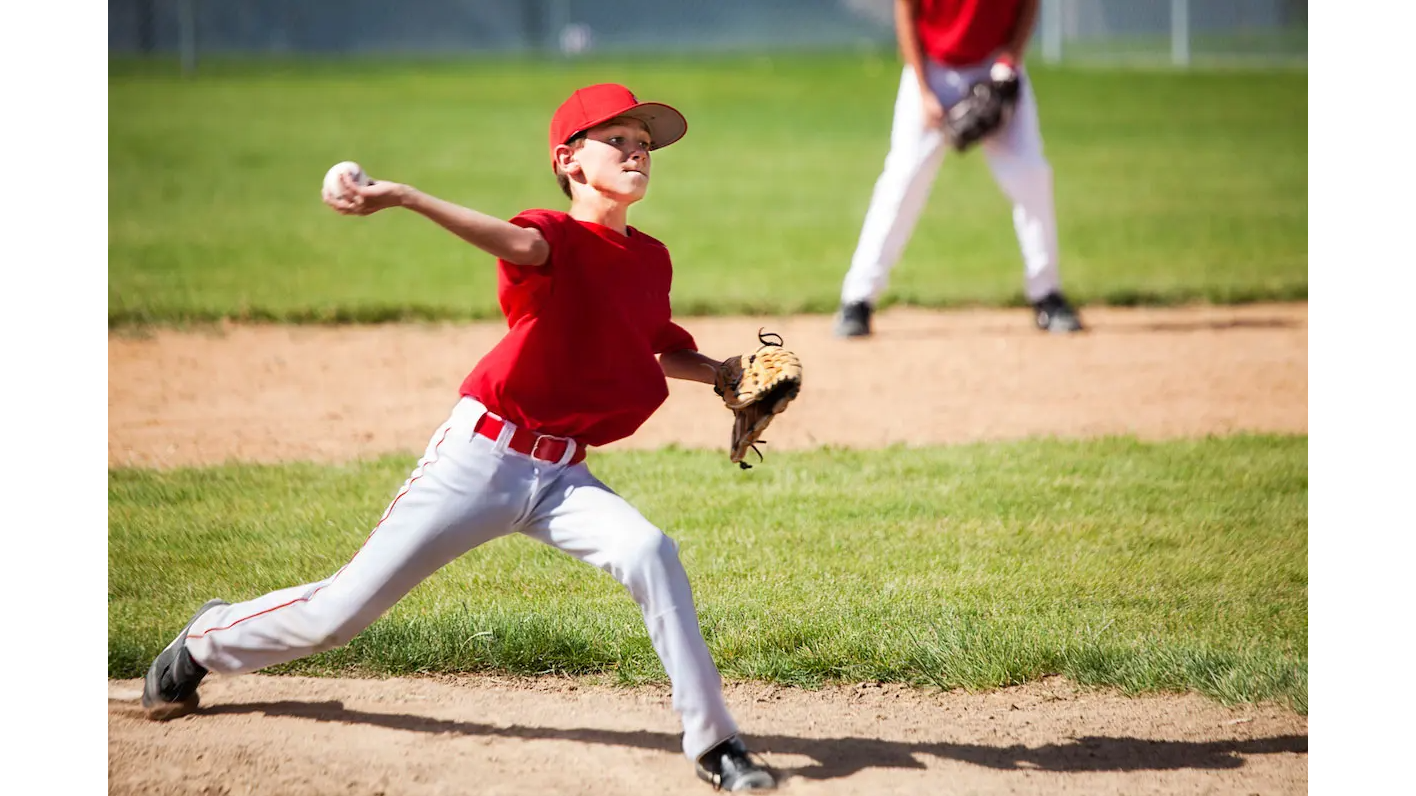
Your child stayed under the pitch count. The coach tracked every throw. The rules were followed. And then on the drive home, they say their arm feels sore. Or worse, something just doesn’t feel right.
It's a frustrating and confusing moment for any parent. You did everything you were supposed to do. So why is their arm hurting?
The short answer: pitch counts matter, but they only capture part of the picture. Research shows that nearly 50 percent of youth and high school pitchers experience elbow or shoulder pain during their season.
Something is clearly missing from the equation. Understanding what that something is can help you protect your child's arm far more effectively than relying on pitch counts alone.
Pitch Counts Don't Tell The Whole Story
Pitch counts only track what happens during games. They don't include warmups before the first pitch, bullpen sessions between starts, practice throws, private lessons, showcases, or the pitches thrown for another team three days earlier.
Research shows that in-game pitches account for only 10 to 12 percent of a young pitcher's total throwing volume over the course of a season. The rest accumulates quietly, long toss at practice, catch with a teammate, lessons with a pitching coach, and the showcase last weekend that nobody thought to factor in. A pitcher might throw 60 pitches in a game and stay well within the limit, but across the week, they may have thrown double or triple that amount without anyone realizing it.
This is where hidden workload enters the picture. Studies indicate that 44 percent of youth pitchers participate in multiple leagues simultaneously, often with different coaches and little coordination between them. One coach has no idea what the other team asked of that arm three days ago. The pitch count from Saturday's game looks safe in isolation, but it wasn't thrown in isolation. And that hidden accumulation is often the real reason soreness shows up, not the game itself, but everything surrounding it.
Soreness Isn't Always Injury—But It's Nothing Either
Arm soreness after pitching is common, especially in growing athletes whose muscles are still adapting to competitive workloads. But it's easy to swing too far in either direction. Some parents panic and assume any soreness means injury. Others brush it off completely because "kids are resilient" or "it's just part of the game."
The reality sits in the middle. Mild muscle fatigue that shows up after an outing and resolves within 24 to 48 hours is typically part of normal recovery. But when soreness shows up frequently, lasts longer than expected, or gets worse over time, it's a signal worth paying attention to. The location matters too; general muscle fatigue in the shoulder or upper arm is different from pain localized to the inside of the elbow, where the ulnar collateral ligament sits. Sharp or stabbing sensations are different from a dull ache.
The goal isn't to eliminate all soreness. That's not realistic. The goal is to understand what kind of soreness you're seeing and what's causing it. Pattern recognition over time tells you far more than any single post-game check-in. You want to know what normal feels like for your child so you can recognize when something falls outside that pattern.
Recovery Time Matters More Than Most Think
A lot of attention goes into how many pitches were thrown. Far less goes into what happened afterward.
Recovery is where the arm actually adapts. Pitching places enormous stress on the shoulder and elbow—forces that approach the structural limits of the ligaments involved. Given adequate time, the body responds by rebuilding stronger. But when that recovery window gets cut short, microtrauma accumulates instead of healing. Two outings might look perfectly fine on their own, but if they're stacked too close together, or if the days between were filled with catching, lessons, and long toss, they create more strain than either would have caused alone.
Most guidelines recommend at least 48 hours between pitching outings, with longer rest required after higher pitch counts. But "rest" only counts if it's actually rest. A pitcher who threw 50 pitches on Saturday, caught a doubleheader on Sunday, threw a bullpen on Monday, and had a lesson on Wednesday didn't really get recovery days at all. In many cases, soreness has less to do with the game itself and more to do with what happened in the days before and after. The outing was just the final stress on an arm that was already running low on margin.
Why Rest Doesn't Always Fix It
Parents often expect that time off will solve everything. Take a few days off, or a few weeks, and the arm should feel fresh again. Sometimes it does. Sometimes it doesn't. And that's where things get confusing.
If a pitcher comes back after rest and their velocity drops, or their arm still feels off, it doesn't always mean something is wrong. It can mean the arm isn't fully conditioned for the level of stress it's being asked to handle. Rest removes fatigue and allows inflammation to subside, but it doesn't automatically build readiness. An arm that has been resting hasn't been maintaining the baseline conditioning needed to handle competitive intensity.
This is why injuries so often spike at the beginning of the season. The December 2024 MLB Report on Pitcher Injuries found that pitching injuries, both minor and serious, cluster during spring training, when players ramp up too quickly after lower offseason workloads. The same pattern applies to youth pitchers: going from minimal throwing to full-intensity competition without a gradual buildup creates vulnerability. Time off is valuable when an arm needs to recover, but time off followed by an immediate return to high-effort pitching is a recipe for problems. The ramp-up matters as much as the rest itself.
The Real Question Isn't The Number
After a game, most conversations start with one question: "Did they stay under the pitch count?" It's useful. But it's not enough.
A better question is this: Was the arm actually ready for the total workload it handled this week? That question forces you to think beyond the single game. It includes the warmup throws, the bullpen session two days earlier, the showcase last weekend, and the lesson with the pitching coach. It accounts for whether the recovery time was truly recovery time.
Two pitchers can throw the same number of pitches and have completely different outcomes. One recovers fine. The other ends up sore. The difference usually comes down to preparation, total workload, and recovery, not just the number on the scoreboard.
What Parents Should Pay Attention To
Instead of focusing only on pitch counts, it helps to look at the full picture.
Track how much throwing happened across the entire week, not just in games. Pay attention to how the arm feels the day after an outing, not just immediately after pitching. Notice whether soreness is improving with rest, staying the same, or gradually getting worse. And honestly assess how much true recovery time exists between outings, counting only the days when the arm wasn't asked to do much of anything.
Small patterns matter because that's where early warning signs show up. Pain that lingers more than 48 hours. Soreness localized to the elbow joint rather than the surrounding muscles. Loss of velocity. Changes in mechanics, dropping the elbow, rushing through the motion, or favoring one side. A pitcher who suddenly can't locate pitches they normally command. These signals are worth investigating, even when the pitch count looked perfectly safe.
A Smarter Way To Think About Arm Health
Pitch counts still matter. They establish a ceiling that didn't exist a generation ago, and they've almost certainly prevented injuries that would have otherwise occurred.
But they're just one piece of the puzzle. Arm health is about managing total workload across all settings, allowing proper recovery between stresses, and building the kind of conditioning that supports repeated high-effort throwing. Research shows that youth players who follow consistent arm care routines, stretching, strengthening, and mobility work experience significantly fewer injuries. One study found nearly a 50 percent reduction in elbow injuries among players who committed to just 10 minutes of targeted exercises per day.
When those pieces are in place, soreness becomes easier to understand and easier to manage. You stop reacting to every ache with alarm, and you start recognizing what's normal for your child versus what deserves closer attention.
Final Thought
If your kid's arm hurts after pitching, it doesn't automatically mean something is wrong. But it also doesn't mean everything is fine.
Most of the time, soreness is a sign that something in the bigger picture needs adjusting—less stacking, better recovery, smarter management of total workload. Staying under the pitch count doesn't guarantee safety. It just gives you a starting point. The rest is about paying attention to everything else that the number doesn't capture.
VeloRESET
City: Fresno
Address: 8930 North 6th Street
Website: https://www.veloreset.com/


Comments
Post a Comment