Why Buyers Trust Familiar Brands: Repetition as Decision Shortcut
Key Takeaways
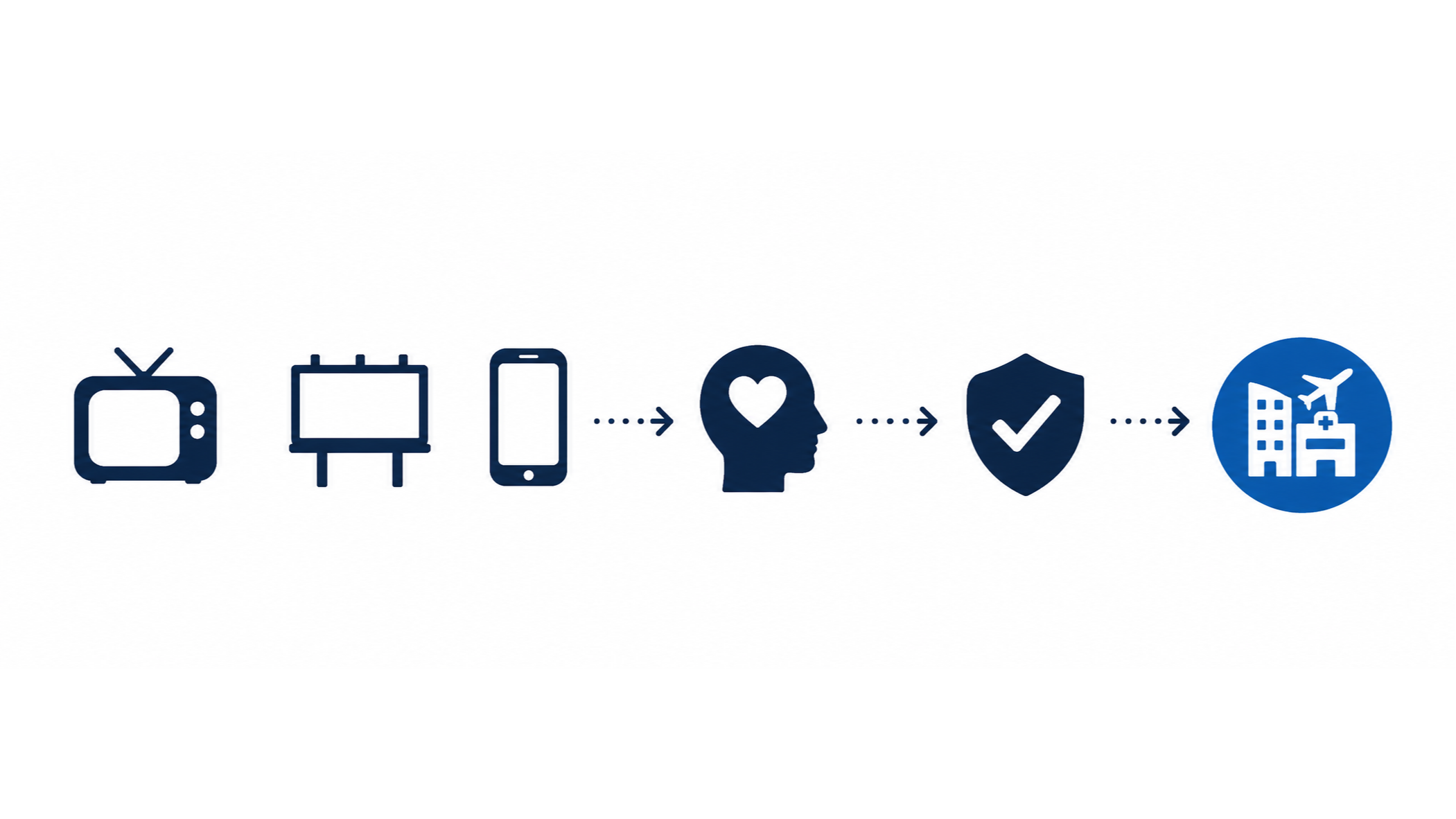
- Buyers trust familiar brands because repeated exposure within credible environments triggers the brain’s safety mechanisms, making those brands feel like lower-risk choices
- The mere exposure effect shows that people develop preferences through familiarity, even without conscious attention or active comparison
- Authority bias forms when brands appear consistently within trusted contexts, causing credibility to be inferred before logical evaluation begins
- B2B decision-makers rely on familiarity as a cognitive shortcut, with most purchasing preferences forming subconsciously before rational analysis
- Brands can influence consent by shaping evaluative environments where choosing them feels natural rather than forced
Brand trust isn't built through superior features or compelling sales pitches alone. The most successful brands understand that buyers make decisions using mental shortcuts, and familiarity ranks as one of the most powerful influencers in that process.
Buyers Trust Brands They Recognize Before They Compare
Buyers gravitate toward brands that feel established within their professional environment. This is not driven by aggressive advertising or frequent promotion. It results from consistent presence within credible contexts, which signals stability and legitimacy before formal evaluation begins.
When decision-makers encounter a brand repeatedly within respected industry publications, institutional discussions, and third-party settings they already trust, familiarity forms. That familiarity lowers perceived risk and influences preference prior to any comparison of features or pricing.
This helps explain why established brands often retain advantage even when newer alternatives offer stronger products or lower prices. Familiar options reduce cognitive effort and decision anxiety, particularly for stakeholders who must justify choices internally, making them more likely to be considered early in the buying process.
The Mere Exposure Effect in Action
How Familiarity Often Beats Comparison
The mere exposure effect demonstrates that people develop preferences for things they encounter repeatedly, even without conscious attention or detailed analysis. In B2B contexts, this means buyers often favor familiar brands because familiarity feels safer and requires less mental effort.
Under time pressure and information overload, decision-makers rarely conduct exhaustive comparisons. Instead, they default to brands that already feel known, using familiarity as a shortcut to reduce friction. The brand that enters evaluation already familiar does not need to persuade. It begins inside the consideration set.
Why the Rule of 7 Still Applies
The Rule of 7 originally suggested that buyers need multiple encounters with a brand before taking action. While modern markets no longer operate on impression counting, the underlying psychological insight remains valid. Trust forms through repeated exposure over time, not through a single persuasive interaction.
Today, this principle plays out through consistent encounters within credible environments rather than repetitive advertising. When decision-makers come across the same brand across trusted industry contexts and authoritative third-party settings, familiarity builds naturally. Each encounter reinforces recognition and reduces perceived risk without overt messaging or pressure.
Repetition Signals Safety Before Logic
The Brain’s Early Safety Assessment
Research in neuroscience and behavioral economics shows that the majority of B2B decisions form before conscious analysis begins. Initial preferences emerge quickly, shaped by intuitive assessments of familiarity, credibility, and perceived safety. Later rational analysis often serves to confirm these early judgments rather than replace them.
This reality reshapes how effective brands approach market positioning. Instead of relying solely on feature comparisons or logical arguments, brands that influence outcomes earlier focus on establishing credibility through consistent presence within trusted environments. By the time formal evaluation starts, perception has already been shaped by accumulated exposure in professional contexts.
Why Most B2B Decisions Begin Subconsciously
Research in neuroscience and behavioral economics shows that the majority of B2B decisions form before conscious analysis begins. Initial preferences emerge quickly, shaped by intuitive assessments of familiarity, credibility, and perceived safety. Later rational analysis often serves to confirm these early judgments rather than replace them.
This reality reshapes how effective brands approach market positioning. Instead of relying solely on feature comparisons or logical arguments, brands that influence outcomes earlier focus on establishing credibility through consistent presence within trusted environments. By the time formal evaluation starts, perception has already been shaped by accumulated exposure in professional contexts.
Authority Bias Through Credible Context
When Context Becomes Perceived Expertise
Authority bias leads people to assign greater credibility to entities that appear authoritative before substance is consciously evaluated. Consistent presence within respected environments functions as a proxy for expertise and legitimacy. When a brand is encountered within established institutional settings, buyers infer that validation has already occurred.
This explains why participation in authoritative conversations and trusted industry contexts carries more weight than traditional advertising. Each credible placement functions as an implicit signal of competence, reinforcing authority perceptions gradually and without overt persuasion.
Authority scaffolding is not built through collaboration or co-publishing. It is built through strategic placement inside environments that already carry institutional trust.
Brands gain authority when their ideas, expertise, or products consistently appear within respected third-party contexts that decision-makers already recognize as credible. These environments function as legitimacy filters. When a brand is encountered there, the brain assumes vetting has already occurred.
- No partnership is required.
- No endorsement is claimed.
Credibility comes from context, not association.
This approach reflects the foundational insight articulated by Edward Bernays: trust transfers through environment. When ideas are repeatedly encountered within trusted institutional settings, they inherit legitimacy without persuasion.
In practice, authority scaffolding is created by placing existing brand IP into neutral, high-trust environments over time. The work is selective, consistent, and deliberately non-promotional. Each appearance reinforces familiarity. Each environment reinforces legitimacy. Over time, perception stabilizes. The brand no longer feels introduced. It feels established.
That is authority scaffolding as a system.
Not collaboration.
Not exposure.
Not PR.
Structural credibility, accumulated before evaluation begins.
Engineering Consent in Modern Branding
Bernays’ Framework Applied Today
Bernays introduced the concept of engineering consent to describe how environments influence public choice. His insight was that opinion is shaped less by argument and more by context, repetition, and perceived legitimacy.
Modern brand strategy applies this principle by shaping evaluative environments where certain options feel natural to consider. This is not manipulation. It is context design. Buyers retain autonomy, but the conditions under which they evaluate options are already influenced.
Creating Environments Where Your Brand Feels Natural
Successful brands do not rely on isolated impressions. They construct environments where their presence feels expected rather than promotional. This involves consistent participation in authoritative industry contexts and reliable appearance within trusted professional conversations.
The buyer still chooses freely. What changes is the evaluative landscape. Some brands feel legitimate. Others feel risky. By the time formal procurement begins, that distinction is already in place.
From Random Visibility to Strategic Familiarity
1. Build Strategic Familiarity, Not Random Exposure
Effective brand building requires systematic, context-driven familiarity rather than scattered attention. Strategic familiarity means appearing consistently in environments where decision-makers already look for signals of legitimacy.
This reinforces recognition within relevant professional communities instead of chasing broad awareness metrics that rarely translate into trust or preference.
2. Use Repetition to Signal Safety in Risk-Sensitive Markets
B2B buyers operate in risk-sensitive environments where poor decisions carry professional consequences. Consistent presence over time signals stability and staying power, reducing the perceived risk of choosing a familiar option.
The goal is not saturation. It is steady reinforcement within credible contexts.
3. Design for Confirmation, Not Persuasion
When buyers engage directly, they are often seeking confirmation rather than persuasion. Effective brands design materials that validate existing confidence instead of attempting to manufacture trust at the last moment.
This shifts sales and content strategy from convincing skeptics to reassuring decision-makers that their instincts were sound.
Make Choosing Your Brand Feel Like the Obvious Next Step
The strongest brands do not win by out-arguing competitors. They win by shaping evaluation conditions so their selection feels reasonable, safe, and expected.
Buyers want decisions that feel defensible and low-risk. Brands that invest in strategic familiarity make that easier. The result is smoother evaluations, shorter sales cycles, and relationships built on trust rather than pressure.
This understanding represents a shift from transactional marketing to authority-led positioning, where preference forms before comparison and trust precedes choice.
JCH Digital helps companies shape how their products and expertise are evaluated before buyers engage, placing authority within credible environments where trust forms upstream of comparison.
JCH Digital
City: Quesnel
Address: Blair Street
Website: https://www.jchdigital.ca/


Comments
Post a Comment