Virtual Contrast Supervision: Pricing & Cost Planning For Imaging Centers
Key Takeaways
- Virtual supervision allows imaging networks to avoid the $590,000+ median annual salary for on-site radiologists, offering a path to sustainable 2026 budget planning.
- Fee models vary between per-study charges, monthly retainers, and hybrid tiers, allowing facilities to align costs with actual patient volume.
- The 2026 CMS Final Rule mandates that virtual direct supervision must utilize real-time, two-way audio and visual technology to meet "immediate availability" standards.
- Implementation costs include HIPAA and HITECH-compliant platform integration and specialized training for technologists.
- Expert oversight providers manage over tens of thousands of monthly contrast exams with documented zero missed responses, with a safety record that traditional on-site staffing must struggle to match.
The Economic Shift: Virtual Supervision vs. On-Site Staffing
Traditional staffing models are creating unsustainable financial pressure for imaging center owners and operators. In 2026, the total compensation package for a single radiologist—including benefits, malpractice insurance, and overhead—often exceeds $700,000. For outpatient imaging networks with 20 to 200+ facilities, staffing every site with a physical physician is no longer a viable growth strategy.
Virtual supervision has emerged as the primary alternative to this fixed-cost burden. By utilizing remote oversight, facilities can achieve the same level of CMS compliance for a fraction of the cost. Industry analysis from our partners suggests that centers can secure compliant virtual contrast supervision pricing starting as low as $45 per hour, allowing capital to be redirected toward equipment upgrades and patient care.
This shift is driven by a chronic radiologist shortage and the rising volume of contrast-enhanced exams. The diagnostic imaging market is now performing over 600 million procedures annually in the U.S., while the aging population continues to increase demand for specialized services.
Understanding Virtual Supervision Pricing Structures
Standardizing clinical costs requires a deep understanding of the three primary pricing models currently available in the 2026 market.
1. Per-Study Fee Models
The per-study model is designed for flexibility. Centers pay only for the exams that require supervision, which is ideal for facilities with fluctuating patient volumes. For example, a new center starting with moderate daily volume might pay a set fee per MRI or CT contrast scan. This ensures that operational expenses correlate directly with revenue-generating activity. Clinical experts note that this model is particularly useful for centers in rural areas or those with specific technologist staffing shortages.
2. Monthly Retainer Options for Predictable Budgeting
Established imaging networks with high, consistent volumes typically prefer monthly retainers. These agreements provide budget certainty by offering unlimited or high-volume coverage for a flat monthly fee. These plans often include value-added services such as discharge summaries, incident reports, and audit-ready documentation. For a network with dozens of sites, this model provides the lowest per-scan cost and ensures a "always-on" platform for daytime, evening, and weekend operations.
3. Hybrid Pricing: Base Coverage Plus Volume Tiers
Hybrid models offer a middle ground, combining a fixed base fee for core hours with variable tiers for overages. This structure is advantageous for imaging center networks planning for expansion. It provides a safety net for standard operations while allowing the facility to scale up during peak seasons or when opening new locations without the immediate need to renegotiate contracts.
Implementation Costs and Technological Requirements
While the long-term savings of virtual supervision are significant, centers must plan for initial implementation. Under current HIPAA and HITECH standards, the security of the communication platform is non-negotiable.
Platform Integration
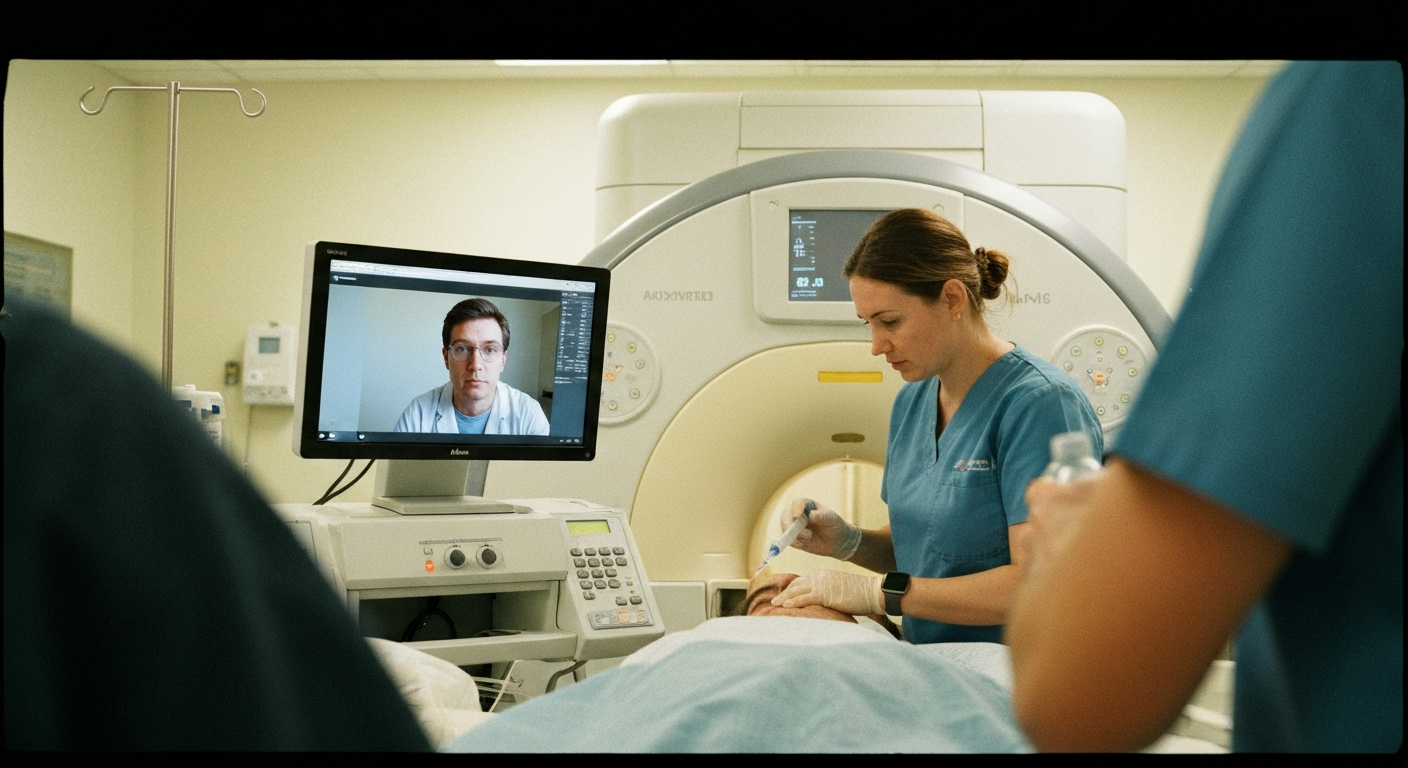
Integration requires a secure, high-speed connection between the imaging facility and the supervising radiologist. Modern platforms must support real-time, two-way audio and visual interactive telecommunications. CMS has explicitly stated that audio-only communication does not satisfy the "immediate availability" requirement. Facilities should expect to invest in vetted, compliant hardware that ensures zero latency during a potential contrast reaction.
Technologist Training and Certification
A key component of virtual supervision is the "champion" technologist. While the radiologist provides remote oversight, the on-site team must be proficient in managing reactions and using the remote platform. Professional training programs—often provided by the oversight partner—ensure that technologists are prepared to respond to mild, moderate, or severe reactions within seconds.
A Clinical Benchmark: Safety and Reaction Management
The primary concern for many C-suite executives and medical directors is safety. However, data suggests that specialized virtual providers manage more contrast reactions than many on-site general radiologists. A leading team in this space manages 5 to 10 reactions daily across 200+ imaging partners, resulting in a level of clinical experience that is difficult to replicate in a single-site environment.
This unmatched experience has led to a documented record of zero missed responses. For imaging centers facing audit risks, having a partner that provides consistent, specialized coverage is a major competitive differentiator. Audit-ready documentation and standardized incident reports further protect the facility during CMS and state compliance reviews.
CMS Compliance: The 2026 Permanent Rule
The transition to virtual supervision was accelerated by the 2026 CMS Final Rule, which permanently adopted the definition of "direct supervision" to include virtual presence. This ruling provides the regulatory stability that hospital networks and independent diagnostic testing facilities (IDTFs) needed to commit to long-term virtual models.
To remain compliant, the supervising physician must be "immediately available" to provide direction throughout the performance of the test. This availability is measured in seconds, not minutes. Virtual platforms ensure this through redundant coverage systems that guarantee a licensed, practicing radiologist is always on the other end of the screen, regardless of the hour or holiday.
Maximizing ROI for New and Expanding Centers
For a new imaging center, the initial investment for build-out and equipment can range from $1.5 million to over $5 million. Reducing fixed staffing costs is the most effective way to achieve profitability earlier in the center’s lifecycle. Virtual supervision allows these centers to:
- Extend Operating Hours: Facilities can offer scans in the evenings and on weekends without the cost of a physical radiologist, maximizing the utility of expensive MRI and CT equipment.
- Scale Rapidly: Opening a new site no longer requires months of local radiologist recruitment. A virtual platform can be activated at a new location in a fraction of the time.
- Maintain Audit Readiness: Digital logging and automated session recording provide a defensible record of compliance for every contrast exam performed.
By partnering with experts who focus exclusively on virtual contrast supervision, imaging centers can ensure they are meeting the highest standards of patient safety while optimizing their 2026 operational budgets.
Note: Information provided is for general guidance only and does not constitute medical, legal, or financial advice. Pricing estimates and regulatory requirements are current at the time of writing and subject to change. For personalized consultation on imaging center operations and virtual contrast supervision, contact ContrastConnect.
ContrastConnect
City: Las Vegas
Address: Las vegas
Website: https://www.contrast-connect.com/


Comments
Post a Comment