How Desk Work Causes Neck Pain And Stiffness: Expert Explains Posture Risks
Key Takeaways
- 58.6% of desk workers suffer from chronic neck pain, making it the most common workplace injury in office environments
- Forward head posture adds 10 pounds of pressure for every inch the head moves away from natural alignment, potentially tripling cervical spine stress
- Neck pain costs the US economy $61.2 billion annually in lost productivity, with 76.6% coming from reduced work performance
- Cervical traction using 10% body weight protocols can improve physical markers of forward head posture within 4-6 weeks
- Women face roughly double the risk compared to men for developing workplace neck pain and related complications
The modern office has created an epidemic that's hiding in plain sight. While technology has revolutionized how we work, it's simultaneously destroying our neck health at an alarming rate. What starts as minor stiffness after long computer sessions can escalate into chronic pain that affects every aspect of life—from sleep quality to work productivity.
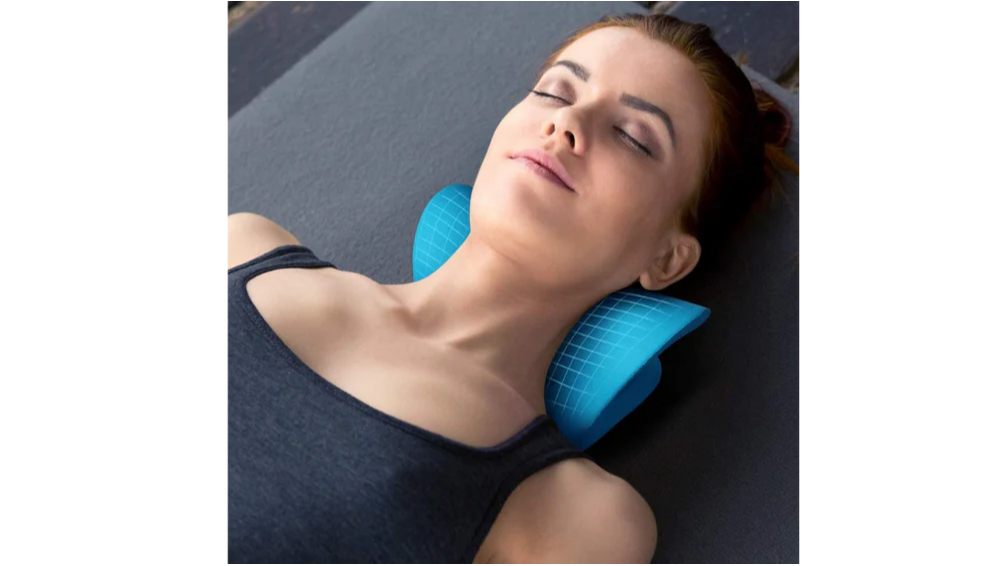
For desk workers exploring ways to manage these issues, tools such as a cervical traction device are often considered as part of a broader approach to improving posture and reducing daily discomfort.
Why Neck Pain Is So Common Among Desk Workers
A 2025 epidemiological study revealed that 58.6% of office workers experience neck pain, establishing it as the most prevalent musculoskeletal disorder in industrial office environments. This staggering statistic represents millions of professionals who struggle daily with discomfort that extends far beyond the workplace.
Additional research from a landmark 2007 study by Cagnie et al. provides deeper insight into the persistence of symptoms. Among affected workers, 18.1% report continuous pain that doesn't subside even after work hours. These aren't isolated incidents of temporary discomfort—they're indicators of a systemic problem affecting the majority of desk-based professionals across industries.
What makes this data particularly alarming is that 64.3% of affected workers directly connect their pain to their current job responsibilities. Even more telling, 56.2% report that their symptoms began specifically during their current employment, suggesting that workplace factors are primary drivers rather than pre-existing conditions.
What Is Forward Head Posture And Why It Matters
The biomechanical foundation of desk-related neck pain lies in a condition called forward head posture (FHP). This postural deviation occurs when the head shifts forward from its natural alignment over the shoulders, creating a cascade of physical stress that compounds with each passing hour at the computer.
How Each Inch Forward Adds 10 Pounds of Pressure
Biomechanical research has revealed a precise mathematical relationship between head position and cervical spine stress. For every inch the head moves forward from its natural alignment, the effective weight on the cervical spine increases by approximately 10 pounds. This means a head that's positioned just three inches forward—common in typical computer work—effectively triples the pressure on neck structures.
To put this in perspective, the average human head weighs about 10-12 pounds when properly aligned. However, when positioned four inches forward during computer work, the cervical spine experiences the equivalent of supporting a 50-pound weight. This dramatic increase in pressure occurs because the neck muscles must work exponentially harder to counteract the forward pull of gravity.
Cervical traction devices like The Neck Cloud specifically target this biomechanical imbalance by providing controlled decompression that counteracts the compressive forces created by forward head posture.
Significant Reduction in Range of Motion
Clinical research demonstrates that prolonged forward head posture is associated with a 53% reduction in neck flexion range of motion compared to individuals maintaining neutral posture. This dramatic limitation affects not just comfort but fundamental daily activities that require normal neck movement.
The reduction in mobility occurs because forward head posture creates adaptive shortening in posterior neck muscles while simultaneously weakening the deep cervical flexors. This muscular imbalance becomes self-perpetuating, as restricted movement patterns reinforce the problematic posture that created them initially.
Over time, this restricted range of motion can lead to compensatory movement patterns in the shoulders and upper back, creating a domino effect of dysfunction throughout the upper body. Simple activities like checking blind spots while driving or looking up at overhead objects become increasingly difficult and uncomfortable.
The Surprising Link Between Posture And Breathing
Perhaps the most surprising consequence of forward head posture is its impact on respiratory function. According to Dr. Rene Cailliet, former Director of Physical Medicine and Rehabilitation at USC, chronic forward head posture can result in a 30% loss of vital lung capacity because the misalignment blocks the action of the hyoid muscles required to lift the first rib during inhalation.
This breathing restriction occurs because forward head posture creates tension in the scalene muscles, which attach to the first and second ribs. When these muscles are chronically tight from supporting an improperly positioned head, they cannot effectively assist with rib elevation during deep inspiration.
The reduced breathing capacity doesn't just affect physical performance—it can impact cognitive function, energy levels, and stress management. Many desk workers attribute afternoon fatigue to mental exhaustion when it may actually stem from compromised respiratory efficiency caused by poor neck posture.
How Neck Pain Impacts Work Performance And Productivity
The economic impact of neck pain extends far beyond individual discomfort, creating massive productivity losses that affect entire organizations and the broader economy. A foundational 2003 study by Stewart et al. found that pain-related conditions in the US workforce result in an estimated $61.2 billion annually in lost productive time, with neck disorders representing a significant portion of this figure. Given inflation and workforce growth, current costs have likely risen substantially.
Women Face Roughly Double the Risk
Gender disparities in workplace neck pain present a concerning pattern that affects workforce dynamics across industries. Research by Cagnie et al. found that female desk workers have roughly double the risk of experiencing neck pain compared to their male counterparts, with an odds ratio of 1.95 indicating a 95% higher likelihood of developing symptoms.
This disparity stems from multiple factors including anatomical differences, workplace ergonomics often designed for male body proportions, and higher relative musculoskeletal loads during computer tasks. Women typically apply greater forces to computer mice and use larger ranges of motion during routine computer work, contributing to increased strain on neck and shoulder structures.
The implications extend beyond individual health outcomes to organizational planning and healthcare costs. Companies with higher proportions of female desk workers may need to implement more targeted ergonomic interventions and neck pain prevention strategies.
Losses from Reduced Performance
The most significant economic impact comes not from employees missing work entirely but from reduced performance while present. 76.6% of productivity losses are attributed to reduced work performance (presenteeism) rather than absenteeism. This means workers are physically present but operating at diminished capacity due to neck pain and related symptoms.
Presenteeism is particularly problematic because it's often invisible to management and difficult to quantify. An employee with chronic neck pain may complete their tasks but require more time, make more errors, or avoid certain activities that exacerbate their symptoms. The cumulative effect across an organization can be substantial.
The NEXpro project case study demonstrated the potential for intervention, showing that combining workplace ergonomics, neck exercises, and health information increased productivity by approximately 30 Swiss Francs per employee per week. This data suggests that targeted interventions can provide significant returns on investment through improved workplace performance.
OSHA Recommendations vs. Reality
While workplace safety guidelines provide clear recommendations for preventing neck injuries, the gap between official standards and actual workplace implementation reveals why neck pain remains epidemic among desk workers.
Monitor Positioning Guidelines
OSHA (Occupational Safety and Health Administration) ergonomic guidelines specify that the top of a computer monitor should be positioned at or slightly below eye level to ensure the head and neck remain balanced and in-line with the torso. This positioning allows the neck to maintain its natural cervical curve while reducing strain on supporting muscles.
The guidelines also recommend that monitors be positioned 20-26 inches from the eyes, with the screen perpendicular to windows to minimize glare. When properly implemented, these standards significantly reduce the likelihood of developing forward head posture during computer work.
However, OSHA recommendations extend beyond monitor placement to include regular breaks, adjustable workstations, and employee training on proper posture. The detailed nature of these guidelines reflects the complex, multifactorial nature of workplace neck injury prevention.
Up to 90% of Computer Users Show Forward Head Posture (FHP)
Despite clear safety guidelines, separate research involving computer users found that 71% exhibited a forward head position, which was directly linked to diffuse neuromuscular symptoms and upper-extremity pain. Some studies suggest this percentage may be as high as 90% in intensive computer users, indicating a massive gap between recommendations and reality.
This widespread deviation from proper posture occurs because many workstations aren't ergonomically configured, employees lack training on proper positioning, and the demands of computer work naturally encourage forward head movement. Email, detailed screen work, and multitasking often draw workers into compromised positions.
The prevalence of FHP despite established guidelines highlights the need for both better workplace implementation of ergonomic principles and individual interventions that can address postural problems that have already developed.
Cervical Traction: 4-6 Week Recovery Protocol
For workers already experiencing the effects of chronic forward head posture, cervical traction offers an evidence-based approach to addressing biomechanical dysfunction and reducing pain. Clinical research supports structured traction protocols as effective interventions for postural restoration.
10% Body Weight Formula for Optimal Results
Optimal pain relief and improved neck mobility are achieved when cervical traction force is applied at approximately 10% of the individual's body weight to widen the intervertebral foramen. This specific force application creates therapeutic space between vertebrae while avoiding excessive stress that could exacerbate symptoms.
For example, a 150-pound individual would benefit from approximately 15 pounds of traction force applied in a controlled manner. This force level provides sufficient decompression to reduce pressure on nerve roots and improve circulation to compressed tissues while remaining within safe therapeutic parameters.
The 10% body weight formula ensures personalized treatment that accounts for individual variation in body size and cervical structure. This precision in force application distinguishes therapeutic cervical traction from generic stretching or positioning approaches.
Improving Physical Markers of FHP
Clinical trials indicate that a 4-week protocol of cervical traction combined with posture exercises significantly increases the craniovertebral angle, effectively improving the physical markers of FHP. The craniovertebral angle serves as an objective measure of head position relative to the cervical spine. Most clinical trials utilize 8-12 week protocols for significant postural restoration, though initial pain relief and angular improvements are often measured at the 4-week mark.
This improvement in angular measurement corresponds to real-world functional improvements including reduced pain, increased range of motion, and improved breathing capacity. Patients typically report noticeable improvements within 2-3 weeks, with optimal results achieved by the 4-6 week mark.
The combination approach proves more effective than traction alone, as exercises help retrain muscle activation patterns while traction provides passive correction of spinal alignment. This dual intervention addresses both the structural and functional components of forward head posture.
Start Your Neck Pain Recovery Today
The epidemic of workplace neck pain doesn't have to define the future of desk-based work. With proper understanding of the biomechanical factors involved and evidence-based approaches to neck pain recovery, desk workers can take control of their neck health and prevent long-term complications.
Implementation starts with immediate workplace adjustments: monitor positioning at eye level, regular movement breaks every 30 minutes, and awareness of head position during computer tasks. However, for those already experiencing chronic symptoms, using at-home cervical traction devices offers the most direct path to recovery.
The key lies in addressing both the immediate symptoms and the underlying postural dysfunction that created them. This approach ensures not just temporary relief but long-term prevention of recurring problems that can derail productivity and quality of life.
The Neck Cloud
City: Sheridan
Address: 30 North Gould Street
Website: https://neck-cloud.com


Comments
Post a Comment