Georgia Garage Floor Coating: The Complete Homeowner Guide
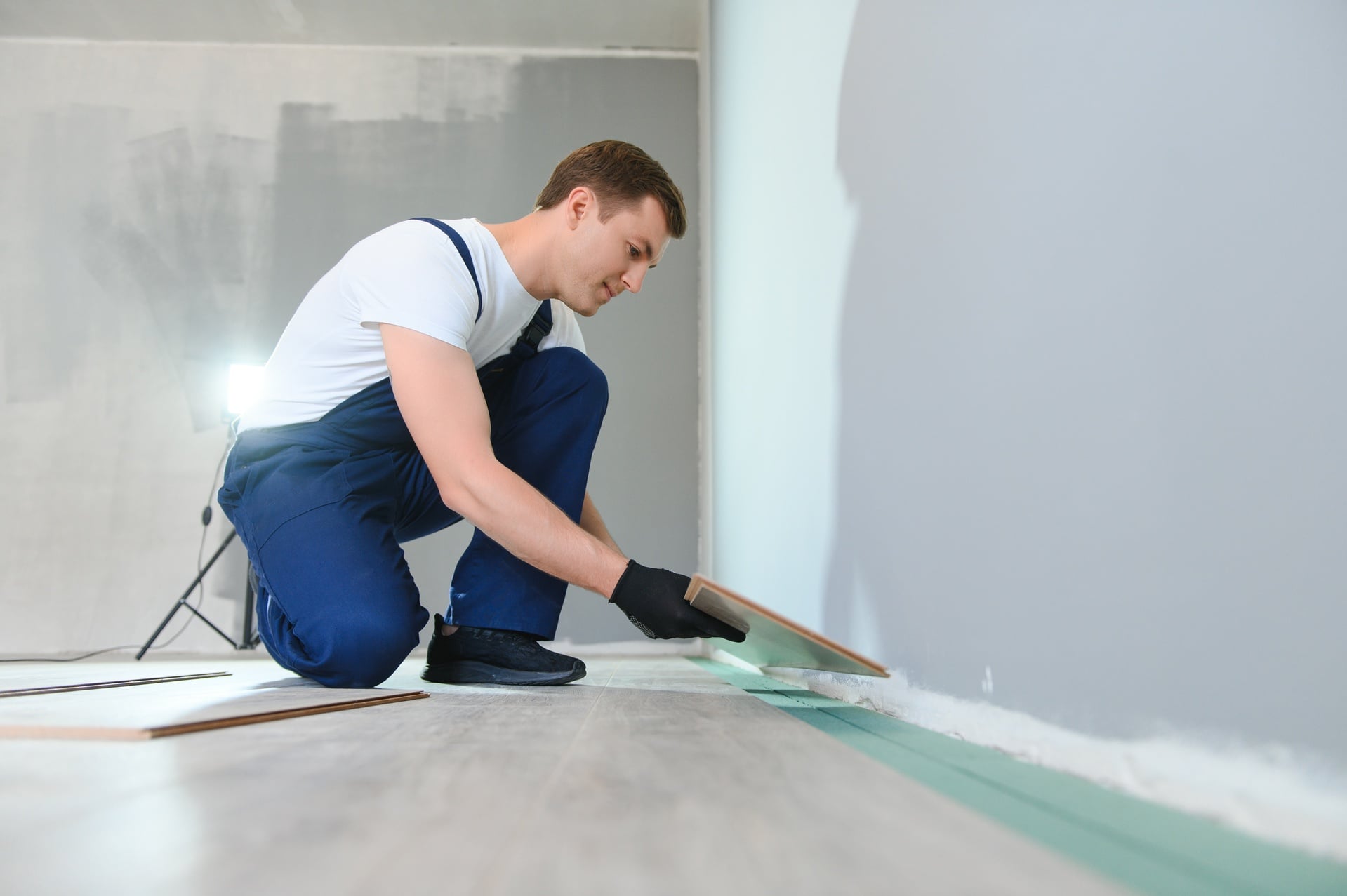
Georgia Garage Floor Coating: The Complete Homeowner Guide
Most people start researching garage floors the same way. They type “epoxy garage floor” into Google, scroll through a few contractor sites, get confused by the terminology, and either call the first company that shows up or decide to do it themselves with a Home Depot kit. Neither of those usually ends well.
This Polyaspartice vs Epoxy flooring guide is for Georgia homeowners who want to understand what they’re actually buying before they spend $2,000 to $4,000 on a garage floor. That means understanding the chemistry behind the products, why Georgia’s climate creates specific problems that other states don’t deal with as much, what surface preparation actually involves, and how to tell the difference between a contractor doing it right and one cutting corners.
Custom Garage Floors LLC serves the south Atlanta metro area — Peachtree City, Newnan, Fayetteville, McDonough, Tyrone, Jackson, and Locust Grove. The garage flooring coating systems Custom Garage Floors installs use industrial diamond grinding for surface prep and Simiron-brand polyaspartic coating systems for the finish — the same product line used by some of the highest-rated concrete coating companies in Atlanta.
Here’s everything homeowners need to know.
Why the word “epoxy” is everywhere — and why that’s misleading
Epoxy has been the dominant term in garage flooring for decades. It’s what people search for, what box stores sell, and what most homeowners picture when they imagine a coated garage floor. That’s not going to change anytime soon.
The problem is that the product itself has changed. Most professional installers today use polyaspartic as the finish coat — not straight epoxy — because polyaspartic performs better in almost every category that matters for a residential garage. But because homeowners keep searching for “epoxy,” most contractor sites just use that word anyway, even when they’re installing something different.
The result is a market full of confusion. Homeowners ask for epoxy, get quoted on polyaspartic, don’t know the difference, and either make a decision without understanding it or get an epoxy-only system when they would have been better off with something else.
Understanding the difference isn’t complicated. It just takes a few minutes.
Epoxy: what it is and what it’s actually good at
Epoxy floor coating is a two-part system — a resin and a hardener that are mixed together and applied to concrete. Once it cures, it forms a hard, thick surface that bonds to concrete, resists chemicals, and handles the kind of daily abuse a garage floor takes.
It’s been coating concrete floors in industrial and commercial settings for decades. The reason it took over the residential garage market is straightforward: it works, it looks good, and it was the best option available for a long time.
Where epoxy runs into trouble is in its chemistry. Standard epoxy uses aromatic isocyanates — that’s the compound that gives it strength and hardness. The downside of aromatic chemistry is that it contains benzene rings, and benzene rings break down when exposed to UV light. Over time, that breakdown shows up as yellowing, fading, and loss of gloss. In a Georgia garage where the door is open half the day, that process moves faster than most people expect.
The other issue is hot tire pickup. When a car has been sitting outside in the Georgia summer sun, the tires get hot. Park on an epoxy floor and that heat softens the coating just enough to create a slight bond with the rubber. When the car pulls out, it takes pieces of the coating with it. It leaves marks at best and causes outright delamination at worst. It’s one of the most common complaints from homeowners who went with an epoxy-only system in a hot climate.
Neither of these problems makes epoxy useless. It just means epoxy has a specific role in a properly designed floor system — and the finish coat isn’t it.
Polyaspartic: the chemistry behind why it replaced epoxy as the finish coat
Polyaspartic is a type of aliphatic polyurea. Bayer MaterialScience developed it in the early 1990s — originally as a corrosion-protection coating for steel structures like bridges and signal towers. It made its way into residential flooring later, but it’s now the professional standard for topcoats on garage floors.
The reason comes down to two properties.
First, UV stability. Aliphatic chemistry doesn’t contain benzene rings. That means UV light doesn’t degrade it the same way it degrades epoxy. A polyaspartic topcoat won’t yellow, won’t fade, and won’t lose its gloss in a sun-exposed garage. This is documented in technical data sheets from major manufacturers including LATICRETE and Covestro — the company formerly known as Bayer MaterialScience, which holds the original patents on polyaspartic chemistry.
Second, flexibility. After curing, polyaspartic stays slightly flexible. Concrete expands and contracts with temperature changes, and a coating that can flex with it is less likely to crack or delaminate over time. That flexibility is also what prevents hot tire pickup — the coating doesn’t create the rigid bond that epoxy does, so hot tires don’t pull it up when they roll away.
It also cures significantly faster. Polyaspartic topcoats typically allow foot traffic within a few hours of application. Vehicles can usually return within 24 to 48 hours depending on temperature. Standard epoxy systems need two to three days before foot traffic, and full cure takes up to a week.
Why a two-stage system beats going all-in on either product
Here’s the part that most comparisons online skip over.
Professional installers don’t usually choose between epoxy and polyaspartic — they use both. The system that consistently produces the best results combines an epoxy base coat with a polyaspartic finish coat. Each material does what it’s actually good at.
Epoxy goes down first. It self-levels well, builds significant thickness, and bonds strongly to properly prepared concrete. It fills minor surface irregularities and creates a solid foundation. The self-leveling property is genuinely useful here — it produces a smoother, more uniform base than polyaspartic would if applied directly to concrete.
Polyaspartic goes on top. UV protection, hot tire resistance, scratch resistance, and color stability all live in the topcoat. The polyaspartic doesn’t need to do the structural work — the epoxy base handles that. It just needs to be the durable, UV-stable surface layer the floor sees every day.
The two-stage approach costs more and takes longer to install. That’s real. But a floor that still looks right in year eight is a different product than one that starts showing wear by year three, even if they look identical when first installed.
One-coat systems skip one of these benefits. Epoxy-only skips UV protection. Polyaspartic-only skips base coat thickness and self-leveling. Neither is as durable as a properly installed two-stage system.
Why Georgia’s climate makes all of this more important
South Atlanta summers are brutal. Heat indexes above 100°F are common through July and August. UV intensity is high. Humidity doesn’t let up. And most residential garages in the area have south or west-facing doors that get full afternoon sun.
That combination accelerates every failure mode epoxy has. UV yellowing that might take three or four years in Minnesota can happen in twelve to eighteen months in Georgia. Hot tire pickup is more likely because summer temperatures mean tires are hotter more of the year. Thermal expansion and contraction cycles are more extreme, which puts more stress on a rigid, inflexible coating.
Polyaspartic’s UV stability and flexibility aren’t nice-to-haves in this climate. They’re the reason the floor lasts.
Surface prep: the part that determines whether any of this matters
This is where most homeowners are surprised, and where most budget installs cut corners.
A coating system — no matter how good the product is — is only as durable as the bond between the coating and the concrete. That bond is mechanical. The coating needs surface texture on the concrete to grip into. Without it, the coating sits on top of a smooth surface and eventually peels off, regardless of how premium the materials are.
There are two main ways to create that surface texture: acid etching and diamond grinding.
Acid etching uses a diluted acid solution to chemically open the concrete pores. It’s cheap, doesn’t require specialized equipment, and it’s what most DIY kits recommend. The problem is that acid etching tops out at a CSP 1 to CSP 2 surface profile on the International Concrete Repair Institute’s scale — the smoothest end. For the thick, high-solids coating systems professionals install, it’s not enough surface texture to create a lasting mechanical bond. Sherwin-Williams, in their published surface prep guidelines, explicitly states that acid etching is no longer recommended for professional coating systems because the profile it creates is insufficient.
Diamond grinding uses industrial equipment with diamond tooling to mechanically remove the top layer of concrete and open it to a CSP 2 to CSP 3 profile — the texture that epoxy and polyaspartic systems need for proper adhesion. The profile is consistent, controllable, and deep enough for the coating to grip under vehicle traffic, heat cycles, and daily use.
Stronghold Floors, a garage coating company with 20 years in the business and over 8,000 customers, states directly that surface prep failures — not material failures — are the leading cause of garage floor coating problems. The coating didn’t fail. The prep did.
Home Depot kits don’t come with diamond grinders. Most one-day budget installs skip grinding because it adds equipment cost and time. That’s the actual difference between a floor that peels in eighteen months and one that holds up for fifteen years. Not the coating brand. Not the chip color. The prep.
Custom Garage Floors grinds every floor before coating. It’s not a premium add-on — it’s how the job gets done right.
What to ask before hiring a contractor
Most homeowners don’t know what questions to ask. Here are the ones that actually matter.
Ask whether they grind the floor or etch it. A contractor who says they etch is either doing budget work or working on very thin coatings. For a full polyaspartic system, grinding is the right answer.
Ask what the base coat is. If they’re applying a single-coat polyaspartic system, they should be able to explain why. A two-stage system with an epoxy base is generally more durable.
Ask about the coating brand. Contractors using professional-grade systems like Simiron are using materials formulated differently than what’s available in box stores.
Ask about the warranty and what it actually covers. Lifetime warranties in this industry vary widely. Understand whether it covers delamination and yellowing, and what the process is if something goes wrong.
What a professional installation costs in south Atlanta
Garage floor coating in the south Atlanta market runs roughly $6 to $8 per square foot for a professional installation. A standard two-car garage at 600 square feet comes out to $3,600 to $4,800 depending on the system, the condition of the concrete, and any crack repair needed beforehand.
DIY kits from Home Depot run $100 to $300 for the materials. But a real diamond grinder costs $300 to $500 per day to rent, and most DIY installs skip it. The result is usually a floor that looks fine for a year and starts peeling by year two. Redoing it costs the same money, plus the cost of removing the failed coating first.
The comparison isn’t really professional vs. DIY on day-one cost. It’s professional installation done once vs. DIY installation done multiple times.
The bottom line for south Atlanta homeowners
For a garage in Peachtree City, Newnan, Fayetteville, McDonough, or anywhere in the south Atlanta corridor, the system that holds up is an epoxy base coat, polyaspartic topcoat, installed over diamond-ground concrete. That’s the combination that handles Georgia summers, resists UV, survives hot tires, and doesn’t need to be redone every two or three years.
The product matters. The prep matters more. And for a garage floor that sees daily vehicle traffic in a climate that accelerates every failure mode cheap coatings have, cutting corners on either one is how a $300 DIY project turns into a $4,000 professional reinstall.
More detail on the polyaspartic floor coating systems Custom Garage Floors installs — including color and flake options — is on the service page. Free estimates are available for residential projects throughout the south Atlanta metro area.
Content developed with support from trusted digital marketing agency ASTOUNDZ.
Custom Garage Floors
City: Locust Grove
Address: 137 Caraway Rd.
Website: https://customgaragefloorsllc.com/


Comments
Post a Comment