Flying Carpenter Ants In Your Houston Home? Here's What That Really Means
Key Takeaways
- Flying carpenter ants (swarmers) signal an established colony is already active on or near your property — they're not scouts, the nest already exists
- Carpenter ants don't eat wood; they excavate it, creating smooth tunnels called galleries and pushing debris out through kick-holes as frass
- Houston's high humidity makes local homes especially vulnerable — crawl spaces, leaky pipes, and moisture-damaged wood are prime nesting targets
- Flying carpenter ants are frequently mistaken for termite swarmers, but the treatments are completely different — misidentification lets the real infestation keep growing
- DIY sprays treat visible ants only; professional treatment traces the infestation back to the colony source and eliminates it directly
Flying carpenter ants have one job: find a new place to build a colony. So when they show up inside a Houston home or hovering near wood siding and window frames, it's not a random visit. These winged insects — called swarmers — are the reproductive members of a mature carpenter ant colony, and their presence almost always means a nest already exists somewhere on or near the property. ABC's full guide on flying carpenter ants in Houston covers exactly what homeowners should know when they spot them.
Carpenter ant swarms in Houston typically peak in spring and early summer as temperatures rise. The males fly off, mate, and die. The fertilized females then go searching for a nesting site — and they're picky about it. They want wood that's already compromised. Rot around a window frame. Moisture buildup in a crawl space. Structural wood left behind after a termite infestation. Houston's heat and humidity make that kind of wood easier to find, which is part of why carpenter ants are so common here.
What Carpenter Ants Actually Do to Wood
Here's something that surprises most people: carpenter ants don't eat wood. They excavate it. They carve out smooth tunnels — called galleries — to build their nests inside wooden structures. The excavated material gets pushed out through tiny kick-holes as a fine, sawdust-like debris called frass.
That's what makes them harder to catch than termites. There's no consumed wood trail. Instead, homeowners find small frass piles tucked near baseboards or behind wall panels — sometimes years after the colony got established. According to the National Pest Management Association, carpenter ants are among the most destructive wood-damaging insects in the country. A single colony can grow to thousands of workers, and one mature nest produces hundreds of new swarmers each year. Left untreated, satellite colonies form in multiple locations throughout a structure.
Flying Ants vs. Termite Swarmers
Flying carpenter ants and termite swarmers look similar enough to fool most homeowners — and that's a real problem, because the treatments are completely different. Carpenter ants have a pinched waist and bent antennae. Termite swarmers have a thick, uniform body and straight antennae. Wings differ, too: carpenter ant wings are unequal in length; termite wings are equal in length. Treating for the wrong pest wastes time and money while the real infestation keeps growing.
Frequently Asked Questions
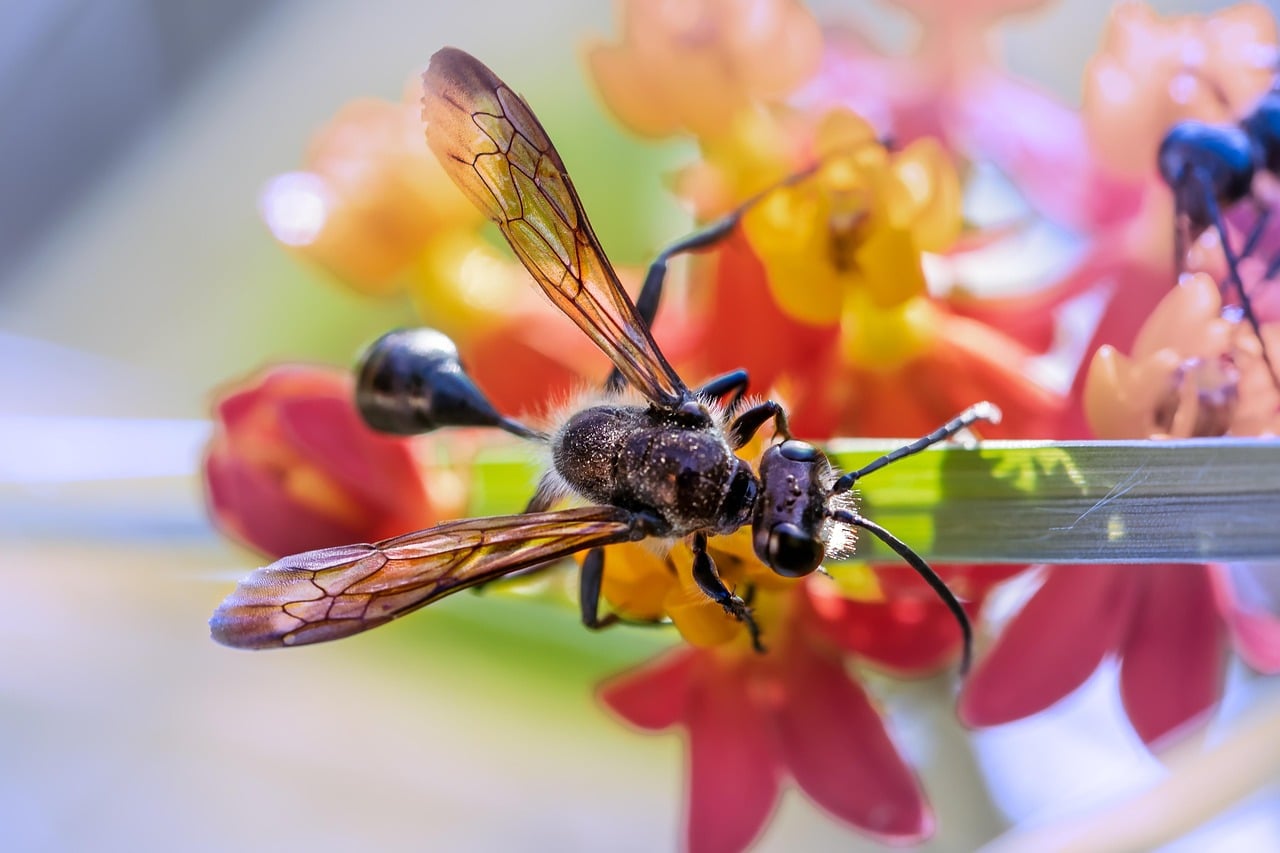
What do flying carpenter ants look like? Flying carpenter ants are large — typically a quarter inch to three-quarters of an inch long — with a dark body, bent antennae, a clearly defined pinched waist, and two pairs of wings that are unequal in length. The forewings are noticeably longer than the hindwings, which is one of the key differences from termite swarmers.
Are flying carpenter ants the same as regular carpenter ants? They're the same species, different life stage. Flying carpenter ants are the reproductive members of the colony — called swarmers or alates — that emerge to mate and establish new nests. Worker carpenter ants are wingless and stay behind to maintain the colony. Spotting swarmers means a mature colony is already nearby.
How do I know if I have carpenter ants or termites? Look at the body and antennae. Carpenter ants have a pinched waist and bent (elbowed) antennae. Termite swarmers have a thick, uniform body with no visible waist and straight antennae. Wing length differs, too — carpenter ant wings are unequal, termite wings are the same length. When in doubt, have a pest control professional make the call, since the treatments are completely different.
Can flying carpenter ants damage my home? Yes, though indirectly. Carpenter ants don't eat wood — they excavate it to build nesting galleries. Over time, that excavation significantly weakens the structural wood. A mature colony can house thousands of workers, and left untreated, satellite nests spread throughout a structure. The damage often goes unnoticed for years because it happens inside walls and other out-of-sight areas.
When should I call a pest control professional for carpenter ants? As soon as swarmers are spotted inside or around the home. Swarmers mean an established colony is already active nearby — waiting allows the infestation to grow and the structural damage to worsen. Other signs that warrant a call include frass piles near wood surfaces, small kick-holes in wood framing, or a faint rustling sound inside walls.
Houston's High-Risk Spots
Carpenter ants follow moisture. In Houston, the list of vulnerable spots is long: crawl spaces with poor ventilation, wood framing near leaking kitchen or bathroom pipes, fascia boards exposed to weather, areas around clogged gutters, and any structural wood that contacts soil. Homes with a prior termite infestation are at elevated risk — carpenter ants move in quickly wherever wood has already been weakened.
Beyond the swarmers themselves, signs of active carpenter ant activity include cone-shaped frass piles near wood surfaces, small kick-holes, and — with large enough colonies — a faint rustling sound inside walls. Any of these should prompt a professional inspection.
Why DIY Rarely Fixes the Problem
Most DIY approaches target the ants people can see, not the colony those ants came from. Carpenter ants establish satellite nests away from the main colony, so the visible population doesn't reveal where the real infestation is concentrated. Spraying accessible areas eliminates only a fraction of the colony at best, while the core nest continues to produce workers.
ABC's licensed ant control Houston specialists trace carpenter ant activity back to its source, treat the colony directly, and address the moisture or wood conditions that invited the infestation. That's the difference between a short-term fix and an actual solution.
ABC Home & Commercial Services has protected properties throughout Greater Houston from pests since 1986. Their Houston pest control services cover the full range of wood-damaging and invasive pests affecting the region. For homeowners who've spotted swarmers or other signs of a carpenter ant infestation, the team provides thorough inspections and targeted treatment plans tailored to what's actually happening inside the structure.
Content strategy by national digital marketing agency ASTOUNDZ.
ABC Home & Commercial Services Houston
City: Cypress
Address: 11934 Barker Cypress Rd
Website: https://www.abchomeandcommercial.com/houston


Comments
Post a Comment