First-Generation College Student Experiences: Key Challenges & Family Support
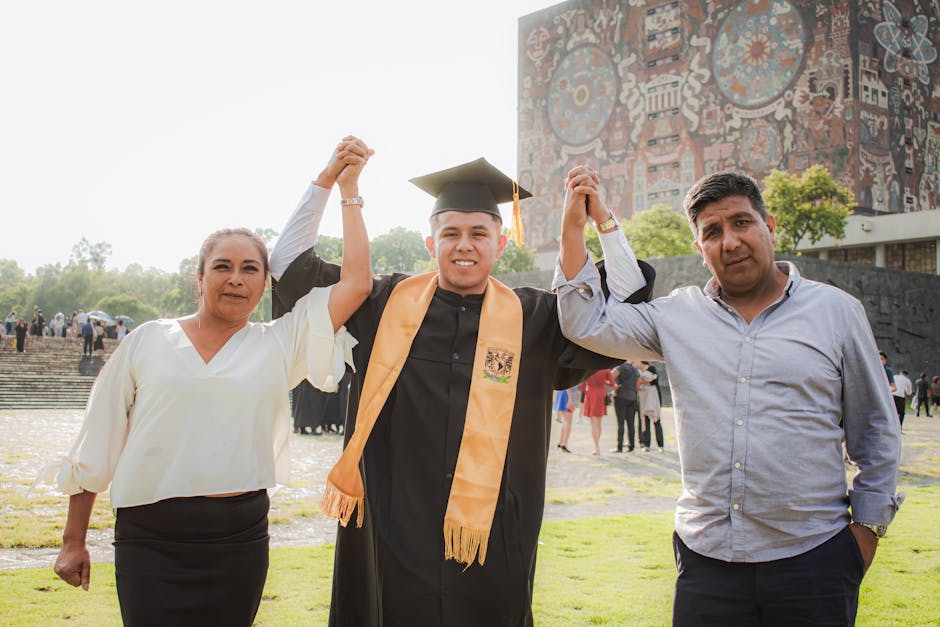
Key Takeaways
- Family support significantly influences academic persistence, decision-making, and emotional stability for first-generation college students.
- Many students navigate college systems without inherited knowledge, increasing reliance on external guidance and structured support.
- According to the National Center for Education Statistics, first-generation students are less likely to complete a degree compared to their peers.
- Strong support systems—both at home and through structured programs—help bridge gaps in resources, confidence, and long-term planning.
Understanding the First-Generation Context
Accessing higher education is often seen as a milestone achievement, but for first-generation college students, it can also mark the beginning of a complex transition. Without a family history of navigating college systems, these students frequently rely on external guidance, mentorship, and structured college access support programs to understand expectations, processes, and long-term planning.
Family support remains central to this journey, but it often takes a different form compared to continuing-generation households. Instead of academic guidance, support may be rooted in encouragement, sacrifice, or emotional backing—valuable, yet sometimes insufficient for navigating institutional complexity.
The Knowledge Gap Within Families
One of the most persistent challenges first-generation college students face is not a lack of motivation, but a lack of inherited academic context. In households where college was never experienced firsthand, guidance on applications, financial aid, or academic pathways is often limited or absent. As a result, students are required to interpret complex systems on their own—systems that are typically navigated more intuitively in families with prior exposure to higher education.
This gap does not simply affect isolated decisions; it compounds over time. Misunderstanding application timelines, underestimating financial aid options, or selecting courses without long-term planning can all influence a student’s academic trajectory. Over time, the absence of early clarity can lead to delayed decisions, reduced confidence, and missed opportunities that are difficult to recover from later.
Emotional Pressure and Responsibility
Beyond logistical challenges, family dynamics introduce a more nuanced form of pressure. First-generation college students are often positioned as representatives of progress within their families, carrying expectations that extend beyond personal success. The pursuit of higher education becomes tied to broader aspirations—economic stability, social mobility, and long-term security for the household.
This creates a dual responsibility. On one hand, students must adapt to unfamiliar academic environments; on the other, they remain connected to family roles and expectations. The tension between these responsibilities can be difficult to navigate. Feelings of guilt around leaving home, pressure to succeed without visible setbacks, and the need to balance academic work with family obligations can all contribute to sustained emotional strain.
While family encouragement remains a powerful source of motivation, it does not always mitigate these pressures. In many cases, it amplifies them, particularly when students feel that failure carries consequences beyond their own individual experience.
Financial Constraints and Decision-Making
Financial limitations shape not only access to higher education but also the decisions students make throughout their academic journey. For many first-generation students, college is approached with a heightened awareness of cost, risk, and return on investment. This often leads to more conservative choices, even when those choices may limit long-term opportunities.
According to the National Center for Education Statistics, first-generation college students have lower completion rates than their continuing-generation peers, with financial strain identified as a contributing factor. This reality influences decisions at multiple levels—from selecting institutions and majors to choosing whether to participate in unpaid internships or extracurricular activities that could enhance prospects.
Rather than being a one-time barrier, financial pressure becomes an ongoing consideration. Students may prioritize immediate stability over long-term growth, avoid academic risks, or take on additional work that reduces the time available for studies. These trade-offs, while practical in the short term, can shape outcomes in ways that extend beyond graduation.
The Role of Structured Support Systems
In response to these overlapping challenges, structured support systems provide a form of stability that is often missing from a student’s immediate environment. Unlike informal advice or one-time guidance, these systems offer consistent, informed support that evolves alongside the student’s academic journey.
Mentorship programs, cohort-based models, and leadership development initiatives serve multiple functions at once. They translate complex academic processes into actionable steps, provide accountability, and create a space where students can ask questions without hesitation. Over time, this consistency helps reduce uncertainty and builds the confidence needed to make informed decisions.
- Access to reliable, experience-based guidance
- Ongoing mentorship that adapts to changing needs
- A structured environment that encourages long-term planning
Equally important is the sense of belonging these systems create. When students are surrounded by peers navigating similar challenges, the experience of isolation—common among first-generation students—begins to diminish. In many cases, students turn to structured initiatives—such as cohort-based mentorship and leadership development programs, including organizations like Leaders in Training in Las Vegas—to gain consistent guidance and long-term academic direction. This social dimension plays a critical role in persistence, often determining whether students continue or disengage when challenges arise.
Balancing Family Support With External Guidance
Family support remains a foundational element in the success of first-generation college students, but it operates most effectively when complemented by external guidance. Emotional encouragement, cultural values, and motivation provided by families are not diminished by external support—they are strengthened by it.
The most effective outcomes emerge when these two forms of support work together. Families provide the emotional grounding that sustains students through uncertainty, while structured programs offer the practical tools needed to navigate complex systems. This combination allows students to move forward with both confidence and clarity, reducing the likelihood of avoidable setbacks.
Rather than viewing family support as limited, it is more accurate to see it as incomplete on its own. When paired with informed mentorship and structured resources, it becomes part of a broader support system capable of addressing both the emotional and practical dimensions of the college experience.
Why Understanding These Challenges Matters for Long-Term Outcomes
Recognizing the intersection between family support and structural barriers is essential for anyone evaluating how first-generation students succeed in higher education. These challenges are not isolated—they interact, compound, and evolve.
Students who are able to access consistent guidance while maintaining strong family connections are better positioned to make informed academic decisions, persist through setbacks, and adapt to changing circumstances. In contrast, those without access to structured support often face a steeper path, even when motivation and effort remain high.
Understanding these dynamics often leads students and families to explore college access and leadership support programs that provide structured guidance and long-term mentorship. It also highlights the importance of creating environments where both family support and external resources work together to support long-term success.
Rather than viewing these challenges as limitations, they can be understood as signals—indicating where targeted support, informed decision-making, and sustained guidance can make the most meaningful difference.
Leaders in Training
City: Las Vegas
Address: 900 N Lamb Blvd
Website: https://litlv.org/
Phone: +1 702 449 0703
Email: mcastillo@litlv.org


Comments
Post a Comment