Couples Therapy After Infidelity: Brighton Counselling Affairs Recovery Process
Key Takeaways
- Studies show that 70% of couples successfully recover from infidelity when they receive professional therapy support, with structured approaches proving most effective.
- The recovery process follows three distinct stages: crisis stabilisation, trauma processing, and moving towards forgiveness or conscious separation.
- EFT Tapping helps release body-based trauma responses and reduces defensive reactions that commonly arise after betrayal.
- Both partners require individual healing alongside couples work to address underlying patterns that contributed to the infidelity.
- Online therapy proves equally effective as in-person sessions for infidelity recovery, removing barriers for Brighton couples.
Infidelity represents one of the most challenging experiences a relationship can face, yet it doesn't have to signal the end. Understanding the recovery process and accessing appropriate professional support can transform this crisis into an opportunity for deeper connection and healing.
Why 70% of Couples Successfully Recover from Infidelity with Professional Support
Research consistently demonstrates that couples who engage in professional therapy following infidelity achieve remarkably positive outcomes. Studies show that 70% of couples experience meaningful improvement in their relationship satisfaction and attachment security when working with qualified therapists. This success rate reflects the structured, evidence-based approaches that specialised therapists employ to address the complex layers of trauma, trust breakdown, and emotional wounds that infidelity creates.
The key difference lies in having professional guidance and support during what can feel like an overwhelming emotional situation. Without support, couples often become trapped in cycles of blame, defensiveness, and repeated conflict that gradually erode any remaining connection. Professional couples therapy provides the framework and tools necessary to help couples move beyond the betrayal.
The Three-Stage Recovery Process Brighton Therapists Use
Brighton therapists specialising in infidelity recovery typically guide couples through a structured three-stage process designed to address the immediate crisis whilst building foundations for long-term healing. This phased approach ensures that each stage receives adequate attention before moving forward, preventing couples from rushing past vital healing work.
1. Crisis Stabilisation and Safety Creation
The initial stage focusses on establishing emotional and practical safety for both partners. This involves creating clear boundaries around contact with third parties, establishing transparency agreements, and developing immediate coping strategies for intense emotions. Therapists help couples manage the acute trauma responses that commonly occur in the weeks following disclosure, including panic attacks, intrusive thoughts, and sleep disturbances.
During this phase, the betrayed partner often experiences symptoms similar to post-traumatic stress disorder, whilst the unfaithful partner grapples with shame, guilt, and fear of losing the relationship. Creating a stable foundation allows both individuals to begin processing their experiences without being overwhelmed by emotional reactivity.
2. Processing the Trauma and Understanding Impact
Once initial stability is established, therapy moves into deeper examination of the betrayal's impact, and the underlying factors that contributed to the infidelity. This stage involves understanding the emotional wounds created by the betrayal whilst also examining relationship patterns, unmet needs, and individual vulnerabilities that may have played a role.
The betrayed partner receives support in processing their trauma whilst learning to express pain and anger constructively. Simultaneously, the unfaithful partner develops genuine empathy for their partner's experience and takes full accountability for their choices. This mutual understanding forms the foundation for any potential reconciliation.
3. Moving Towards Forgiveness or Conscious Uncoupling
The final stage supports couples in making informed decisions about their relationship's future. Some couples choose to rebuild their partnership with renewed commitment and deeper intimacy. Others recognise that whilst healing has occurred, the relationship cannot continue, leading to conscious uncoupling - a respectful separation that honours the healing work accomplished.
Forgiveness, when it occurs, represents a gradual process rather than a single moment. It involves releasing resentment for the sake of one's own wellbeing rather than condoning the behaviour or necessarily rebuilding the relationship.
How EFT Tapping Helps Release Emotional Charge from Betrayal
Emotional Freedom Technique (EFT) Tapping offers a unique approach to healing infidelity trauma by working directly with the body's stress response system. This technique involves gently tapping specific acupuncture points whilst focusing on distressing emotions or memories, helping to calm the nervous system and reduce the emotional charge attached to traumatic experiences.
Addressing Body-Based Trauma Responses After Infidelity
Betrayal trauma often becomes stored in the body, creating physical symptoms such as chest tightness, nausea, or hypervigilance that persist long after the initial discovery. Traditional talk therapy, whilst valuable, may not fully address these somatic responses. EFT Tapping works directly with the body's energy system to release trapped trauma and restore emotional equilibrium.
Many individuals find that certain triggers - seeing their partner's phone, hearing specific songs, or visiting particular locations - create immediate physical reactions that feel beyond their conscious control. EFT Tapping helps desensitise these triggers by reducing the nervous system's reactivity to associated memories.
Reducing Triggers and Defensive Reactions Through Tapping
The technique proves particularly effective for reducing defensive reactions that can sabotage recovery conversations. When partners feel triggered, their ability to communicate constructively diminishes significantly. EFT Tapping helps regulate these responses, creating space for more thoughtful and empathetic interactions.
Regular practice of EFT Tapping can help both partners develop greater emotional resilience and self-regulation skills. This improved emotional capacity supports the ongoing work of rebuilding trust and intimacy whilst reducing the likelihood of destructive conflict cycles.
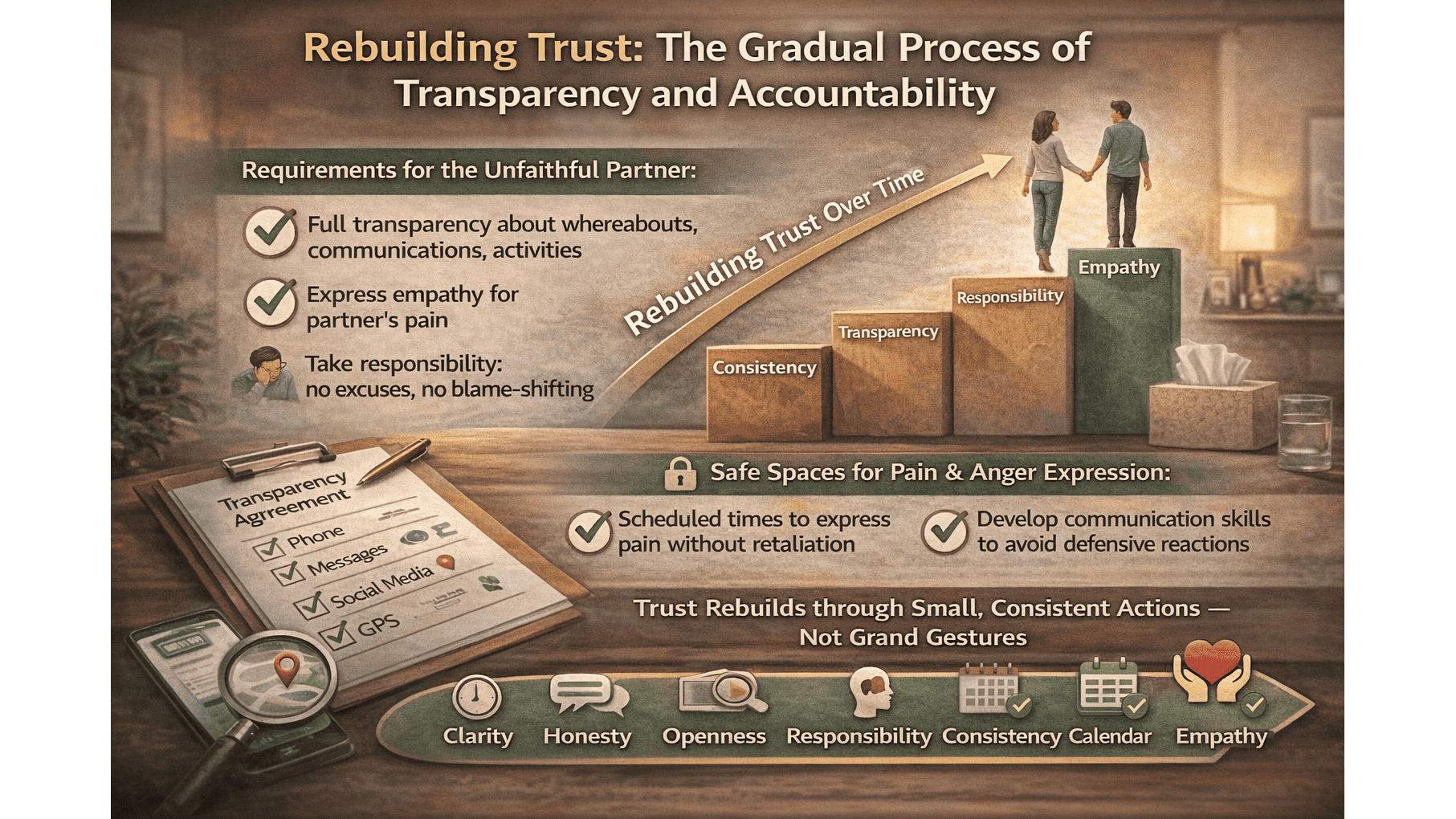
Rebuilding Trust: The Gradual Process of Transparency and Accountability
Trust rebuilding after infidelity requires consistent, sustained effort over an extended period. Rather than expecting immediate forgiveness, successful recovery involves understanding that trust rebuilds through numerous small actions that demonstrate reliability, honesty, and commitment to change.
Requirements from the Unfaithful Partner
The partner who had the affair bears primary responsibility for trust rebuilding efforts. This involves complete transparency about their whereabouts, communications, and activities. Many couples establish agreements about phone access, social media use, and reporting systems that provide the betrayed partner with necessary reassurance.
Beyond practical transparency, the unfaithful partner must demonstrate genuine empathy for their partner's pain, take full responsibility for their choices without making excuses, and show consistent commitment to understanding why the infidelity occurred. This includes identifying and addressing the personal issues, relationship dynamics, or external stressors that contributed to their choices.
Creating Safe Spaces for Pain and Anger Expression
Recovery requires creating structured opportunities for the betrayed partner to express their pain, anger, and questions without fear of retaliation or shutdown. This doesn't mean unlimited venting, but rather scheduled times where difficult emotions can be expressed and heard.
Infidelity couples therapy helps the individuals within the relationship to develop communication skills that allow for emotional expression without escalating into destructive conflict. The unfaithful partner learns to listen empathetically without becoming defensive, whilst the betrayed partner develops ways to express their needs constructively rather than through attacks or ultimatums.
Why Both Partners Need Individual Healing Alongside Couples Work
Whilst couples therapy addresses relational dynamics, individual healing work proves equally vital for sustainable recovery. Each partner brings their own psychological patterns, childhood experiences, and personal vulnerabilities that contributed to the relationship's dynamics and the occurrence of infidelity.
The betrayed partner often needs individual support to process trauma symptoms, develop self-care strategies, and rebuild their sense of personal worth and identity outside the relationship. They may also need to examine their own relationship patterns and identify any ways they might have contributed to emotional distance without bearing responsibility for their partner's choices.
The unfaithful partner requires individual therapy to understand the internal factors that led to their betrayal, develop better coping strategies for stress and emotional needs, and address any underlying issues such as addiction, depression, or attachment difficulties. This personal work improves their capacity to show up authentically in couples therapy and make genuine changes.
Online vs In-Person Therapy: Equal Effectiveness for Infidelity Recovery
Research demonstrates that online therapy achieves outcomes comparable to in-person sessions for couples recovering from infidelity. Studies indicate that couples therapy for infidelity, particularly modalities like EFT, has high success rates often cited in the range of 60-80% for significant improvement or recovery, regardless of delivery format. This equivalence proves particularly significant for Brighton couples facing practical barriers to traditional therapy attendance.
How Digital Sessions Remove Barriers for Brighton Couples
Brighton's high cost of living and demanding work schedules often make consistent therapy attendance challenging. Online sessions eliminate travel time, parking costs, and scheduling conflicts that can disrupt therapeutic momentum. Couples can access support from their own homes, creating a more comfortable environment for vulnerable conversations.
The familiar setting often helps partners feel more relaxed and open during sessions. Many therapists note that seeing couples in their natural environment provides valuable insights into relationship dynamics that might not emerge in a clinical setting. Additionally, online therapy offers greater scheduling flexibility, enabling sessions to be held during lunch breaks, early mornings, or evenings that suit demanding professional schedules.
The Hove Counselling Practice's Multi-Modal Approach
The Hove Counselling Practice integrates various therapeutic approaches based on each couple's specific needs and responses. This might include combining traditional talk therapy with EFT Tapping, incorporating elements of Emotionally Focused Therapy with Cognitive Behavioural techniques, or adapting approaches based on progress and emerging needs.
The flexibility of online delivery allows the Practice to introduce new techniques seamlessly, guiding couples through practical exercises in their own space, and providing consistent support throughout the recovery journey. This adaptability proves particularly valuable given the unpredictable nature of infidelity recovery, where progress often occurs in waves rather than linear progression.
Contact Claire Sainsbury MBACP for Specialised Infidelity Recovery Support
Recovery from infidelity requires specialised expertise and compassionate guidance from professionals who understand the complex dynamics of betrayal trauma and relationship healing. The journey demands patience, commitment, and skilled support to navigate successfully.
Professional guidance provides the structure, tools, and objective perspective necessary to transform this crisis into an opportunity for deeper understanding and authentic connection. Whether couples ultimately choose reconciliation or conscious separation, the healing work undertaken during this process creates lasting benefits for both individuals.
For specialised support in recovering from infidelity, contact Claire Sainsbury at The Hove Counselling Practice, which offers couples therapy services both online and in-person to support relationships through their most challenging moments.
The Hove Counselling Practice
City: Hove
Address: 126 Shirley St
Website: https://thehovecounsellingpractice.co.uk


Comments
Post a Comment