Cold Air vs Heat Essential Oil Diffusion And How They Compare
Key Takeaways
- Cold-air diffusion preserves essential oil chemical integrity while heat-based systems destroy therapeutic compounds through thermolysis
- Water-based ultrasonic diffusers create health risks from microbial growth and mineral "white dust" that cold-air technology avoids
- Commercial applications require HVAC integration and scalability that only cold-air diffusion systems can provide efficiently
- Total cost analysis reveals cold-air diffusion offers superior value despite higher upfront investment
Essential oil diffusion technology has evolved from simple candle warmers to sophisticated commercial-grade systems that can scent entire buildings. The method used to transform liquid oils into airborne particles determines everything from scent quality to health safety to operational costs.
Why Chemical Integrity Matters More Than You Think
Essential oils contain hundreds of delicate volatile organic compounds that create their unique therapeutic and aromatic properties. These molecular structures are surprisingly fragile, and the diffusion method directly impacts whether the oil reaches the air intact or chemically altered. When essential oils undergo structural changes during diffusion, the resulting aroma differs significantly from the original blend, and any potential wellness benefits are compromised.
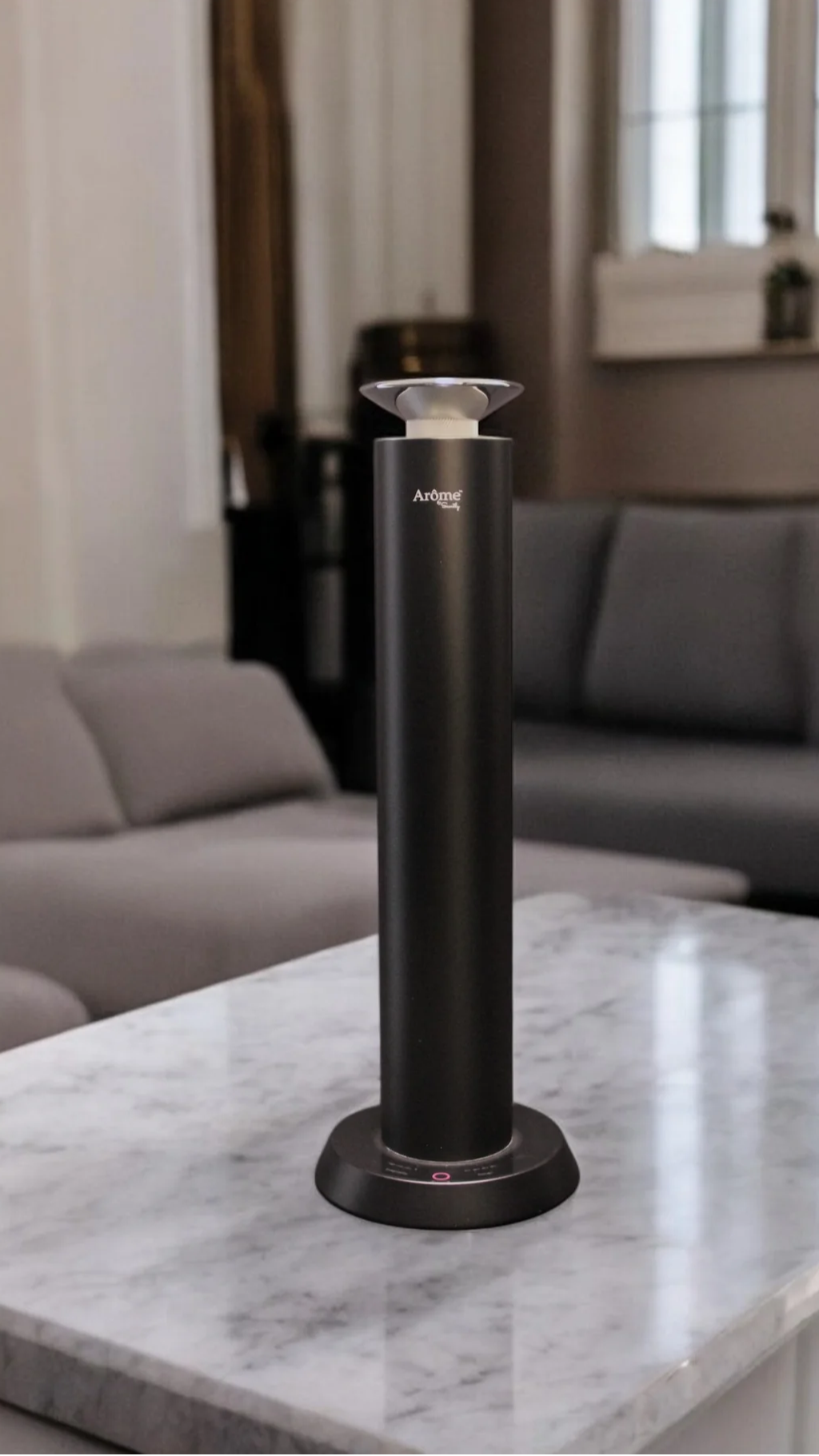
The preservation of chemical integrity isn't just about maintaining scent quality—it's about safety. Scently's cold-air diffusion technology ensures that essential oils maintain their original molecular structure without thermal degradation or water dilution. When oils are heated or mixed with water, they can alter the chemical composition, potentially leading to the formation of by-products that may cause respiratory irritation or other adverse reactions in sensitive individuals.
Professional perfumers and aromatherapists specifically formulate their blends to deliver precise ratios of top, middle, and base notes. Any alteration to these carefully balanced molecular structures fundamentally changes the intended experience and effectiveness of the product.
Heat-Based Systems Break Down Essential Oils
1. Thermolysis Destroys Therapeutic Compounds
When essential oils are exposed to heat from warmers or candles, they undergo thermolysis—a chemical breakdown process that destroys their beneficial properties. Heating essential oils can increase VOC emissions and lead to the formation of potentially irritating by-products. These heated compounds can cause respiratory irritation rather than providing therapeutic benefits.
2. Fractional Evaporation Changes Scent Profiles
Heat causes different molecular weights within essential oils to evaporate at different rates—a process called fractional evaporation. Lighter, more volatile compounds escape first, leaving behind heavier, often less pleasant-smelling resins. This means the scent profile continuously changes throughout a single diffusion session, starting bright and fresh but becoming increasingly heavy and sometimes acrid as the lighter molecules are depleted.
3. Limited Coverage Area Requires Multiple Units
Heat-based diffusers typically have limited coverage areas, requiring multiple units for larger spaces. This creates uneven scent distribution with "hot spots" near the warmers and "dead zones" in corners or adjacent rooms. The resulting patchwork of scent intensity is particularly problematic in commercial environments where consistent brand experience is essential.
Cold-Air Technology Preserves Oil Purity
How Venturi Effect Creates Pure Nano-Mist
Cold-air diffusion operates on the Venturi principle, using high-velocity compressed air to create a pressure differential that draws pure oil through an atomization chamber. This mechanical process breaks the oil into microscopic particles between 0.1 and 5 microns in diameter without heat or water. The resulting "dry" nano-mist behaves like a gas, remaining suspended in air for hours while maintaining the oil's original chemical composition.
The atomization process maximally preserves the essential oil's therapeutic compounds because no thermal energy is applied. This means the full spectrum of terpenes, esters, and phenols reach the air exactly as the perfumer intended, delivering both authentic scent profiles and any potential wellness benefits.
Superior Coverage Without Degradation
Professional cold-air diffusers can effectively scent spaces from 500 to over 6,000 square feet from a single unit. The nano-mist particles are so small they follow natural air currents and ventilation patterns, creating even distribution throughout multi-room spaces. Unlike heat-based systems, the scent intensity and profile remain consistent throughout the entire diffusion period.
Health and Safety Risks You Need to Know
1. VOC Emissions from Heat Diffusion
Heated essential oils can react with indoor air to form secondary compounds—particles that can penetrate deep into lung tissue and potentially cause inflammatory responses. As essential oil temperature increases, VOC concentrations can grow significantly, creating indoor air quality concerns in poorly ventilated spaces.
2. Microbial Growth in Water-Based Systems
Ultrasonic diffusers require standing water reservoirs that quickly become breeding grounds for mold and bacteria if not cleaned daily. Studies have documented significant bacterial growth in the air near ultrasonic units after just days of use without cleaning. Common species include Micrococcus luteus and other molds and bacteria, which are then aerosolized directly into breathing air.
3. Particle Emissions and Mineral Residue
Water-based diffusers create "white dust" from dissolved minerals in tap water. This mineral residue can be inhaled and may cause respiratory concerns, particularly for children. Cold-air systems eliminate this risk entirely by operating without water.
Commercial Applications and HVAC Integration
Scalability for Large Spaces
Commercial scenting demands consistent coverage across thousands of square feet, which only HVAC-integrated cold-air systems can provide effectively. Major hotel chains and luxury retailers use these systems to deliver signature scents throughout entire buildings from centralized units connected to air handling systems. The technology can treat facilities up to 25,000 square feet, ensuring uniform scent distribution without the maintenance burden of multiple smaller units.
HVAC integration offers discrete operation with the diffusion hardware hidden in mechanical rooms, maintaining aesthetic integrity while providing automated scheduling and intensity control. Building managers can create scent zones for different areas—energizing citrus in work spaces, calming lavender in relaxation areas—all controlled from a central dashboard.
Total Cost Analysis
While cold-air diffusers require higher upfront investment, long-term analysis reveals superior value through reduced maintenance and consistent performance. Professional cold-air systems offer significant labor savings compared to water-based systems that require daily water changes and frequent replacement. The reduced maintenance requirements alone justify the premium pricing for commercial applications.
Cold-Air Diffusion Offers Significant Business Advantages
The evidence strongly supports cold-air diffusion for any application where scent quality, safety, and operational efficiency matter. Chemical purity preservation ensures authentic fragrance experiences while eliminating health risks from thermal degradation, microbial growth, and mineral inhalation. The technology's scalability and HVAC integration capabilities make it the only viable solution for professional environments requiring consistent, high-quality scenting.
For business owners evaluating diffusion options, cold-air technology provides measurable advantages: coverage areas up to 6,000 square feet from single units, precise digital control systems, and dry nano-mist that won't damage furniture or create residue. The higher initial investment delivers superior return through reduced maintenance, consistent performance, and the ability to create signature scenting that builds brand experience and customer satisfaction.
Discover how Scently's advanced cold-air diffusion systems can transform your commercial space with professional-grade scenting technology designed for business environments.
Scently
City: Irving
Address: 2300 Valley View Lane
Website: https://scent.ly


Comments
Post a Comment