Bangladesh Food Insecurity Crisis: How Food Relief Reaches Remote Villages
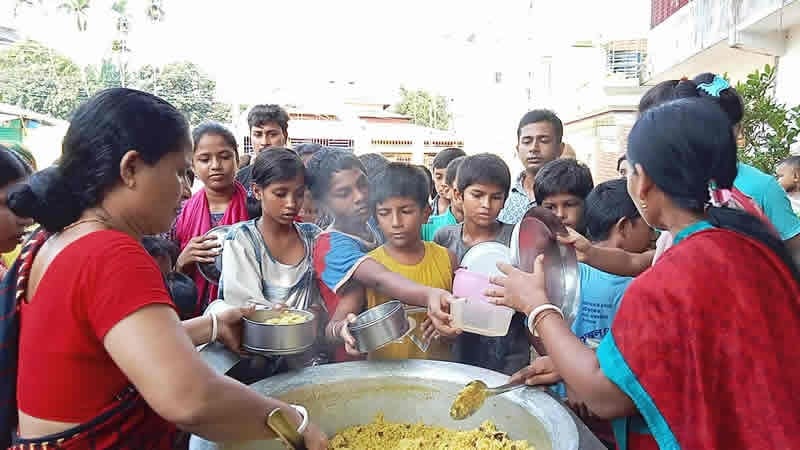
Key Takeaways
- Over 15 million people in Bangladesh face acute food insecurity, with rural regions most exposed to climate and income shocks.
- The core challenge is not food availability, but distribution inefficiency and access gaps.
- Last-mile delivery determines impact, especially in flood-prone and infrastructure-limited areas.
- Staple foods are prioritized due to logistics, storage resilience, and cultural alignment.
- Sustainable relief depends on consistent funding and embedded local networks, not one-time aid.
Understanding The Structural Causes Of Food Insecurity
Food insecurity in Bangladesh is not only a matter of insufficient production, but a complex issue shaped by access, affordability, and environmental disruption. While national food output has improved, millions still lack consistent access to meals due to income instability and geographic isolation. According to global food security assessments, more than 15 million people in Bangladesh face acute food insecurity, particularly in rural regions affected by flooding and economic volatility.
Within this context, food relief in Bangladesh plays a critical role in bridging the gap between supply and access. Organizations working in this space focus on ensuring that essential food reaches communities where traditional systems fail to provide consistent support.
Why Last-Mile Distribution Determines Real Impact
In food relief operations, the final stage of delivery is often the most challenging. Known as last-mile distribution, this phase involves transporting food into remote villages where infrastructure limitations can significantly disrupt access.
Seasonal flooding, poor road connectivity, and dispersed populations make centralized distribution ineffective in many rural areas. As a result, successful food relief efforts prioritize adaptability, using decentralized systems that can respond to rapidly changing conditions. The ability to navigate these constraints ultimately determines whether food reaches intended recipients or remains delayed within the system.
How Distribution Networks Function In Practice
Food relief systems operate through interconnected layers rather than a single linear supply chain. Central procurement ensures availability, but the real complexity lies in how food moves through regional and local networks.
Distribution hubs such as schools, community centers, and places of worship serve as key access points, enabling efficient delivery to large groups. Beyond these hubs, localized distribution becomes essential for reaching individuals who cannot travel due to distance, health, or social barriers.
This multi-layered approach ensures that food flows from centralized storage into increasingly targeted channels. Without such coordination, even well-supplied programs risk failing at the point of delivery.
Why Staple Foods Are Central To Relief Distribution
Food relief strategies in Bangladesh rely heavily on staple foods such as rice and lentils, not simply due to tradition, but because of their alignment with logistical, economic, and cultural constraints. In high-pressure distribution environments, food selection must optimize for transport efficiency, storage stability, and immediate usability.
The preference for staple-based aid is driven by several operational factors:
- Storage resilience: Rice and lentils can withstand high humidity and extended storage without rapid spoilage, reducing loss across supply chains.
- Transport efficiency: High caloric density relative to weight allows larger populations to be served per shipment.
- Cultural compatibility: These foods are already embedded in daily diets, ensuring immediate consumption without adaptation barriers.
- Preparation flexibility: Minimal ingredients and simple cooking methods make them accessible even in resource-constrained settings.
- Cost predictability: Stable pricing compared to perishable goods enables more consistent procurement planning.
These factors make staple foods not just a nutritional choice, but a logistical necessity in environments where distribution constraints directly shape impact.
The Role Of Community Networks In Sustaining Distribution
Formal logistics systems alone are insufficient to sustain effective food relief in rural Bangladesh. The gap between structured operations and real-world conditions is often bridged by informal community networks that provide localized insight and operational support.
These networks enable more accurate identification of vulnerable households, particularly those that may not be visible through formal data channels. They also facilitate smoother distribution by organizing communities, managing access points, and ensuring that aid reaches intended recipients efficiently.
Over time, these networks evolve into a form of embedded infrastructure, strengthening both immediate relief efforts and long-term resilience.
How Support Expands Food Relief Reach In Bangladesh
The scalability of food relief efforts depends on the strength and consistency of the systems supporting them. Financial contributions influence procurement capacity, but more importantly, they determine whether distribution can be sustained over time rather than delivered in isolated cycles.
Volunteer involvement further extends operational reach, particularly in remote regions where formal infrastructure is limited. In such environments, local participation often determines whether food can reach individual households beyond centralized hubs.
As organizations working in rural food assistance in Bangladesh continue to expand their efforts, the balance between scale and consistency remains a defining challenge. Sustained support enables these systems to evolve from reactive responses into stable, repeatable distribution networks that can reach the most vulnerable communities.
Lotus Ministry Trust
City: San Francisco
Address: 1355 Post St
Website: https://www.lotus-ministry.org/
Email: lotus.ministry.trust@gmail.com


Comments
Post a Comment