What Is AI Ad Testing & How Does It Predict Performance Pre-Launch? 2026 Guide
Key Takeaways
- AI ad testing uses machine learning to analyze visual, emotional, and audio elements, predicting campaign performance before launch with up to 90% accuracy
- Traditional testing methods can be eliminated, cutting costs by up to 90% and reducing testing time by 80%
- Performance marketers achieve 20-30% stronger initial campaign performance and 22% higher ROI on average using AI testing
- Real-time campaign optimization will be standard by 2026, with AI automatically allocating budgets to winning creatives
- AI platforms can analyze thousands of ad variations in under 60 seconds, dramatically outperforming human prediction accuracy
Performance marketers face constant pressure to deliver winning campaigns while managing tight budgets and compressed timelines. The traditional approach of launching ads and hoping for the best has become a luxury few can afford. AI ad testing represents a fundamental shift from reactive optimization to predictive intelligence, allowing advertisers to identify winning creatives before spending a single dollar on media.
AI Ad Testing Predicts Winners in Minutes, Not Weeks
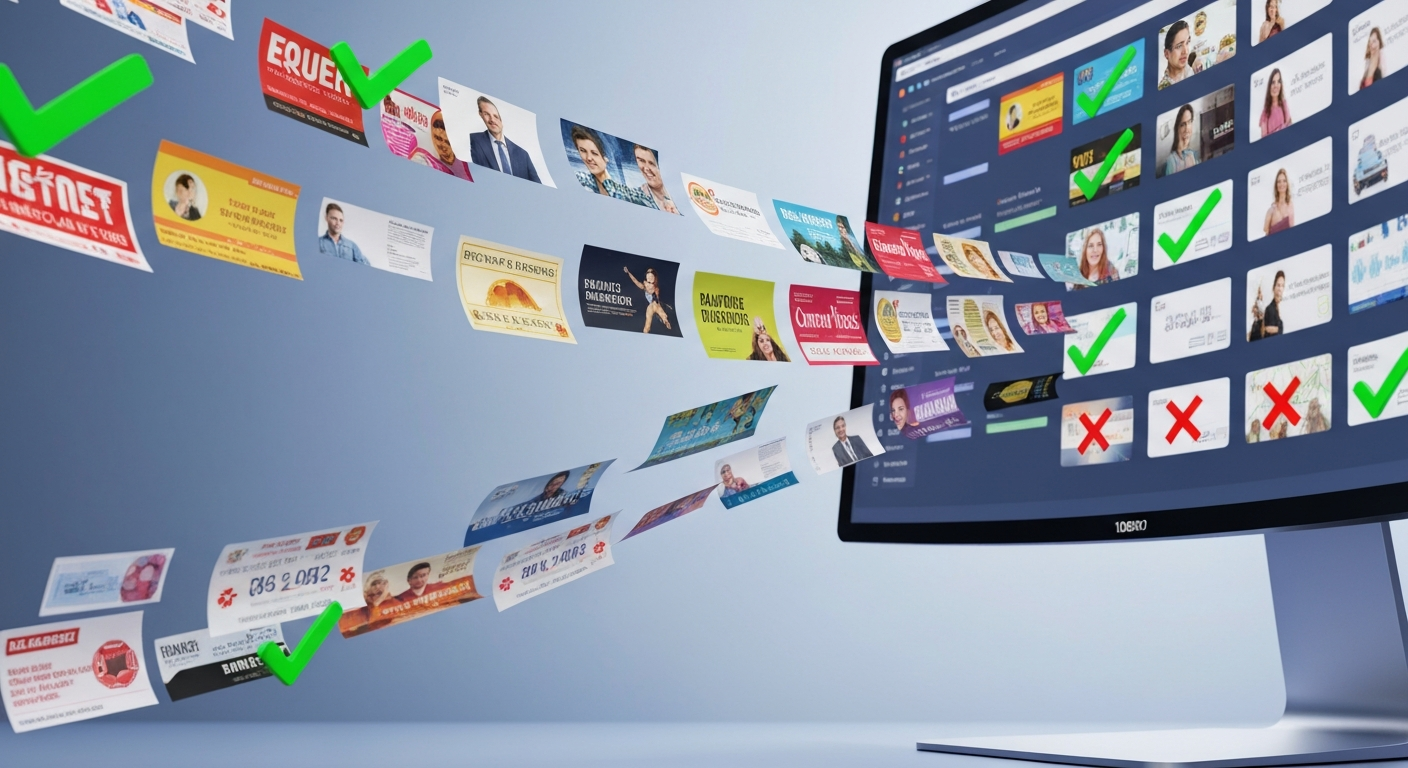
AI ad testing transforms the creative evaluation process from weeks of uncertainty into minutes of data-driven confidence. This technology uses machine learning algorithms to analyze thousands of creative elements simultaneously, predicting which ads will connect with target audiences before they go live. The speed advantage alone represents a competitive edge—while competitors wait weeks for A/B test results, AI-powered marketers can iterate and optimize at lightning pace.
The accuracy of these predictions has reached remarkable levels, with AI systems demonstrating up to 90% accuracy in forecasting winning ad creatives. Compare this to human marketers, who typically achieve only 52% accuracy when predicting ad performance, according to marpipe data. This dramatic improvement in prediction capability means fewer failed campaigns and more budget allocated to proven winners from day one.
Modern AI testing platforms can process and evaluate creative assets at an unprecedented scale. Platforms like GetHookd are leading this transformation, enabling performance marketers to test multiple creative hypotheses simultaneously without the traditional time and cost constraints. The result is faster campaign launches and higher confidence in creative decisions.
How AI Analyzes Ads Before They Launch
Machine Learning Evaluates Visual and Emotional Elements
AI ad testing goes far beyond surface-level analysis, diving deep into the psychological and emotional triggers that drive consumer behavior. Machine learning algorithms evaluate color psychology, facial expressions, composition, and visual hierarchy to predict emotional responses. These systems identify subtle drivers of engagement that human reviewers often miss—specific color combinations that increase trust, facial expressions that boost conversion rates, or visual elements that capture attention in crowded feeds.
The technology analyzes copy elements with equal sophistication, evaluating tone, urgency, clarity, and emotional connection. AI systems can predict how different messaging approaches will perform across demographic segments, identifying which phrases trigger action and which create barriers to conversion. This granular analysis extends to audio elements in video ads, evaluating music tempo, voice tone, and sound effects for their impact on viewer engagement.
AI Significantly Outperforms Traditional Testing Methods
Traditional A/B testing requires statistical significance that can take weeks or months to achieve, especially for campaigns with smaller budgets or niche audiences. AI testing eliminates this waiting period by using vast datasets from previous campaigns and behavioral patterns. The machine learning models have been trained on millions of ad interactions, allowing them to make accurate predictions with minimal data input.
Where traditional testing might compare two or three variations, AI can evaluate hundreds of creative combinations simultaneously. This expanded testing scope reveals performance patterns that would be impossible to detect through conventional methods. The technology identifies winning elements across multiple variables—not just which headline performs better, but which combination of headline, imagery, color scheme, and call-to-action creates optimal results.
Large-Scale Analysis Delivered in Minutes
AI-powered systems can analyze thousands of ad variations in under 60 seconds, processing creative assets at a speed that makes real-time optimization possible. This rapid analysis capability transforms creative testing from a bottleneck into an accelerator, allowing marketing teams to test more concepts and iterate faster than ever before.
The technology processes multiple creative formats simultaneously—static images, video content, carousel ads, and interactive elements—providing performance predictions across all major advertising formats. This universal analysis capability means marketers can optimize entire campaign portfolios rather than testing individual ads in isolation.
Why Traditional Testing Methods Fall Short
Time-Consuming Processes Delay Campaign Launch
Traditional creative testing creates significant delays in campaign deployment, often requiring 2-4 weeks to gather statistically significant results. In fast-moving markets, these delays can mean missing critical opportunities or launching campaigns after optimal timing has passed. Seasonal campaigns, product launches, and trending topics all suffer when testing cycles extend beyond market relevance.
The traditional approach also requires substantial upfront investment before any performance data becomes available. Marketers must commit budget to multiple creative variations and run them long enough to achieve statistical significance. This front-loaded investment model creates cash flow challenges and reduces the ability to pivot quickly based on market changes.
Limited Scalability Restricts Testing Volume
Manual testing processes create natural bottlenecks that limit the number of creative concepts that can be evaluated. Most marketing teams can only test a handful of variations due to time and resource constraints. This limitation forces teams to make educated guesses about which concepts deserve testing priority, potentially missing breakthrough creative approaches.
Traditional testing also struggles with audience segmentation, requiring separate test groups for different demographics or behavioral segments. The sample size requirements multiply quickly, making thorough audience testing prohibitively expensive for most campaigns. AI testing eliminates these scale limitations by predicting performance across multiple audience segments simultaneously.
Proven Performance Benefits for Advertisers
1. Cut Testing Costs by Up to 90%
AI testing eliminates the media spend required for traditional A/B testing, where budgets must be split across multiple variations to gather performance data. Instead of spending thousands of dollars to determine winning creatives, marketers can identify optimal ads before any media investment. This cost reduction is particularly significant for smaller advertisers who previously couldn't afford thorough testing programs.
The technology also reduces production costs by identifying creative elements that drive performance before expensive video production or professional photography. Marketers can test concept sketches, rough cuts, or basic mockups to validate creative direction before investing in final production assets.
2. Reduce Testing Time by 80%
The speed advantage of AI testing compounds throughout the campaign lifecycle. Where traditional testing might require 3-4 weeks per iteration, AI predictions enable immediate creative optimization. This time compression allows for multiple creative iterations within a single campaign period, leading to continuously improving performance.
Faster testing cycles also enable real-time response to market conditions. When competitors launch new campaigns or market trends shift, AI-powered marketers can test and deploy counter-strategies within hours rather than weeks. This agility becomes a significant competitive advantage in dynamic markets.
3. Achieve 20-30% Stronger Initial Performance
AI testing enables campaigns to launch with optimized creatives from day one, eliminating the typical learning period where budgets are spent on underperforming ads. According to McKinsey data, this immediate optimization leads to 20-30% stronger performance during the critical initial launch phase, when audience attention and budget allocation decisions are made.
The performance advantage extends beyond initial metrics, as AI-optimized campaigns maintain higher engagement rates throughout their lifecycle. The technology identifies creative elements that resist ad fatigue, ensuring sustained performance as campaigns scale and mature.
4. Generate 22% Higher ROI on Average
Companies integrating AI testing into their marketing operations report an average of 22% higher ROI compared to traditional testing methods. This improvement stems from multiple factors: reduced testing costs, faster optimization cycles, and higher-performing creative assets. The ROI improvement is particularly pronounced for direct-response campaigns where creative performance directly impacts conversion rates.
The technology also improves budget efficiency by identifying audience segments where creative connection is strongest. Rather than broad targeting with average performance, AI testing enables precise audience-creative matching that maximizes return on ad spend for each segment.
Real-Time Campaign Optimization Already Here
Leading-edge AI platforms have moved beyond pre-launch testing to continuous optimization during live campaigns. These systems monitor performance metrics in real-time, automatically adjusting creative distribution based on evolving audience response patterns. When one creative begins showing fatigue signs, the AI system seamlessly shifts budget to alternative variations.
By 2026, this real-time optimization will become standard practice, with AI systems automatically creating and testing new creative variations based on performance patterns. The technology will continuously generate fresh creative concepts, test them against live audiences, and scale successful variations—all without human intervention. This evolution represents a shift from campaign management to campaign orchestration, where marketers set strategic parameters while AI handles tactical execution.
Advanced systems are already incorporating external signals like weather patterns, news events, and social media trends into creative optimization decisions. This contextual awareness enables campaigns to adapt creative messaging based on real-world conditions, maintaining relevance and engagement as market conditions evolve.
AI Testing Platforms Deliver Pre-Launch Confidence
Modern AI testing platforms provide marketers with unprecedented confidence in creative decisions before campaigns launch. These systems generate detailed performance predictions across multiple metrics—click-through rates, conversion likelihood, engagement scores, and audience segment preferences. The analysis removes guesswork from creative strategy and enables data-driven decision-making at every stage of campaign development.
The platforms also provide actionable recommendations for creative improvement, identifying specific elements that could boost performance. Rather than simply ranking creative options, AI systems explain why certain approaches will succeed and suggest modifications to optimize underperforming elements. This guidance transforms creative development from an art into a science, where decisions are based on predictive intelligence rather than intuition.
As AI testing technology continues advancing, performance marketers gain access to tools that were previously available only to the largest advertisers with substantial testing budgets. This democratization of predictive creative intelligence levels the playing field, enabling smaller teams to compete with enterprise-level optimization capabilities.
GetHookd LLC
City: Miami
Address: 40 SW 13th street
Website: https://www.gethookd.ai/


Comments
Post a Comment