Texas Pest Control Agency's MultiCasting: 1 Guide Into 8+ Formats
Key Takeaways
- Texas homeowners research pest control across multiple platforms—Google, YouTube, Reddit, and TikTok—before hiring, requiring businesses to maintain visible presence everywhere customers look
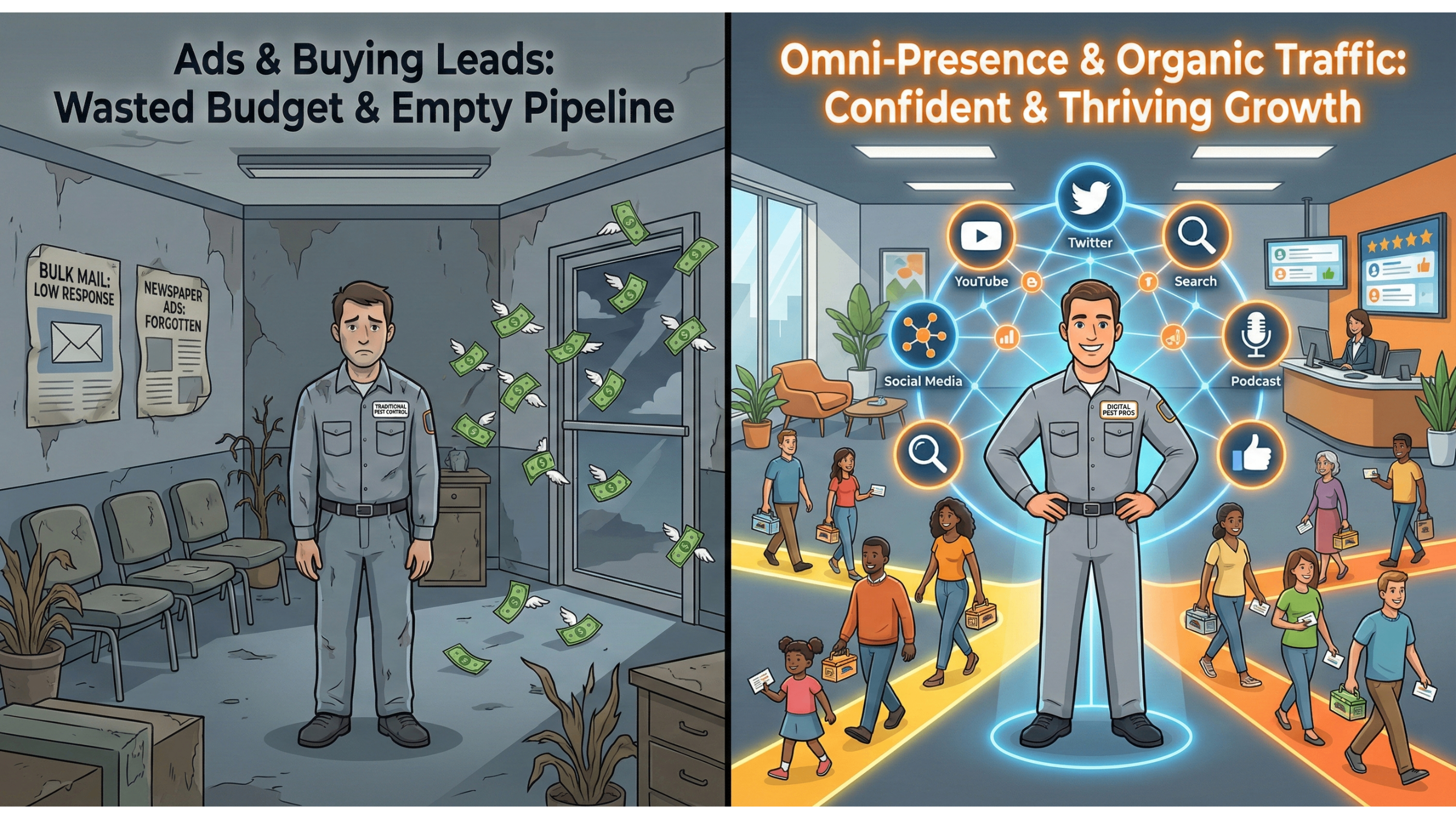
- MultiCasting transforms one piece of content into 8+ formats (videos, articles, podcasts, social posts) distributed across numerous platforms for maximum organic reach
- Strategic content marketing generates 3x more leads and costs 62% less than traditional advertising while building long-term brand authority
- Real Texas pest control companies have achieved significant increases in organic calls and substantial annual website visitors through content strategies
The pest control landscape in Texas has fundamentally shifted. While competitors pour money into expensive pay-per-click campaigns and door-to-door sales, forward-thinking agencies are discovering a more sustainable path to growth through strategic content distribution.
Why Texas Homeowners Research Multiple Platforms Before Hiring Pest Control
Texas homeowners don't make snap decisions when choosing pest control services. The stakes feel too high—strangers entering their homes, chemicals around children and pets, and the risk of recurring infestations if the job isn't done right. Research shows that most people investigate multiple platforms before deciding who to trust with their pest problems.
This research journey typically begins with identification. A homeowner spots "flying insects near the garage" or "small mounds in the backyard" and heads to Google Images or TikTok to figure out what they're dealing with. Are those winged creatures harmless carpenter ants or destructive termites? The search for answers leads them through YouTube tutorials, Reddit discussions in r/Austin or r/Houston, and community recommendations on Nextdoor.
The investigation phase reveals just how skeptical Texas homeowners have become about pest control marketing. ReachLocal Media has observed this trend across hundreds of local service businesses, noting that customers now require multiple meaningful touchpoints before they feel comfortable enough to make contact. Community forums overflow with questions about whether quarterly services are necessary or if DIY treatments using professional-grade products can achieve the same results.
What makes this research behavior particularly challenging for pest control businesses is the seasonal nature of concerns. Spring brings termite swarm anxiety across DFW and Houston. Summer heat drives scorpions and cockroaches indoors, creating urgent moisture-seeking behavior. Fall triggers "the great indoor migration" as temperatures drop, sending rodents toward attic spaces. Each season demands different educational content to capture homeowners at their moment of greatest concern.
The verification phase proves most critical for conversion. Even after identifying their pest problem and researching potential solutions, homeowners scrutinize Google Business Profiles, hunt for recent reviews, and look for visual evidence that a company actually works in their specific neighborhood. They want to see trucks in their subdivision, not just generic stock photos on a website.
The MultiCasting Strategy: One Content Piece Becomes Eight Marketing Assets
MultiCasting solves the omnipresence challenge by transforming a single piece of valuable content into multiple formats optimized for different platforms and audience preferences. Instead of creating separate content for YouTube, Facebook, and Google, smart pest control agencies start with one detailed guide and adapt it strategically across eight or more distinct formats.
Consider a detailed guide about "Fire Ant Prevention in Central Texas." This single piece of research and expertise becomes the foundation for an entire content ecosystem. The transformation process maximizes both reach and return on investment while maintaining consistent messaging across all customer touchpoints.
1. News Articles for Authority Building
The foundational guide transforms into news-style articles distributed across numerous media outlets, including local ABC, NBC, and Fox affiliates. A fire ant prevention guide becomes "Central Texas Braces for Peak Fire Ant Season" - positioning the pest control company as a community authority rather than just another service provider. These placements create high-authority backlinks while establishing credibility that paid ads simply cannot match.
News syndication also captures search traffic for timely queries like "fire ant season Texas 2024" or "when do fire ants swarm Austin." Homeowners searching for current information discover educational content that naturally introduces the company's expertise without aggressive sales messaging.
2. Social Media Posts Across All Major Platforms
The same fire ant content adapts into platform-specific social media formats. Instagram receives visually striking before-and-after photos showing successful fire ant mound treatment. Facebook gets detailed carousel posts explaining the three-step prevention process. LinkedIn targets property managers with cost-benefit analysis of professional treatment versus tenant complaints and property damage.
TikTok and Instagram Reels showcase the most engaging element: technicians demonstrating proper bait placement or revealing hidden fire ant activity that homeowners typically miss. These short-form videos humanize the brand while providing genuine value that viewers save and share within their communities.
3. Video Content for Visual Learning
Video formats serve different learning preferences and platform algorithms. The fire ant guide becomes a detailed 10-15 minute YouTube tutorial covering identification, prevention, and when to call professionals. Shorter versions become YouTube Shorts, Instagram Reels, and TikTok content focusing on single concepts like "Why fire ant baits fail" or "Signs of a queen fire ant."
Video content particularly excels at building trust through transparency. Technicians can demonstrate their knowledge, show actual equipment and techniques, and provide visual proof of results. This transparency directly addresses homeowner skepticism about pest control effectiveness and professionalism.
4. Podcasts and Audio Content
Audio formats reach audiences during commutes, workouts, and household tasks when video consumption isn't practical. The fire ant content becomes interview-style podcasts where technicians discuss seasonal patterns, share success stories, and answer common homeowner questions. These conversations feel less sales-focused and more educational, building authority through storytelling rather than direct promotion.
Podcast distribution across Spotify, Apple Podcasts, and Google Podcasts creates additional discoverability while positioning company representatives as industry experts worthy of interview requests and speaking opportunities.
Publishing Across Multiple Platforms: Where Your Customers Actually Search
Modern customer research extends far beyond traditional Google searches. Today's homeowners discover solutions through diverse platforms, each requiring specific content optimization and engagement strategies. The key lies in understanding where different types of pest-related queries naturally occur and ensuring consistent presence across all relevant touchpoints.
Search Engines Beyond Google
While Google dominates search volume, Bing captures significant market share among certain demographics, particularly older homeowners who represent a core pest control audience. YouTube functions as the second-largest search engine, with homeowners specifically searching for visual identification help and how-to content. These platforms require tailored approaches - Bing responds well to detailed, text-heavy content with clear geographic signals, while YouTube prioritizes engagement metrics and thumbnail optimization.
Voice search through Alexa and Google Home increasingly influences local service discovery. Homeowners ask conversational questions like "What's the best pest control company near me?" or "How do I know if I have termites?" Content must anticipate these natural language patterns and provide direct, conversational answers that voice assistants can easily extract and read aloud.
AI Tools and Modern Discovery Platforms
ChatGPT, Claude, and Perplexity have fundamentally changed how people research complex topics. Homeowners now ask AI tools detailed questions about pest identification, treatment effectiveness, and safety concerns. These platforms pull information from authoritative sources, making it vital for pest control companies to maintain high-quality, factual content that AI systems recognize as trustworthy.
The rise of AI-powered search also emphasizes the importance of structured, answer-first content formatting. When someone asks an AI tool "Are quarterly pest control treatments worth it in Texas?", the system needs to find clear, direct answers backed by local expertise and specific examples.
Community Platforms and Review Sites
Reddit, Nextdoor, and local Facebook groups serve as unofficial consultation platforms where homeowners seek unbiased opinions about pest control services. These communities value authentic engagement over promotional content. Successful pest control companies participate by answering technical questions, sharing prevention tips, and demonstrating expertise without obvious sales pitches.
Community engagement builds long-term brand recognition through helpful contributions rather than interruption marketing. When a company representative consistently provides valuable advice in local forums, community members naturally recommend that business when friends and neighbors need pest control services.
Real Texas Pest Control Results From Strategic Content Distribution
The theoretical benefits of multichannel content marketing translate into measurable business growth for Texas pest control companies willing to commit to strategic approaches. These real-world examples demonstrate the compound effect of organic omnipresence versus traditional advertising approaches.
Reliant Pest Management: Substantial Annual Growth
Reliant Pest Management, operating across Central Texas, transformed their digital presence by focusing on detailed blog content targeting specific local markets. Their systematic approach to content creation and SEO optimization resulted in substantial annual website visitors and generated significant sales-qualified leads per year.
The company's success stemmed from addressing specific regional pest concerns through detailed, location-specific content. Rather than generic "how to kill ants" articles, they created detailed guides addressing "Fire Ant Control in Round Rock Clay Soil" and "Scorpion Prevention for Hill Country Homes." This hyper-local approach captured search traffic from homeowners facing area-specific pest challenges.
Their content strategy also emphasized seasonal timing, publishing termite prevention guides before spring swarming season and rodent exclusion content as fall temperatures dropped. This proactive approach positioned them as the go-to resource when homeowners needed immediate solutions.
The Bug Master: Significant Increase in Organic Calls
The Bug Master, serving the Austin metropolitan area, achieved a substantial increase in phone calls from organic traffic through targeted content marketing and local SEO efforts. Their approach focused on dominating search results for "Pest Control Austin TX" and related local queries while building authority through educational content.
Key to their success was consistent publishing of technician-spotlight content, showcasing real employees working in recognizable Austin neighborhoods. This local authenticity helped differentiate them from national chains while building trust with area homeowners who wanted to work with familiar, neighborhood-focused professionals.
The company also used customer success stories and before-and-after documentation, creating compelling visual proof of their effectiveness. These case studies served dual purposes: demonstrating results to potential customers while providing fresh content for search engines and social media platforms.
How Content Marketing Costs 62% Less Than Traditional Ads
Industry data consistently shows that content marketing generates three times more leads than traditional marketing methods while costing 62% less per acquisition. For Texas pest control companies, this cost efficiency proves vital given the high competition and rising costs in paid advertising channels.
The compounding nature of content assets explains much of this cost advantage. A detailed blog post about termite prevention might cost $500-1000 to research, write, and optimize initially. However, that single piece of content continues generating qualified traffic and leads for years without additional investment. In contrast, the same budget in Google Ads might generate leads for just a few days or weeks.
Content marketing also produces higher-quality leads who arrive already educated about pest control processes and company expertise. These informed prospects typically exhibit less price sensitivity and higher close rates compared to interruption-based advertising leads who may be comparison shopping based solely on price.
Breaking the Texas Pest Control Marketing Cycle: Less Reliance on Paid Ads
Texas pest control companies face an increasingly expensive and competitive paid advertising landscape. Google Ads costs have risen 12.8% year-over-year, while Local Services Ads require constant optimization to maintain visibility. Meanwhile, door-to-door sales strategies face growing consumer resistance and regulatory challenges across major metros.
Strategic content distribution offers a sustainable alternative that builds long-term competitive advantages rather than temporary visibility. Companies investing in strategic content strategies create permanent digital assets that continue attracting customers long after the initial investment period.
The transition away from ad dependency doesn't happen overnight, but the economics become compelling quickly. Within 6-12 months, well-executed content strategies typically begin generating enough organic leads to reduce paid advertising budgets. By month 18-24, many companies achieve advertising independence while maintaining steady growth through organic channels.
This shift also improves profit margins significantly. Organic leads carry no per-click costs, allowing companies to invest savings in service quality, technician training, or geographic expansion rather than constantly feeding advertising platforms.
The key lies in treating content marketing as infrastructure investment rather than expense. Like investing in service vehicles or equipment, strategic content strategies require upfront investment but generate returns for years while supporting sustainable business growth independent of external advertising costs.
For Texas pest control agencies ready to break free from expensive advertising cycles while building lasting market authority, ReachLocal Media specializes in MultiCasting strategies that transform single content pieces into digital omnipresence across all customer research platforms.
ReachLocal Media
City: Grapevine
Address: 1452 Hughes Rd
Website: https://reachlocalmedia.clientcabin.com


Comments
Post a Comment