Pool Deck vs Patio Kitchen: Tampa Installer Reveals Weight Load Demands
Key Takeaways
- Standard pool decks typically support only 50 pounds per square foot, while outdoor kitchens can weigh 800-2,000+ pounds concentrated in small areas
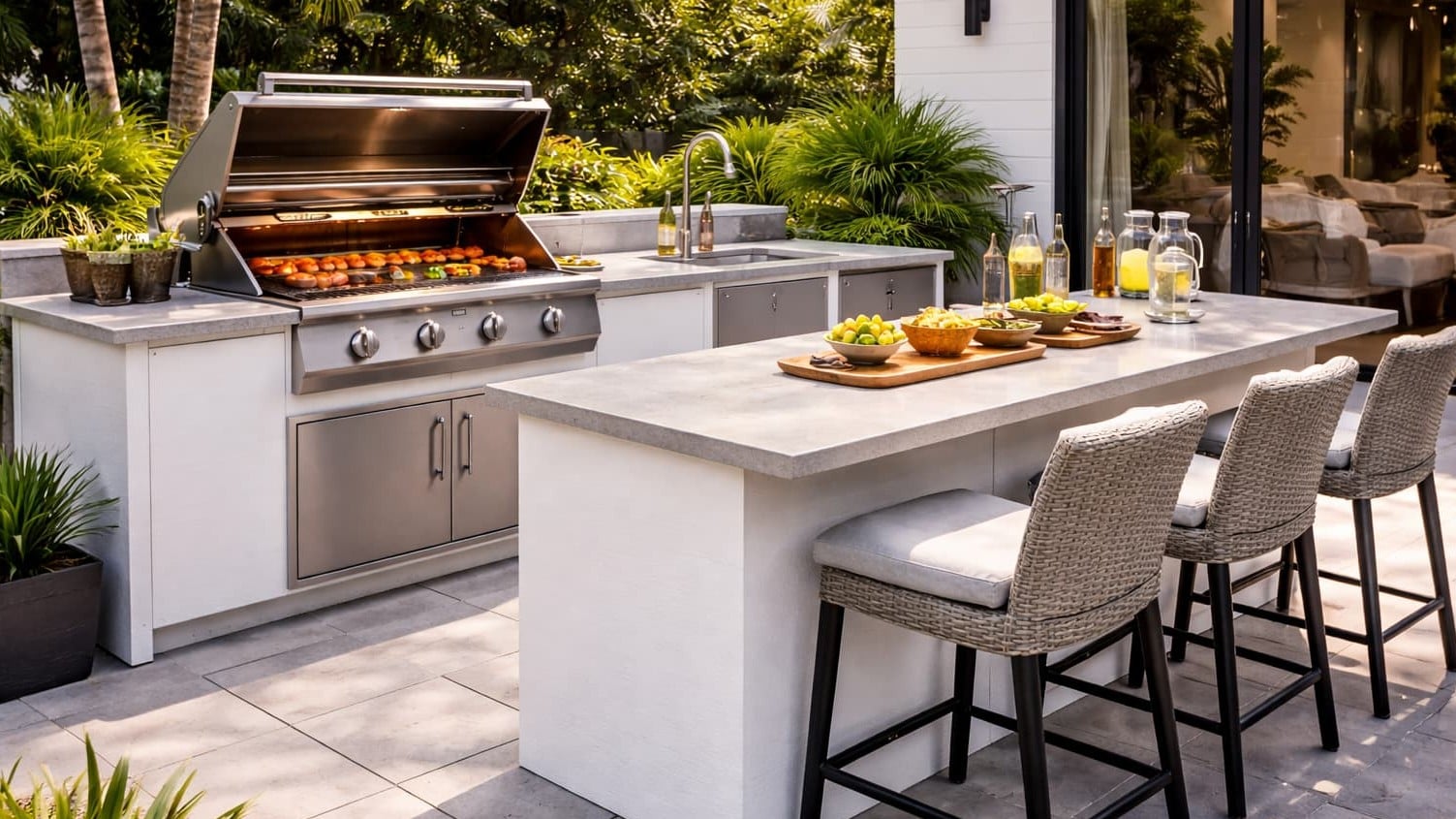
- Patios offer superior load-bearing capacity and design freedom for heavy appliances like stone countertops and built-in grills
- Pool deck kitchens require professional structural engineering and often costly reinforcement to meet Florida building codes
- Tampa's hurricane zone regulations add specific anchoring and flood protection requirements that affect installation costs
- Lightweight modular solutions can work on properly engineered decks, but patios remain the safest choice for full outdoor kitchens
Tampa homeowners dreaming of backyard entertaining spaces face a crucial decision: should that outdoor kitchen go on the pool deck or a dedicated patio? The answer isn't just about aesthetics—it's about structural reality, safety, and Florida's demanding building codes.
Pool Decks vs Patios: Weight Capacity Reality Check
The fundamental difference between pool decks and patios lies in their load-bearing design. Most residential decks are engineered to handle approximately 50 pounds per square foot—adequate for furniture, people, and typical deck activities. Patios, built on solid foundations or concrete slabs, can support significantly more weight without structural concerns.
This weight capacity gap becomes critical when planning outdoor kitchens. Outdoor Kitchen Tampa specializes in helping homeowners navigate these structural challenges, ensuring installations meet both safety standards and design goals. The team regularly sees homeowners underestimate the engineering requirements, especially for pool deck installations.
Understanding these limitations upfront prevents costly mistakes and safety hazards. Pool decks create seamless entertaining flows between cooking and swimming areas, but they demand careful planning and often significant structural modifications.
Outdoor Kitchen Weight: What You're Really Adding
Basic Kitchen Components and Their Weights
A basic built-in outdoor kitchen typically weighs 800-1,200 pounds, but that's just the starting point. Premium installations with multiple appliances, stone features, and extensive counter space easily exceed 2,000 pounds. Consider these component weights:
- Built-in gas grills: 150-400 pounds depending on size and features
- Stone countertops: 13-30 pounds per square foot for granite; concrete countertops weigh approximately 18.75 pounds per square foot at standard thickness, though lightweight concrete options like GFRC can reduce this significantly
- Outdoor refrigerators: 63-112 pounds unloaded, with additional weight when stocked
- Modular kitchen islands: Around 1,000 pounds for an 8-foot concrete panel unit
These weights don't include the structural framework, plumbing, electrical components, or accessories that complete most outdoor kitchen projects.
Weight Distribution Challenges on Decks
Pool decks face a unique challenge: outdoor kitchens concentrate massive weight in relatively small footprints. Unlike distributed loads from people or furniture, a 1,200-pound kitchen island creates point loads that standard deck framing cannot handle safely.
The problem compounds when considering Florida's weather demands. Marine-grade materials, required for Tampa's humid, salt-air environment, often weigh more than standard options. Stainless steel appliances, concrete countertops, and polymer cabinetry all add significant mass to installations.
Pool Deck Kitchen Limitations
Standard Deck Load Capacity
Florida's building codes establish minimum load requirements, but standard residential decks rarely exceed these minimums significantly. The typical 50-pound-per-square-foot capacity assumes distributed loads, not the concentrated weight of major appliances.
Pool decks face additional challenges due to their exposure. Constant moisture, temperature fluctuations, and potential flooding create conditions that can compromise structural integrity over time. These factors make weight limitations even more critical for long-term safety.
Reinforcement Requirements
Installing outdoor kitchens on pool decks often requires extensive structural modifications. Common reinforcement needs include:
- Larger joists with tighter spacing
- Additional support beams and footings
- Reinforced attachment points for appliances
- Strengthened deck surface materials rated for higher loads
These modifications can double or triple initial project costs. Professional structural engineering assessment becomes required, not optional, for pool deck kitchen installations.
Material Selection Constraints
Pool deck kitchens often require compromising on preferred materials to stay within weight limits. Instead of natural stone countertops, homeowners might choose lighter composite materials. Premium stainless steel appliances might give way to aluminum alternatives.
These compromises affect both aesthetics and durability. Florida's challenging climate demands robust materials, but deck weight limitations can force choices that sacrifice longevity for structural compliance.
Patio Kitchen Advantages
Superior Load-Bearing Foundation
Patios built on proper foundations or concrete slabs eliminate most weight concerns that plague deck installations. This structural advantage translates to design freedom and material choices that create more durable, functional outdoor kitchens.
The solid foundation also provides stability for heavy appliances and countertops. Stone surfaces remain level, appliances operate without vibration, and the entire kitchen maintains structural integrity through Florida's weather extremes.
Design Freedom and Flexibility
Patio installations support virtually any outdoor kitchen design. Homeowners can choose premium materials, incorporate multiple appliances, and create expansive prep areas without structural limitations. This flexibility often results in more functional, valuable outdoor spaces.
The design freedom extends to future modifications. Adding appliances, expanding counter space, or upgrading materials becomes simpler when structural capacity isn't a limiting factor.
Florida Building Code Requirements
Structural Standards for Tampa Area
Florida's building codes establish specific requirements for outdoor kitchen installations, particularly regarding structural integrity and safety systems. These codes address foundation requirements, structural connections, and material specifications required for hurricane-prone regions.
Local municipalities often add requirements beyond state minimums. Tampa area installations must consider specific soil conditions, flood zones, and wind load requirements that affect both pool deck and patio installations.
Hurricane Zone Considerations
Specific areas within Tampa and the broader Tampa Bay region are subject to high-velocity hurricane zone regulations, creating additional requirements for outdoor kitchen installations. All components must meet specific anchoring requirements to resist wind uplift and lateral forces.
These requirements affect both appliance selection and installation methods. Built-in units need secure anchoring systems, while freestanding components might require additional tie-downs or removal procedures for storm preparation.
Flood Zone Regulations
Many Tampa properties fall within flood hazard areas, creating specific requirements for outdoor kitchen installations. All appliances and electrical components must be anchored to prevent flotation and protected from water intrusion.
Electrical systems require separate GFCI circuits and elevation requirements that can complicate both pool deck and patio installations. Gas connections need specific protection measures, including secure installation of shut-off valves and automatic excess flow valves to ensure safety during flood events.
Permitting Process
Most outdoor kitchen installations in Florida require permits, especially when integrating gas, electrical, and plumbing systems. The permitting process varies by municipality, but generally requires:
- Structural plans and engineering analysis for deck installations
- Electrical and plumbing system designs
- Gas line routing and safety system specifications
- Compliance documentation for flood zone requirements
Pool deck installations typically face more stringent permitting requirements due to structural modification needs and proximity to water features.
When Pool Decks Make Sense
Lightweight Kitchen Solutions
Pool deck kitchens work best with lightweight, modular solutions designed specifically for deck installation. Portable grills, lightweight counters, and minimal built-in components can create functional cooking spaces without exceeding structural limits.
These solutions often emphasize flexibility over permanence. Modular components allow seasonal reconfiguration, storm removal, and easier maintenance while maintaining the poolside entertaining experience homeowners desire.
Professional Engineering Assessment
Successful pool deck kitchen installations always require professional structural assessment. Engineers can evaluate existing deck capacity, design necessary reinforcements, and ensure code compliance throughout the installation process.
This professional involvement adds upfront costs but prevents expensive failures and safety hazards. The assessment often reveals whether deck modification costs justify the installation versus building a dedicated patio space.
Choose Patios for Heavy Outdoor Kitchens, Reserve Pool Decks for Light Installations
The evidence clearly favors patios for substantial outdoor kitchen installations. The superior load-bearing capacity, design flexibility, and reduced regulatory complexity make patios the smart choice for homeowners seeking full-featured outdoor cooking spaces.
Pool decks retain value for specific applications: lightweight grilling stations, serving areas, and social spaces that complement rather than replace primary cooking facilities. The key lies in matching installation scope to structural reality.
Tampa homeowners planning outdoor kitchens should prioritize safety, code compliance, and long-term functionality over short-term convenience. The investment in proper foundation—whether reinforced deck or dedicated patio—pays dividends through years of safe, enjoyable outdoor entertaining.
For guidance on outdoor kitchen installations that meet Tampa's unique requirements, Outdoor Kitchen Tampa provides info on design and installation services for both pool deck and patio applications.
Outdoor Kitchen Tampa
City: Tampa
Address: 7610 Industrial Ln
Website: https://outdoorkitchentampafl.com


Comments
Post a Comment