Mold Prevention Checklist: Hampton Roads Contractor's Moisture Control Guide
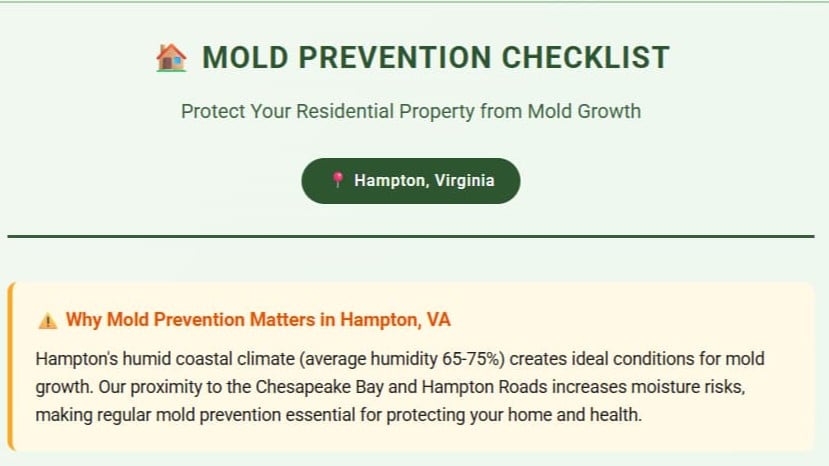
Key Takeaways:
- Hampton Roads' high humidity and frequent precipitation create perfect conditions for mold growth, requiring homeowners to maintain indoor humidity below 60% for effective prevention
- As much as 50% to 60% of indoor air can originate from crawl spaces, making proper moisture control essential for whole-home air quality
- Simple lifestyle changes like proper ventilation and immediate leak repairs can prevent costly structural damage before it starts
- Professional intervention becomes necessary when mold contamination exceeds 10 square feet or when DIY solutions fail to control moisture effectively
Moisture problems in Hampton Roads homes aren't just inconvenient—they're inevitable without proper prevention strategies. The region's unique climate conditions create a perfect storm for mold growth, but homeowners who understand the warning signs and implement targeted moisture control can protect their properties from extensive damage and health risks.
Critical Moisture Warning Signs Hampton Roads Homeowners Can't Ignore
Recognizing moisture problems early saves thousands in remediation costs. Key indicators include musty odors that linger despite cleaning, visible mold on window sills or in closets, and condensation forming on windows and exposed pipes. Water stains on ceilings or walls signal active leaks, while damp cardboard boxes sitting on floors indicate humidity levels above safe thresholds. When moisture meters consistently read above 50% relative humidity, immediate action becomes critical to prevent mold colonization.
Why Hampton Roads Climate Creates Perfect Mold Conditions
1. High humidity levels exceed EPA safety thresholds
The Hampton Roads region regularly experiences humidity levels that surpass the EPA's recommended 30-50% range for indoor environments. When relative humidity reaches 60%, mold spores activate and begin colonizing surfaces within 24-48 hours. The region's coastal location and warm temperatures create persistent moisture challenges that require active management throughout the year.
2. Frequent precipitation saturates crawl spaces
Heavy rainfall and seasonal storms drive moisture into foundation areas, creating saturated conditions in crawl spaces. Without proper vapor barriers, this ground moisture rises into living spaces through the stack effect. The combination of wet soil conditions and inadequate drainage systems compounds moisture problems, particularly in older homes without modern moisture management systems.
3. Stack effect pulls contaminated air into living areas
As much as 50% to 60% of indoor air can originate from crawl spaces, meaning moisture problems below directly impact air quality throughout the home. The natural stack effect draws humid, contaminated air upward, spreading mold spores and moisture to upper levels. This phenomenon makes crawl space moisture control vital for protecting the entire home environment.
Indoor Moisture Control Strategies
Effective moisture control starts with understanding how daily activities contribute to humidity levels. Mold Removal Hampton's prevention checklist provides homeowners with actionable strategies tailored to local climate challenges.
1. Lifestyle modifications that reduce humidity
Simple changes dramatically impact indoor moisture levels. Hang laundry outside rather than using indoor drying racks, which can add several gallons of water to indoor air. Limit houseplants, as soil and transpiration increase humidity. Cover aquariums and keep pet areas clean and dry. Proper ventilation during cooking and showering prevents moisture accumulation in high-humidity activities.
2. Appliance maintenance and proper ventilation
Regular appliance maintenance prevents moisture buildup from mechanical systems. Vent clothes dryers directly outside, never into attics or crawl spaces. Clean refrigerator drip pans monthly and maintain air conditioning filters and coils. Install exhaust fans in bathrooms and kitchens, ensuring they vent outside rather than into attic spaces. These fans should run until all visible moisture disappears from surfaces.
3. Immediate leak detection and repair protocols
Quick leak identification prevents minor issues from becoming major problems. Check plumbing connections under sinks, around water heaters, and at washing machine hookups monthly. Inspect roof areas after storms, focusing on vents and skylights where water commonly infiltrates. Foundation vents should remain clear and functional to promote air circulation and prevent moisture accumulation.
Exterior Water Infiltration Prevention Methods
1. Crawl space vapor barrier installation
Installing complete vapor barriers creates effective moisture protection between homes and ground sources. Professional-grade vapor barriers prevent ground moisture from rising into living areas, addressing one of the most significant moisture sources in Hampton Roads homes. The average cost for full crawl space encapsulation ranges from $3,500 to $8,500, with typical costs around $5,500 for standard 1,000-1,500 square foot spaces.
2. Foundation drainage and gutter management
Proper drainage systems direct water away from foundation areas before infiltration occurs. Keep gutters clean and functional, ensuring downspouts carry water at least six feet from the home's foundation. Grade soil to slope away from the house, preventing water pooling near foundation walls. Foundation drainage systems should be inspected annually and cleared of debris that could cause backup.
3. Siding and landscape moisture barriers
Seal siding along bottom edges to prevent water infiltration during heavy rains. Trim shrubs and plants away from exterior walls to promote airflow and prevent moisture retention against building materials. Avoid directing sprinkler systems toward the house, as consistent water contact creates ideal conditions for moisture penetration through siding and foundation materials.
Professional-Grade Moisture Removal Solutions
1. Whole-home dehumidifier systems
Whole-home dehumidifiers provide consistent moisture control throughout the entire living space. These systems maintain optimal humidity levels below 60%, preventing mold activation while improving overall comfort. Professional-grade units integrate with existing HVAC systems, providing automated moisture management that adjusts to seasonal changes and weather patterns specific to Hampton Roads conditions.
2. Strategic ventilation fan placement
Strategic fan placement creates effective moisture removal in problem areas. Install ventilation fans near moisture sources in kitchens, bathrooms, and laundry rooms, ensuring adequate CFM ratings for room size. Attic ventilation fans prevent moisture accumulation in upper areas, while foundation vents promote air circulation in crawl spaces. Timer controls and moisture-sensing switches ensure fans operate when needed most.
When DIY Isn't Enough: Virginia's Mold Remediation Requirements
1. EPA's 10 square foot rule for professional intervention
The EPA strongly recommends professional intervention when mold contamination exceeds 10 square feet due to spore spreading risks during improper removal attempts. Large-scale contamination requires specialized containment, equipment, and disposal procedures that exceed typical homeowner capabilities. Professional remediation ensures proper containment and prevents cross-contamination to unaffected areas.
2. July 2024 IICRC licensing requirements for Virginia contractors
Virginia law now requires mold remediation contractors to maintain IICRC licensing, ensuring proper training and certification for residential remediation work. This licensing requirement protects homeowners by ensuring contractors follow established protocols for containment, removal, and restoration. When selecting remediation services, verify current IICRC certification to ensure compliance with state regulations.
Protect Your Hampton Roads Home Before Moisture Becomes Costly Damage
Proactive moisture control prevents thousands in structural repair costs and protects family health from mold-related issues. Regular monitoring, maintenance, and immediate response to moisture problems create long-term protection for Hampton Roads homes. The region's climate challenges require consistent vigilance, but proper prevention strategies keep homes safe, comfortable, and valuable. Early intervention through proper moisture management protects both immediate comfort and long-term property investment.
For moisture control solutions and professional mold prevention services, Mold Removal Hampton provides expert remediation and prevention services throughout the Hampton Roads area.
Mold Removal Hampton
City: Hampton
Address: 814 Maxwell Dr
Website: https://moldremovalhampton.com/


Comments
Post a Comment