Geographic Segmentation: Texas Marketing Agency Reveals Regional Content
Key Takeaways
- Geographic segmentation allows Texas contractors to achieve significantly higher engagement by tailoring content to specific regional challenges like Houston's humidity versus Dallas heat.
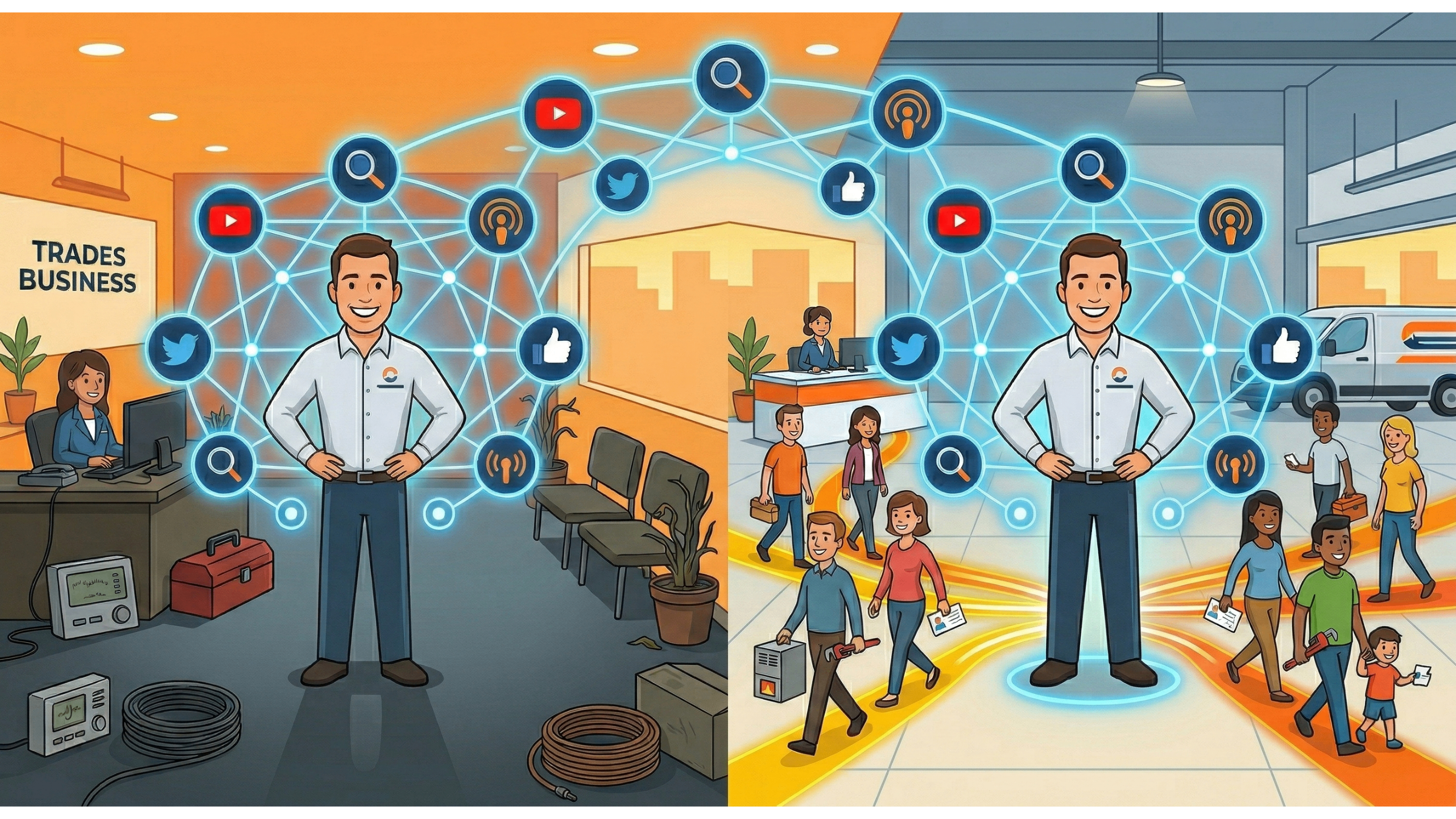
- MultiCasting transforms one marketing idea into multiple platform-optimized formats, creating digital omnipresence across search, social, video, and podcast channels.
- TDLR compliance requirements mandate license display on all advertising materials, including websites and vehicle lettering.
- Hyper-local content strategies generate significantly better ROI than generic statewide marketing approaches.
- Strategic content syndication across multiple platforms drives organic traffic dominance without relying on paid ads.
Texas Contractors Face Critical Digital Marketing Challenges
The Lone Star State's home service industry operates in one of the most competitive markets in North America. With approximately 9,200 registered HVAC businesses and thousands more plumbing and electrical contractors competing for attention, traditional marketing approaches are failing. Rising customer acquisition costs, averaging $62-150 per lead, have pushed many contractors toward financial strain while paid advertising platforms continue increasing their fees.
The challenge extends beyond simple competition. Texas spans multiple climate zones, from Gulf Coast humidity to West Texas desert conditions, each requiring different service approaches and marketing messages. A one-size-fits-all marketing strategy simply cannot address the diverse needs of homeowners in Houston versus those in El Paso. ReachLocal Media has identified geographic segmentation as the critical solution for Texas contractors seeking sustainable growth through organic traffic generation.
Modern consumers research extensively before making purchasing decisions, with 93% reading online reviews before choosing a service provider. This behavior shift demands that contractors establish presence everywhere potential customers might look, rather than relying on single-channel marketing approaches that leave massive gaps in visibility.
Geographic Segmentation Transforms Local Marketing ROI
Houston's Humidity Crisis Demands Different Content Than Dallas Heat
Houston's oppressive humidity levels averaging 75% create entirely different HVAC challenges than Dallas's dry heat conditions. Houston contractors must focus content on mold prevention, indoor air quality solutions, and year-round dehumidification systems. Meanwhile, Dallas-area content should emphasize smart home integration, premium cooling efficiency, and electrical panel upgrades to handle increased air conditioning loads.
This geographic specificity extends to customer demographics and purchasing power. Dallas-Fort Worth residents maintain higher average household incomes, making them ideal candidates for high-end system retrofits and energy-efficient upgrades. Houston's diverse population, with approximately 44% Hispanic residents, requires bilingual content strategies that demonstrate cultural awareness and linguistic accessibility.
West Texas Desert vs. Gulf Coast Salt Air Marketing
The extreme environmental differences between West Texas and coastal regions necessitate completely different service focuses. West Texas contractors deal with dust infiltration, extreme temperature swings, and water conservation concerns. Content must address desert-specific challenges like dust-resistant filtration systems and equipment designed for temperature extremes.
Gulf Coast contractors face salt air corrosion, hurricane preparation, and tropical humidity management. Marketing content should highlight corrosion-resistant materials, storm-ready electrical panels, and moisture control systems. These regional differences aren't minor variations - they represent fundamental differences in service delivery and customer priorities.
Bilingual Content Improves Engagement in Hispanic Markets
Texas markets with significant Hispanic populations show improved cost-per-lead when contractors implement bilingual marketing strategies. The Rio Grande Valley, with 83-90% Hispanic populations, requires Spanish-language content to effectively communicate with potential customers. However, bilingual marketing extends beyond simple translation - it requires cultural adaptation and understanding of community-specific needs.
Successful bilingual strategies incorporate cultural references, family-oriented messaging, and community involvement. Contractors serving these markets must demonstrate genuine commitment to the Hispanic community through sponsorships, charitable involvement, and culturally appropriate communication styles that resonate with local values and traditions.
Hyper-Local Content Generates Significantly Higher Engagement
City-Specific Landing Pages Outperform Generic Content
Generic statewide content fails to address the specific needs of individual communities. A plumbing contractor serving the DFW metroplex achieves dramatically better results by creating dedicated pages for Colleyville, Southlake, and Grapevine rather than generic "DFW Service Area" content. Each city page should address local housing stock, municipal water systems, and neighborhood-specific challenges.
City-specific optimization involves more than location names. Successful pages incorporate local landmarks, school districts, municipal regulations, and community events. This hyperlocal approach demonstrates genuine community involvement while improving search engine rankings for location-based queries that convert at higher rates than generic searches.
Neighborhood-Level Targeting Through Local Platforms
Platforms like Nextdoor provide direct access to neighborhood conversations where residents actively seek contractor recommendations. When homeowners post requests for "reliable plumber" or "honest electrician," organic recommendations from neighbors carry more weight than any paid advertisement. Smart contractors maintain active Nextdoor profiles and encourage satisfied customers to share their experiences within these community networks.
Micro-local advertising through HOA newsletters and community publications achieves high deliverability to target demographics. These placements bypass the noise of internet advertising, placing contractor messages directly in homeowners' hands alongside trusted community news and updates about local schools and events.
MultiCasting Method Distributes Content Across Multiple Platforms
Transform One Idea Into Multiple Platform-Optimized Formats
The MultiCasting approach takes a single core idea and transforms it into multiple content formats optimized for different platforms. A detailed guide about preparing air conditioning systems for Texas summer becomes a detailed blog post, social media infographics, short video tutorials, podcast interviews, and news articles. Each format addresses the same core topic while matching platform-specific user expectations and algorithm preferences.
This systematic approach ensures maximum content efficiency. Rather than creating entirely different topics for each platform, MultiCasting uses one well-researched concept across multiple touchpoints. A single idea about electrical panel safety can generate weeks of content across various channels, maintaining consistent messaging while reaching audiences wherever they consume information.
Simultaneous Distribution Creates Digital Omnipresence
Publishing across numerous platforms simultaneously creates the illusion of ubiquity. When potential customers encounter the same contractor's helpful content on Google search results, YouTube videos, Facebook posts, and podcast interviews, they perceive the business as an established industry authority. This omnipresence builds trust through repeated exposure, making the contractor the obvious choice when service needs arise.
The psychological impact of omnipresence cannot be overstated. Homeowners naturally gravitate toward brands they recognize and encounter repeatedly. By appearing everywhere potential customers look for information, contractors position themselves as the default choice, bypassing the competitive price-shopping phase that erodes profit margins.
Organic Content Strategies Drive Revenue Growth
Unlike paid advertising that stops generating results when budgets are exhausted, organic content continues producing leads indefinitely. A well-optimized blog post about emergency plumbing repairs can generate consistent traffic for years, compounding return on investment over time. This sustainable approach reduces long-term customer acquisition costs while building valuable digital assets.
Organic strategies also provide protection against algorithm changes and platform policy shifts that can devastate paid advertising campaigns overnight. Contractors with diversified organic presence across multiple platforms maintain stable lead flow regardless of individual platform changes or policy updates.
TDLR Compliance Requirements for Texas Licensed Trades
Vehicle Lettering Standards and License Display Rules
The Texas Department of Licensing and Regulation mandates specific requirements for contractor vehicle identification. Licensed contractors must display their company name and license number on both sides of service vehicles using contrasting colors and lettering at least two inches in height. These requirements ensure public safety by allowing customers to verify contractor credentials easily.
Vehicle compliance extends beyond basic identification. Electrical contractors must use "TECL" prefixes before license numbers, while HVAC contractors require proper license designations. Failure to meet these standards results in significant fines and potential license suspension, making compliance verification essential for any contractor operating in Texas.
Business Communications and Website Information Requirements
All forms of advertising designed to solicit business must include proper licensing information. This broad definition includes websites, social media profiles, digital invoices, online proposals, and Google Business listings. Contractors cannot simply add license numbers to vehicle lettering while ignoring digital compliance requirements.
Digital compliance requires systematic implementation across all online touchpoints. Company websites must prominently display license numbers on main pages, social media profiles need licensing information in bio sections, and all digital advertising must include appropriate credentials. This approach protects both contractors and consumers while maintaining professional industry standards.
Content Syndication Strategies Improve Search Visibility
Strategic content syndication amplifies local contractor visibility by distributing educational content across many high-authority websites and news platforms. When contractors share expertise through press releases, industry articles, and educational guides, they generate valuable backlinks that dramatically improve search engine rankings for competitive keywords.
The syndication process transforms isolated company websites into well-connected nodes within the broader digital ecosystem. Each external publication creates a direct link back to the contractor's main website, signaling authority and relevance to search engines. This link-building approach provides sustainable ranking improvements that compound over time, unlike temporary paid advertising boosts.
Successful syndication requires newsworthy angles and genuine expertise sharing. Contractors discussing innovative approaches to Texas heat challenges, energy efficiency improvements, or safety upgrades create valuable content that news outlets willingly publish. This earned media coverage provides credibility that paid advertisements cannot match while building the contractor's reputation as an industry thought leader.
Texas Contractors Achieve Market Dominance Through Strategic Geographic Targeting
Forward-thinking Texas contractors are abandoning generic statewide marketing in favor of precise geographic segmentation combined with omnipresent content distribution. By understanding regional differences, implementing compliant marketing practices, and using content syndication strategies, these businesses achieve sustainable competitive advantages that paid advertising alone cannot provide.
The most successful contractors recognize that modern homeowners research extensively across multiple platforms before making purchasing decisions. Rather than hoping to capture attention at the moment of crisis, smart contractors establish helpful, authoritative presence everywhere potential customers might look for information. This proactive approach builds trust, demonstrates expertise, and positions the contractor as the obvious choice when service needs arise.
Geographic segmentation combined with strategic content distribution creates a self-reinforcing cycle of visibility and authority that becomes increasingly difficult for competitors to challenge. As organic content generates more traffic and engagement, search algorithms reward the contractor with improved rankings, creating even more visibility and establishing long-term market dominance through digital omnipresence.
Ready to transform your Texas contracting business through strategic geographic segmentation and content syndication? Learn how ReachLocal Media helps contractors achieve digital omnipresence across multiple platforms.
ReachLocal Media
City: Grapevine
Address: 1452 Hughes Rd
Website: https://reachlocalmedia.clientcabin.com


Comments
Post a Comment