Strength Training For Cyclists: What Are The Best Exercises To Boost Endurance?
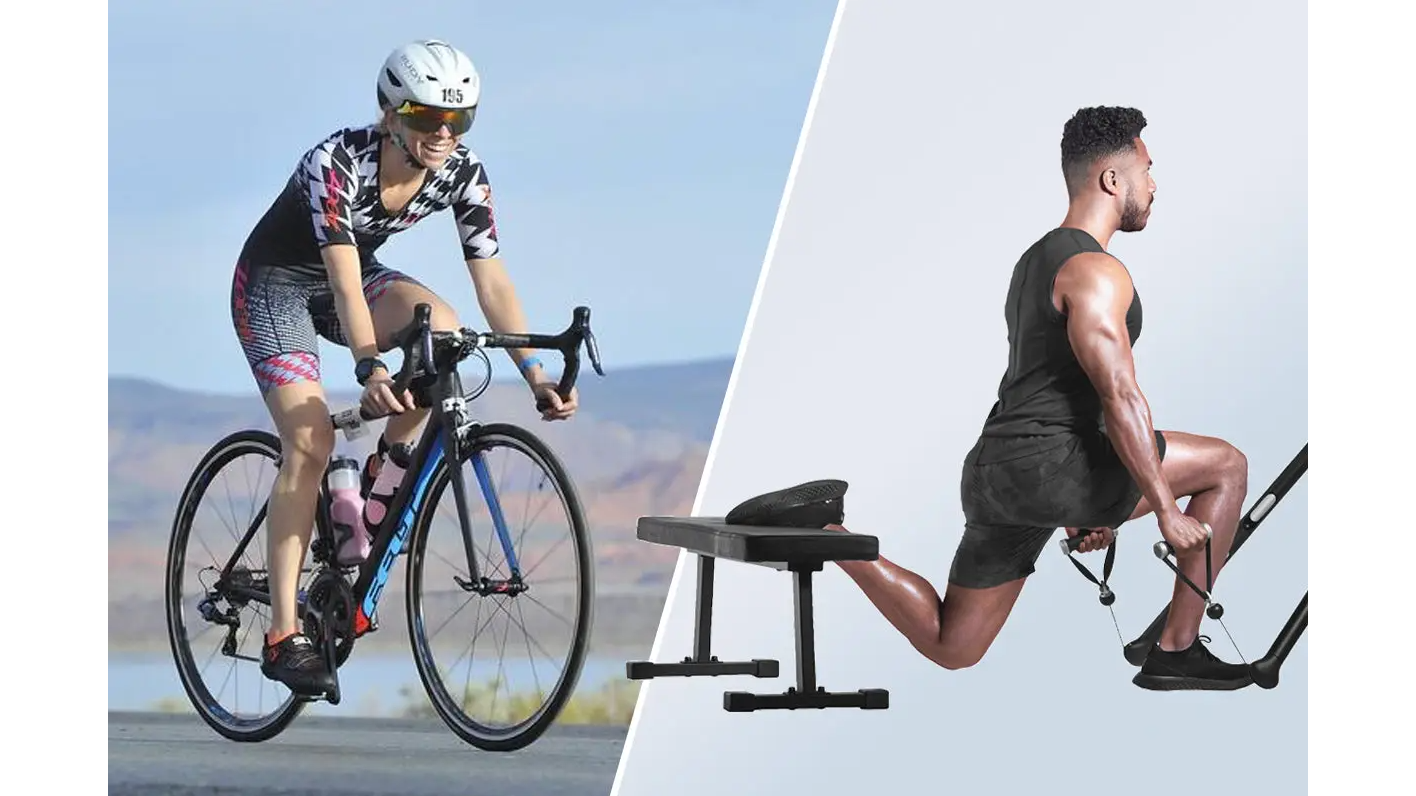
Cyclists who clock endless miles perfecting their endurance often miss a crucial performance factor: what happens off the bike matters just as much as what happens on it.
Most riders assume more saddle time equals better results, but the interplay between resistance work and endurance cycling reveals a different story. Here’s why the weight room might be your secret weapon for faster, stronger rides.
The Hidden Weakness in Your Cycling Fitness
While your quads and calves get stronger with every ride, other muscles quietly fall behind. Your core, glutes, and stabilizing muscles don’t get the same workout from pedaling alone, which creates imbalances that show up when you need power most.
These weak links become obvious during climbs or sprints. When your supporting muscles can’t hold up under pressure, your body starts compensating in ways that waste energy and slow you down. Instead of driving the force through the pedals efficiently, you’re fighting against your own movement patterns.
Building strength in these overlooked areas changes everything. Stronger glutes mean more power with each pedal stroke, while a solid core keeps your upper body stable instead of swaying side to side. That stability directly translates into speed because less energy is lost to unnecessary movement.
Finding the Right Time to Hit the Gym
Winter presents the perfect opportunity to build your strength foundation. With fewer races on the calendar and lower overall training volume, your body can handle the added stress of lifting without compromising your cycling performance.
Start with two to three gym sessions each week, spacing them at least two days apart. This frequency gives your muscles time to recover while still providing enough stimulus to trigger real adaptations. As race season approaches, you’ll dial back to one or two maintenance sessions to preserve your gains without piling on fatigue.
Your workout style should shift throughout the year, too. Early in the off-season, focus on higher reps with moderate weights to build endurance in your muscles. Later, when you’re just maintaining strength during competition periods, fewer reps with heavier weights keep you strong without leaving you too tired for hard rides.
The Exercises That Actually Make You Faster
Not all gym work delivers equal benefits for cyclists. Compound movements that engage multiple muscle groups simultaneously give you the biggest bang for your buck because they mirror the way your body actually works on the bike.
Build Your Power Base:
- Squats target your quads, glutes, and core for explosive climbing strength
- Deadlifts develop your hamstrings and lower back to stabilize your position
- Lunges fix strength imbalances between your left and right legs
- Step-ups replicate the climbing motion while building hip stability
Create Rock-Solid Support:
- Planks build the trunk stability needed for efficient power transfer
- Single-leg deadlifts challenge your balance and strengthen your posterior chain
- Rows and pull-ups prevent the hunched posture that develops from hours in the drops
- Glute bridges wake up hip muscles that cycling alone doesn’t fully activate
Skip isolation exercises like leg extensions. A goblet squat works your entire lower body in a functional pattern that actually helps your riding, whereas machines that target single muscles don’t translate well to real-world performance.
Building Your Program the Smart Way
Jumping straight into heavy weights is a recipe for injury. Instead, master bodyweight movements first to establish proper form and identify any mobility issues that need addressing before you add resistance.
Begin with two or three sets of eight to twelve reps per exercise. Quality matters more than quantity at this stage, so focus on controlled movement rather than chasing heavy loads. Once your technique is solid, progress by adding weight, extra sets, or more challenging variations instead of just doing more reps.
Rest periods depend on your training phase. During endurance-focused blocks, take 60 to 90 seconds between sets. When you’re working with heavier weights, extend that to two or three minutes so you can maintain quality on every rep. This approach keeps workouts efficient without rushing through exercises.
Throughout the year, your strength work should support your cycling goals. Winter calls for three weekly sessions with moderate to heavy loads, spring transitions into two maintenance workouts, and summer racing might include just one session to preserve what you’ve built without overtaxing your system.
Mistakes That Sabotage Your Strength Gains
The mindset that works during interval training often backfires in the weight room. Pushing through compromised form might seem productive, but it only sets you up for injury without triggering the adaptations you’re after.
Doing too much creates another common problem. Cyclists are used to high training volumes, but combining heavy cycling loads with excessive gym work exceeds what your body can recover from. The result is persistent fatigue, declining performance, or injuries that derail your entire season.
Tight muscles limit your progress, too. When hip flexors, hamstrings, or ankles lack mobility, you can’t achieve a full range of motion during squats and deadlifts. That restriction prevents complete muscle activation and forces compensations that make exercises less effective.
Finally, many riders only train the muscles they already use on the bike. This approach reinforces existing weaknesses rather than fixing them. A balanced program addresses your posterior chain, core, and upper body, even when these areas don’t seem directly connected to pedaling power.
Why Professional Guidance Changes the Game
Strength training for cyclists isn’t the same as bodybuilding or general fitness programs. Your goal is functional power and injury prevention, not maximum muscle size or aesthetic improvements, which means your approach needs to be specific to cycling demands.
Working with a qualified coach helps you identify biomechanical weaknesses and design a program that complements your riding instead of interfering with it. They’ll account for your training history, past injuries, competition schedule, and how you respond to different training methods.
Recovery markers tell you whether you’re balancing everything correctly. Pay attention to sleep quality, appetite, mood, and performance both in the gym and on the bike. When these indicators start declining, it’s a signal to pull back before fatigue accumulates and undermines your progress in both areas.
Your Next Move Toward Better Performance
You don’t need fancy equipment or expensive gym memberships to start. Bodyweight exercises, dumbbells, or kettlebells work perfectly well for most movements and fit easily into home training spaces.
Begin with one or two weekly sessions to see how strength work affects your riding and recovery. Understanding how different training types interact helps you find the right balance for your situation and avoid overtraining while maximizing results.
Master Trainer Initiative
City: Clonakilty
Address: Clogheen
Website: https://mastertrainerinitiative.com


Comments
Post a Comment