Off-Season Boat Storage: What To Consider Before Choosing The Right Facility
Where a boat is stored during the winter months affects not only cost, but also long-term condition and ease of access once the season resumes. The difficulty is that off-season boat storage decisions are frequently made under pressure. Availability narrows quickly, pricing can shift by location, and many owners focus on finding any open space rather than choosing a facility that aligns with how the boat will be stored and used.
Why Off-Season Boat Storage Requires a Different Approach
Storing a boat during the off-season is not the same as short-term or in-season storage. Boats may remain inactive for several months, exposed to weather conditions and limited access schedules. These factors increase the importance of choosing storage that matches both protection needs and storage duration.
Unlike short-term storage, off-season arrangements are harder to change once winter begins. This makes early evaluation especially important, as switching facilities mid-season is often impractical or costly.
Understanding Storage Types for Off-Season Boat Storage
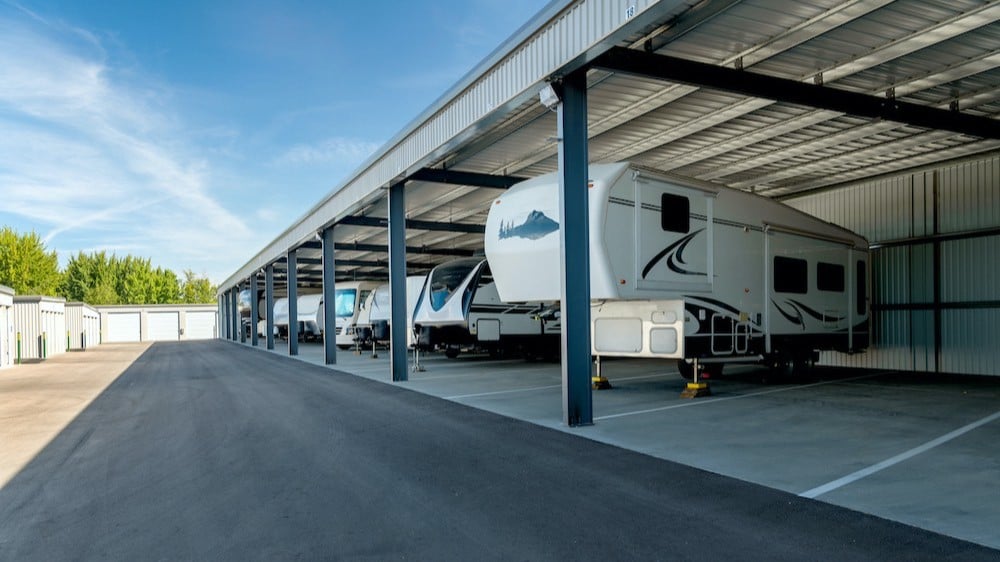
Storage type is one of the most important considerations when planning off-season boat storage. Outdoor storage typically offers the lowest cost and easiest access, but provides minimal protection from weather. Covered storage reduces exposure while maintaining flexibility, making it a common choice for owners seeking a balance between cost and protection.
Indoor off-season boat storage offers the highest level of protection from wind, precipitation, and temperature fluctuations. While it is usually more expensive, it can be well suited for valuable boats or those stored for extended periods. Stacked storage, often found at marinas, can be a cost-effective option for winter storage, though access is typically limited until the boat is retrieved.
How Location Affects Off-Season Boat Storage Decisions
Location plays a significant role in both pricing and availability. Facilities near marinas, waterfronts, or dense urban areas often experience higher demand for off-season boat storage, which can drive rates upward. Storage options farther from these areas may offer more space or lower costs.
Because off-season storage usually involves infrequent visits, proximity may be less important than it is during the active boating season. Expanding the search area can uncover options that provide similar protection at more manageable rates.
The Impact of Timing on Off-Season Boat Storage Availability
Timing is a critical factor in off-season boat storage. As fall progresses, available spaces become more limited and pricing flexibility decreases. Owners who begin evaluating options earlier often have access to a wider range of storage types and locations.
Waiting until storage demand peaks can result in fewer choices and higher costs. Early planning allows owners to weigh tradeoffs more carefully instead of committing to the first available option.
Choosing the Right Winter Boat Storage Partner
What to look for when choosing a winter storage provider that aligns with protection, access, and planning needs.
Evaluating Facilities Built for Long-Term Winter Storage
Selecting a facility for off-season boat storage is not only about finding available space. The right storage partner should align with how the boat will be stored, how often it may need to be accessed, and the level of oversight required during the winter months. These considerations become more important when storage extends over several months with limited opportunities to make changes.
Some facilities are structured around short-term turnover, while others are designed specifically for seasonal storage. Locations that routinely manage winter storage are more likely to have established procedures for snow management, reduced seasonal traffic, and off-season operations. Understanding how a facility handles extended storage helps set realistic expectations.
Security and Oversight During Periods of Inactivity
Security is a central concern during winter storage, particularly when owners may not visit their boat for weeks at a time. While most facilities offer basic security features, the level of oversight can vary.
Gated entry, surveillance cameras, and controlled access points are common, but consistency matters. Facilities that maintain regular monitoring and restricted access during quieter winter months can reduce risk and provide reassurance when boats are stored long term.
Understanding Winter Access Policies
Access policies often change during the off-season. Some facilities limit access hours in winter, while others restrict access entirely until spring. These policies may not be an issue for owners who do not plan to visit their boat, but they can create challenges for those who intend to perform maintenance or inspections.
Clarifying access expectations before committing to storage helps avoid surprises. Knowing whether winter access is available, restricted, or unavailable allows owners to choose a facility that matches their plans.
Storage Configuration and Space Considerations
Boat size, height, and positioning requirements vary widely, and not all facilities are equipped to accommodate every type. Adequate clearance, safe maneuvering space, and proper placement reduce the risk of damage during storage.
Facilities that clearly define storage dimensions and offer flexibility in unit sizing make it easier to confirm that a space is suitable. This is particularly important for boats stored indoors or in shared environments.
Transparency, Pricing, and Communication
Clear communication plays an important role in long-term storage arrangements. Facilities that provide transparent pricing, written agreements, and clearly defined terms tend to reduce confusion over extended storage periods.
Understanding what is included in the quoted rate, how pricing adjustments are handled, and what responsibilities fall on the owner versus the facility helps prevent misunderstandings during the winter months.
Comparing Options Before Committing
Comparing multiple facilities side by side often reveals differences that are not immediately apparent when evaluating one option at a time. Access policies, security practices, and storage configurations can vary significantly between locations.
Viewing options together allows owners to assess tradeoffs more effectively and choose a storage partner that aligns with both practical needs and long-term expectations.
Planning Ahead for the Off-Season
Off-season boat storage is ultimately a planning decision. Taking the time to evaluate storage types, location tradeoffs, and timing considerations helps protect both the boat and the owner’s budget during months of inactivity.
Owners who approach off-season storage thoughtfully are more likely to secure a facility that aligns with their needs, reduces long-term risk, and provides peace of mind until boating season returns.
FindStorageFast
City: Halifax
Address: Canada
Website: https://www.findstoragefast.com/


Comments
Post a Comment