Mold Removal vs Remediation: Tampa Bay Specialist Reveals Key Difference
Key Takeaways
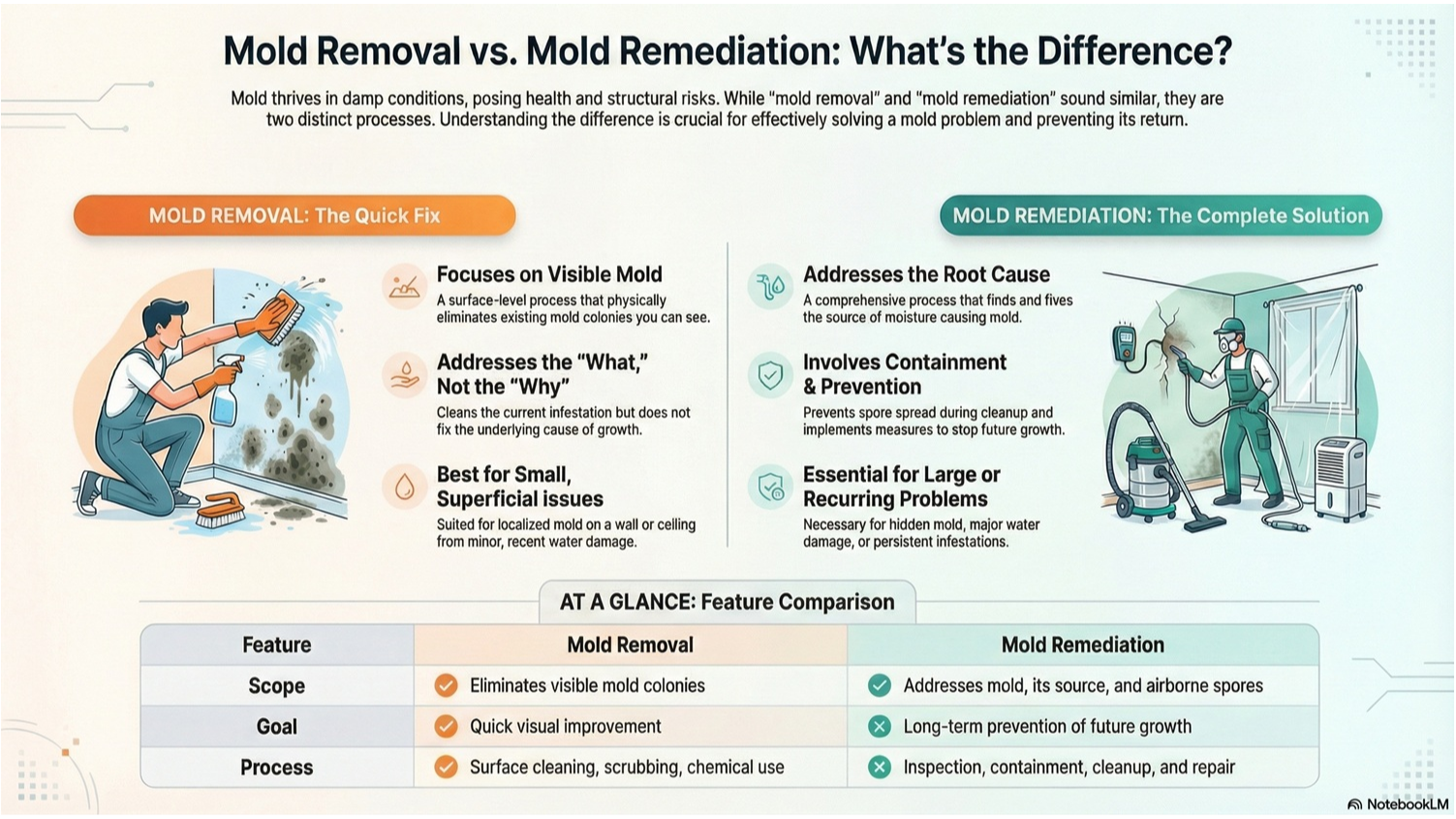
- Mold removal focuses on surface cleaning, while remediation addresses root moisture causes and prevents future growth - particularly critical in Tampa Bay's humid climate.
- Professional remediation costs $1,200-$8,000 on average but prevents expensive recurring problems that simple removal often can't solve.
- EPA guidelines recommend professional help for areas exceeding 10 square feet, HVAC contamination, or when health conditions are present.
- Success stories show remediation solving recurring office mold through HVAC fixes and discovering hidden spores missed by initial treatments.
- Humidity control between 40-55% and ANSI/IICRC S520 standards form the foundation of permanent mold prevention in Florida's challenging climate.
Tampa Bay homeowners and business owners face unique mold challenges due to the region's persistent humidity and occasional severe weather. Understanding the difference between mold removal and remediation can mean the difference between a temporary fix and a long-term solution that protects both health and property value.
Why Simple Mold Removal Often Backfires in Tampa Bay's Climate
Tampa Bay's year-round humidity creates the perfect storm for mold growth, making surface-level mold removal a frustrating cycle for many property owners. While mold removal involves scrubbing visible colonies and applying chemical treatments, it typically ignores the underlying moisture sources that allowed the mold to flourish initially.
The region's climate maintains humidity levels that consistently hover above the 60% threshold where mold thrives. When property owners choose simple removal over thorough treatment, they often discover new growth within weeks or months. TampaBayMold.net specialists emphasize that removal without remediation leaves spores behind that quickly reactivate when conditions remain favorable.
Surface cleaning also misses hidden mold colonies that penetrate deep into building materials. Tampa Bay's frequent storms and high humidity can drive moisture behind walls, under flooring, and into HVAC systems where standard removal techniques can't reach. These hidden infestations continue spreading even after visible mold disappears, creating ongoing health risks and structural damage.
What Professional Mold Remediation Actually Involves
Professional mold remediation takes a thorough approach that goes far beyond surface treatment. The process begins with detailed assessment and continues through moisture elimination and long-term prevention strategies designed specifically for Tampa Bay's challenging climate conditions.
1. Thorough Assessment and Hidden Mold Detection
Certified remediation specialists conduct detailed inspections that include air quality testing to measure spore concentrations throughout the property. These professionals use specialized equipment to detect moisture behind walls, under floors, and in other concealed areas where mold commonly grows undetected. The assessment identifies not just visible colonies but also traces hidden infestations that simple removal overlooks.
Advanced detection methods reveal the full scope of contamination, including areas where humidity has created conditions for future growth. This detailed evaluation forms the foundation for targeted treatment that addresses both current problems and potential future issues.
2. Moisture Source Identification and Repair
The most significant difference between removal and remediation lies in moisture source identification. Professional remediation teams investigate the root causes behind mold growth, examining everything from minor leaks to major drainage issues, HVAC problems, and ventilation deficiencies.
Tampa Bay properties face unique moisture challenges from seasonal storms, high ground water, and architectural features that trap humidity. Remediation professionals address these underlying issues through structural repairs, improved drainage systems, and HVAC modifications that create an environment where mold cannot survive long-term.
3. Containment and Spore Prevention Protocols
During remediation, professionals establish containment zones using physical barriers and negative air pressure systems to prevent spore spread to unaffected areas. HEPA filtration systems capture airborne spores while specialized equipment removes contaminated materials safely.
These containment procedures are critical during the remediation process because disturbing mold colonies releases thousands of spores into the air. Professional protocols ensure that cleanup activities don't inadvertently spread contamination throughout the property, protecting both occupants and unaffected spaces.
Health Risks Tampa Bay Residents Face from Incomplete Mold Treatment
Incomplete mold treatment exposes Tampa Bay residents to serious health consequences that can worsen over time. The region's humid climate means mold problems rarely resolve on their own, making thorough remediation necessary for protecting occupant health.
Immediate Allergic and Respiratory Symptoms
Mold exposure triggers immediate health reactions including chronic cough, nasal congestion, eye irritation, and skin rashes. These allergic responses can manifest as blurred vision, headaches, and sore throat symptoms that persist as long as spores remain in the environment.
Children face heightened risks from mold exposure, with increased likelihood of developing asthma or experiencing severe asthma attacks. Tampa Bay's year-round mold season means these health impacts can become chronic without proper remediation that eliminates spore sources.
Long-term Cognitive Effects from Mold Exposure
Prolonged mold exposure leads to cognitive symptoms including short-term memory loss, difficulty concentrating, and persistent "brain fog" that affects daily functioning. Residents may experience lightheadedness, dizziness, and increased levels of depression, anxiety, and stress.
These neurological impacts can significantly affect quality of life and work performance. The longer mold exposure continues, the more severe these cognitive symptoms can become, making early thorough remediation vital for Tampa Bay residents.
When DIY Removal Makes Sense vs. Professional Remediation
Understanding when to tackle mold issues independently versus calling professionals can save both time and money while ensuring appropriate treatment for different contamination levels.
EPA Guidelines for Size and Contamination Thresholds
The Environmental Protection Agency recommends professional remediation for areas exceeding 10 square feet of contamination. Additional circumstances requiring professional intervention include mold resulting from contaminated water sources, HVAC system infiltration, or when occupants have health conditions that make them particularly sensitive to mold exposure.
DIY removal may be appropriate for small, surface-level infestations on non-porous materials where the moisture source has been clearly identified and corrected. However, Tampa Bay's climate makes professional assessment valuable even for seemingly minor problems, as hidden moisture often creates larger issues than initially apparent.
Cost Comparison: Short-term vs. Long-term Investment
Professional mold remediation typically costs between $1,200 and $8,000 for average infestations, while extensive whole-house contamination can require $10,000 to $30,000 in treatment. These upfront costs often prove cost-effective compared to repeated DIY attempts that fail to address underlying causes.
Tampa Bay property owners who choose thorough remediation avoid the cycle of recurring treatments, repeated material replacement, and ongoing health impacts that make simple removal more expensive over time. Professional remediation also helps maintain property values by ensuring thorough documentation and prevention measures.
Tampa Bay Success Stories: Remediation Results
Real-world cases demonstrate how thorough remediation solves persistent mold problems that surface-level removal cannot address effectively.
Recurring Office Mold Solved Through HVAC System Fix
A commercial office in Tampa faced persistent mold issues despite multiple cleaning attempts. Professional assessment revealed water leaks from an outdated HVAC system that created perfect conditions for continuous mold growth. The remediation team implemented a thorough solution including leak repairs, HEPA vacuuming, antimicrobial treatments, and air filtration systems.
After addressing the HVAC moisture source and implementing proper ventilation controls, the office achieved lasting mold-free conditions. The investment in thorough remediation eliminated recurring problems and created a healthier work environment for employees.
Central Florida Family's Hidden Spore Discovery
A Tampa Bay family discovered significant mold contamination in their HVAC system during post-remediation inspection, even after initial treatment appeared successful. Independent testing revealed residual spores that would have continued spreading throughout the home if not detected through professional verification protocols.
This case highlights the importance of thorough post-remediation testing and the value of professional oversight in ensuring complete mold elimination. The family's experience demonstrates how hidden contamination can persist even after visible mold removal.
Humidity Control Strategies for Permanent Mold Prevention
Long-term mold prevention in Tampa Bay requires consistent humidity control and adherence to professional standards that account for the region's challenging climate conditions.
1. Maintain Indoor Humidity Between 40-55%
Tampa Bay properties must actively control humidity through dehumidifiers, air conditioning systems, and proper ventilation. Maintaining indoor humidity between 40-55% creates an environment where mold cannot establish colonies, even during Florida's most humid seasons.
Professional-grade dehumidification systems work more effectively than consumer units, especially in larger properties or areas with persistent moisture challenges. Proper humidity control also improves overall indoor air quality and reduces allergens beyond just mold prevention.
2. Implement EPA Mold Removal Guidelines
Based on the EPA's current guidelines, here are the key recommendations for mold removal:
Core EPA Principles
Moisture Control is Essential: The key to mold control is moisture control. Without addressing the moisture source, mold will return.
Size-Based Guidelines
If the moldy area is less than about 10 square feet (less than roughly a 3 ft. by 3 ft. patch), in most cases, you can handle the job yourself. For larger areas or certain conditions, professional help is recommended.
When to Call a Professional:
- Mold coverage exceeds 10 square feet
- HVAC system contamination
- Sewage or contaminated water damage
- You have health issues that could be affected by exposure
Basic Cleanup Steps
- Fix the moisture problem first - repair leaks, reduce humidity, ensure proper ventilation
- Scrub hard surfaces - Scrub mold off hard surfaces with detergent and water, and dry completely
- Discard porous materials - Absorbent or porous materials, such as ceiling tiles and carpet, may have to be thrown away if they become moldy since mold can grow deep within these materials
- Dry everything completely - Thorough drying is critical to prevent regrowth
- Don't paint over mold - Do not paint or caulk moldy surfaces. Clean up the mold and dry the surfaces before painting
Safety Precautions
- Wear appropriate protective equipment (N-95 respirator, goggles, gloves)
- Avoid exposing yourself or others to mold during cleanup
- Don't run HVAC systems if contaminated - this spreads spores
3. Conduct Regular Post-Remediation Verification
Independent post-remediation verification confirms successful mold elimination through air quality testing and visual inspection by qualified professionals not involved in the original remediation work. This verification process ensures that remediation efforts achieved their intended results.
Regular follow-up inspections help detect any new moisture issues before they develop into mold problems. Tampa Bay's climate makes ongoing monitoring particularly valuable, as seasonal changes can create new vulnerability points in previously treated properties.
Choose Thorough Remediation for Lasting Mold-Free Results
Tampa Bay property owners who invest in thorough mold remediation protect their health, property values, and long-term peace of mind. While surface-level removal may seem cost-effective initially, the region's humid climate makes thorough remediation the only reliable solution for lasting results.
Professional remediation addresses both visible contamination and underlying moisture sources, creating an environment where mold cannot return. The process includes proper containment, complete spore removal, moisture elimination, and prevention strategies specifically designed for Florida's challenging climate conditions.
The investment in thorough remediation pays dividends through improved indoor air quality, reduced health risks, lower long-term maintenance costs, and protection of property values. Tampa Bay's unique climate demands professional-level solutions that simple removal cannot provide.
For thorough mold remediation services that address both current contamination and long-term prevention in Tampa Bay's challenging climate, visit TampaBayMold.net to learn how their certified specialists provide lasting solutions for residential and commercial properties.
TampaBayMold.net
City: Tampa
Address: 550 N. Reo St. Suite #300
Website: https://www.tampabaymold.net


Comments
Post a Comment