Mold Inspection | Bradenton Specialist Reveals Hidden Moisture Pathways
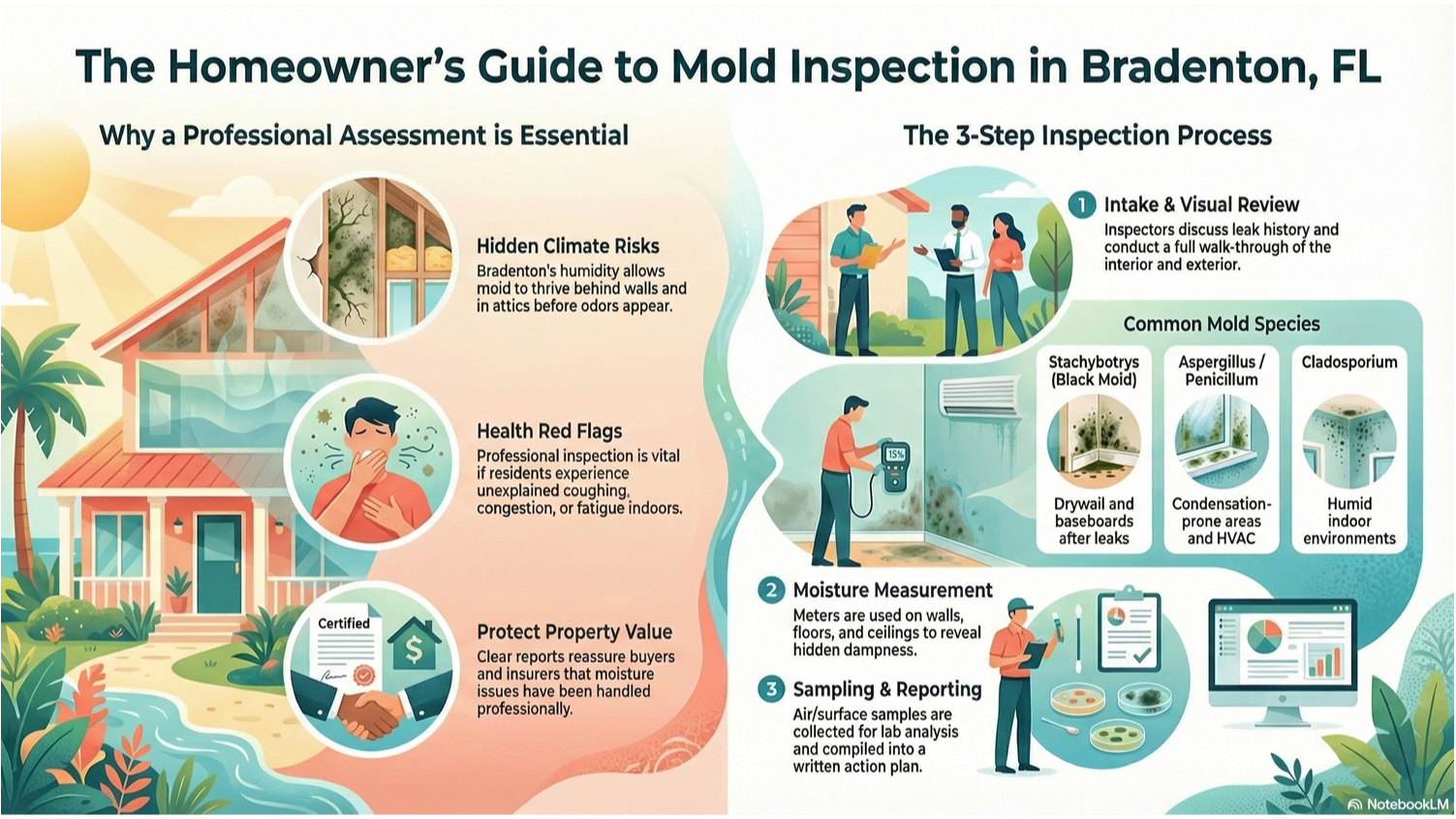
Key Takeaways
- Bradenton's humid climate creates ideal conditions for hidden mold growth behind walls, under flooring, and in HVAC systems where traditional visual inspections miss critical problems.
- Professional moisture detection using thermal imaging and moisture meters reveals temperature patterns and dampness levels that indicate conditions conducive to hidden mold colonies before they become visible.
- Health symptoms that improve when leaving home often signal hidden mold exposure requiring immediate professional assessment to protect family wellness.
- Hidden mold can reduce property values significantly through structural damage and transaction complications, making early detection vital for protecting real estate investments.
- Specialized local expertise in Bradenton's unique climate conditions is crucial for accurate identification of moisture pathways specific to Southwest Florida construction and weather patterns.
Hidden moisture pathways create the perfect environment for dangerous mold growth in Bradenton homes, often developing rapidly and then remaining undetected for months before homeowners notice any visible signs. Understanding where these pathways form and how professional specialists detect them can mean the difference between minor remediation and major structural repairs.
Why Hidden Mold Thrives in Bradenton's Humid Climate
Bradenton's subtropical climate presents unique challenges for homeowners battling moisture intrusion. With humidity levels frequently exceeding 60%, combined with intense heat and frequent rainfall, the region creates optimal conditions for mold development. Florida's coastal environment means that even minor water intrusions from storms, condensation, or small leaks can escalate into serious infestations within 24 to 48 hours.
The warm temperatures accelerate mold growth cycles, while persistent moisture from both indoor and outdoor sources feeds colonies that establish themselves deep within building materials. Unlike visible surface mold, these hidden growths develop behind drywall, under subflooring, and within insulation where air circulation remains poor and moisture accumulates.
Southwest Florida construction patterns, including slab foundations and specific HVAC configurations, create distinct moisture pathways that experienced specialists understand. Professional mold inspection services in Bradenton focus on these climate-specific problem areas to identify issues before they spread throughout the structure.
Warning Signs of Hidden Moisture Pathways
Detecting hidden mold requires recognizing subtle indicators that most homeowners overlook. These early warning signs often appear long before visible growth becomes apparent, providing opportunities for intervention.
1. Persistent Musty Odors Without Visible Mold
Musty smells that intensify after air conditioning cycles or during humid weather indicate active mold colonies releasing volatile organic compounds. These odors often concentrate near specific areas like baseboards, around windows, or in rooms with plumbing fixtures. The smell may seem to disappear and return, correlating with humidity fluctuations and HVAC operation patterns.
Professional inspectors use this information to narrow their search areas, focusing moisture detection equipment on locations where odors appear strongest. Advanced air sampling can confirm the presence of elevated spore levels even when visual inspection reveals nothing suspicious.
2. Unexplained Respiratory Symptoms That Improve Away From Home
Health symptoms that consistently improve when occupants leave the building strongly suggest indoor air quality problems. Common indicators include persistent coughing, sinus congestion, throat irritation, and worsening asthma symptoms that seem unrelated to outdoor allergens or seasonal patterns.
Children and elderly family members often show the first signs of mold-related health impacts. When multiple household members experience similar respiratory issues that resolve during vacations or extended time away from home, hidden mold exposure becomes a serious consideration requiring professional assessment.
3. Water Stains and Warped Building Materials
Discoloration on walls, ceilings, or around fixtures indicates moisture intrusion that may have already created hidden mold colonies. Bubbling paint, warped baseboards, or soft spots in drywall signal ongoing moisture problems that extend beyond surface appearance.
Even old water stains from resolved leaks can indicate areas where moisture once accumulated, creating conditions where mold could grow if humidity returns or new moisture is introduced. Professional evaluation determines whether previous moisture events created lasting contamination requiring remediation.
Where Professional Inspectors Find Hidden Mold
Experienced mold specialists understand the specific locations where Bradenton's climate and construction patterns create hidden moisture accumulation. These areas require specialized detection equipment and knowledge of local building practices to assess properly.
Behind Walls and Under Flooring
Wall cavities provide ideal conditions for mold growth, especially where plumbing runs through interior walls or where exterior walls experience condensation. Moisture from small leaks, condensation, or vapor intrusion creates hidden colonies that feed on drywall paper, insulation, and wooden framing.
Subflooring areas, particularly around bathrooms, kitchens, and laundry rooms, commonly develop mold when minor leaks or condensation seep through flooring materials. Professional inspectors use moisture meters to detect elevated readings that indicate hidden dampness beneath finished surfaces.
HVAC Systems and Attic Spaces
Air conditioning systems create multiple opportunities for hidden moisture accumulation. Condensate line blockages, ductwork condensation, and inadequate drainage can create persistent dampness that supports extensive mold growth within HVAC components and surrounding areas.
Attic spaces in Bradenton homes frequently experience temperature differentials that create condensation on ductwork, roof decking, and insulation. Poor ventilation combined with humid air infiltration creates conditions where mold colonies develop extensively before becoming noticeable in living areas.
Crawl Spaces and Foundation Areas
Ground moisture and poor ventilation make crawl spaces and foundation areas prime locations for hidden mold development. Vapor barriers that fail or were never properly installed allow moisture from soil to penetrate building materials continuously.
These areas often remain unchecked for extended periods, allowing mold colonies to establish themselves throughout structural components. Professional assessment includes thorough examination of these spaces using appropriate safety equipment and specialized lighting.
Advanced Detection Methods Beyond Visual Inspection
Modern mold inspection relies on sophisticated equipment that reveals moisture patterns and mold presence invisible to standard visual assessment. These technologies enable accurate detection of hidden problems before they create expensive damage.
Moisture Meters for Material Assessment
Professional moisture meters measure water content within building materials, revealing elevated readings that indicate potential mold habitat. Pin-type meters penetrate surfaces to assess moisture levels in wood, drywall, and other porous materials, while pinless meters use electromagnetic signals to evaluate moisture without surface damage.
Experienced inspectors understand normal moisture ranges for different materials and environmental conditions in Bradenton's climate. Readings that exceed normal parameters trigger focused investigation of specific areas using additional detection methods.
Thermal Imaging for Temperature Pattern Analysis
Infrared thermal imaging cameras reveal temperature differences that indicate moisture intrusion and air movement patterns. Areas with hidden moisture appear as temperature anomalies on thermal images, showing cooler spots where evaporation occurs or warmer areas where restricted air circulation exists.
This technology proves particularly valuable for detecting moisture behind finished walls, identifying leaks within building systems, and locating areas where insulation has been compromised by water damage. Thermal imaging provides non-invasive assessment that guides targeted moisture measurement and sampling.
Health Risks of Prolonged Hidden Mold Exposure
Hidden mold poses serious health risks that develop gradually, making early detection vital for protecting family wellness. Understanding both immediate and long-term health impacts helps homeowners recognize the importance of professional assessment.
Immediate Allergic and Respiratory Reactions
Mold spores and fragments trigger immediate allergic responses in sensitive individuals, including sneezing, runny nose, eye irritation, and skin reactions. Respiratory symptoms often worsen over time, with persistent coughing, wheezing, and breathing difficulty becoming more frequent and severe.
Asthma sufferers experience particular vulnerability to mold exposure, with hidden colonies creating continuous spore release that triggers attacks even when outdoor air quality remains good. Children and elderly family members typically show symptoms first and most severely.
Long-term Chronic Health Effects
Extended exposure to hidden mold can lead to chronic respiratory conditions, including persistent inflammation that can significantly impact lung function. Certain mold species produce mycotoxins that create neurological symptoms such as memory problems, headaches, and concentration difficulties.
Immune system suppression from prolonged mold exposure increases susceptibility to other illnesses and can create ongoing health challenges that persist even after mold removal. Medical professionals increasingly recognize the connection between hidden mold exposure and various chronic health conditions.
Property Value Impact and Structural Concerns
Hidden mold creates significant financial risks beyond health concerns, affecting both immediate property conditions and long-term real estate value. Understanding these impacts emphasizes the importance of early professional detection and remediation.
Building Material Deterioration and Repair Costs
Mold feeds on organic components within building materials, including the paper facing on drywall, wooden framing, and cellulose insulation. This biological activity weakens structural elements progressively, eventually requiring extensive replacement rather than simple cleaning.
Advanced deterioration can affect load-bearing components, flooring systems, and building envelope integrity. Early detection through professional inspection prevents minor moisture problems from becoming major reconstruction projects that cost thousands of dollars and disrupt household routines for weeks.
Real Estate Transaction Complications
Undisclosed mold problems create serious complications during property sales, potentially derailing transactions or resulting in significant price reductions. Buyers increasingly request mold inspections as part of due diligence, and undiscovered problems found during these assessments can halt closing processes.
Professional documentation of mold conditions and successful remediation provides reassurance to buyers and supports property values. Properties with unresolved mold issues often face financing difficulties, as lenders may refuse mortgages until problems are properly addressed.
Professional Mold Inspection Protects Bradenton Properties From Costly Hidden Damage
Professional mold inspection provides protection against the unique challenges that Bradenton's climate creates for residential and commercial properties. Experienced specialists understand local construction patterns, common moisture pathways, and effective remediation strategies that address problems completely.
Early detection through professional assessment prevents minor moisture intrusions from developing into extensive contamination requiring major remediation. The investment in thorough inspection pays for itself by avoiding costly repairs, protecting family health, and maintaining property values in Bradenton's competitive real estate market.
Regular professional assessment becomes particularly valuable for properties with previous moisture problems, older construction, or locations prone to storm damage. Establishing baseline conditions and monitoring changes over time ensures that any new moisture intrusion receives immediate attention before hidden mold colonies can establish themselves.
For mold inspection and remediation services that protect your Bradenton property investment, contact the experienced specialists at TampaBayMold.net who understand Southwest Florida's unique environmental challenges.
TampaBayMold.net
City: Tampa
Address: 550 N. Reo St. Suite #300
Website: https://www.tampabaymold.net


Comments
Post a Comment