College AV Collaboration Spaces: Interactive Design for Inclusive Learning
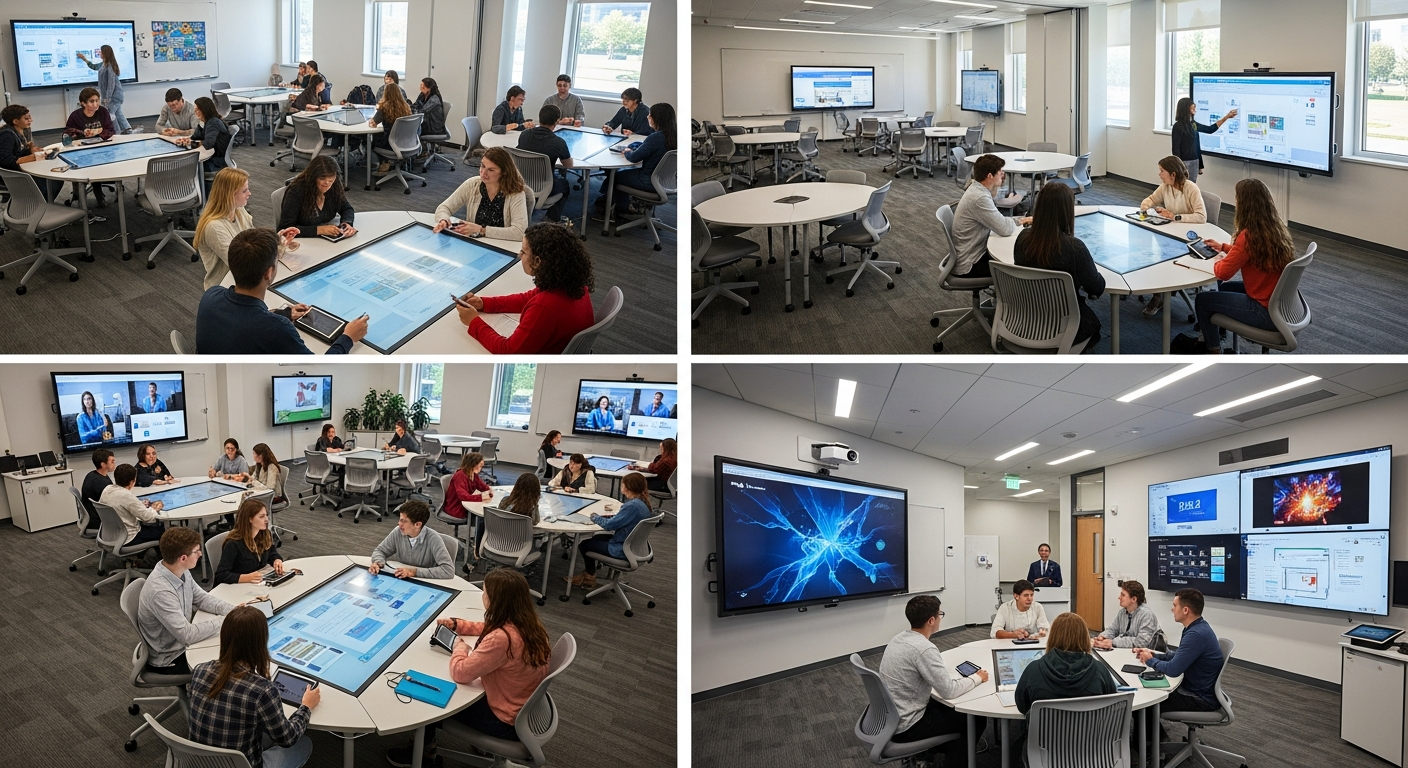
Key Takeaways:
- Universities are transforming traditional common areas into high-tech collaboration hubs with AV technology.
- Interactive displays, digital smartboards, and modular furniture create flexible learning environments that improve student retention and accessibility.
- Strategic implementation focuses on cost-effective solutions, such as repurposing existing spaces and gathering student feedback before making a major investment.
- Training programs ensure faculty adoption of new AV tools, maximizing the return on technology investments.
Modern universities face mounting pressure to create engaging learning environments that prepare students for collaborative workplaces. The answer lies in transforming underused campus spaces into high-tech collaboration hubs equipped with audiovisual technology. The AV solutions design experts at Vizual Symphony explain why.
Universities Transform Common Spaces Into High-Tech Collaboration Hubs
Campus transformation is happening beyond traditional classrooms. Universities nationwide are converting hallways, atriums, cafeterias, and dormitory study areas into active AV collaboration spaces. These renovations don't require massive construction projects; strategically placing interactive displays, flexible furniture, and reliable Wi-Fi transforms "dead space" into productive learning environments.
AV-Enabled Community Spaces Support Collaborative Learning Models
Pedagogical expectations are shifting fast, with universities embracing more activity-based, project-driven, and collaboration-focused assignments. The EDUCAUSE Horizon Report notes that colleges are redesigning their physical spaces to support these learning models, emphasizing flexible environments that enable students to work together, share ideas, and engage in hands-on problem-solving.
Another Avenue for Face-to-Face and Digital Student Social Interaction
One major post-pandemic trend is that students now reserve their limited time on campus for connection, not just classes. They come to campus specifically for community, social interaction, and shared experiences. Creating high-tech collaboration spaces that support both digital and face-to-face engagement directly increases in-person activity, giving students a compelling reason to show up and stay.
Why Interactive AV Technology Drives Student Success
The effects of AV technology on student outcomes extend far beyond flashy displays. Research demonstrates that these tools create measurable improvements in engagement, retention, and accessibility.
Active Learning Classrooms Show Higher Engagement
Interactive displays and touchscreens are transforming traditional lecture halls into active-learning environments where students participate rather than passively listen. Modern active learning classrooms encourage students to collaborate in real time, annotating shared smartboards, contributing wirelessly from their own devices, and solving problems together. Research on active learning classrooms shows that the intentional design of these spaces supports flexible seating, digital collaboration, and instructor mobility, helping faculty shift from podium-based lecturing to hands-on facilitation.
Collaborative Environments Support Remote and Hybrid Learning
Universities that invest in advanced AV classroom technology send a clear message to prospective students: they are committed to academic success, modern learning, and future-focused innovation. As noted in an analysis of emerging collaboration technologies in the EDUCAUSE Review, institutions that upgrade their learning environments with integrated AV and digital tools create stronger student engagement and better long-term outcomes, both on campus and in the workforce.
The seamless integration of AV and IT systems enhances classroom participation and supports both remote and hybrid learning models. Whether students attend in person or join virtually, they can access the same collaborative tools and shared content, ensuring a unified, consistent learning experience.
Accessible AV Design Supports Every Learner
Modern AV technology is reshaping how campuses support diverse learning needs. Features like automatic captioning, AI-powered transcription, adjustable audio zones, and screen-reader-friendly content help ensure students can engage in ways that work best for them. Instead of treating accessibility as an add-on, today's AV systems make inclusivity the default by offering multiple ways to see, hear, and interact with course material.
An article in the EDUCAUSE Review touches on equitable decision-making in academic technology. It notes that campuses adopting inclusive AV technology experience stronger engagement and broader participation because flexible content delivery enables more students to participate in the learning experience actively.
By combining these digital tools with thoughtful space design, universities create environments where every student can contribute. From hybrid lecture halls to tech-enabled student commons, accessibility-focused AV design helps remove barriers, support equity efforts, and strengthen the overall learning experience.
Proven AV Solutions Universities Deploy Today
Successful university AV implementations focus on reliable, user-friendly technologies that faculty and students can adopt quickly. The most effective solutions balance advanced capabilities with practical usability.
Zoom Rooms Deliver Consistent Experience Across Campus Locations
Standardized video conferencing systems enable seamless collaboration across campus buildings and remote locations. Students can join the same virtual workspace whether they're in the library, dormitory study room, or off-campus location.
These integrated systems feature multiple cameras and monitors that automatically switch between speakers, creating natural conversation flows. The technology removes barriers between physical and virtual participants, maintaining engagement across both types of connection.
Digital Smartboards Support Simultaneous Multi-User Annotation
Interactive whiteboards enable real-time collaboration, allowing multiple students to contribute to projects simultaneously. These displays integrate with personal devices, allowing students to share content from laptops, tablets, and smartphones directly to the main screen.
Advanced annotation features let groups mark up documents, diagrams, and presentations together. The collaborative annotations save automatically, creating permanent records of group work sessions that students can access later for study and review.
Modular Furniture Supports Group Work and Individual Study
Flexible seating arrangements adapt to different group sizes and learning activities. Configuring modular furniture systems to support intimate pair work, medium-sized team projects, and larger presentation formats is quick, easy, and essential.
Power outlets and device charging stations integrate directly into furniture pieces, ensuring students can work comfortably without worrying about battery life. Comfortable seating encourages longer collaboration sessions and deeper engagement with learning materials.
Strategic Implementation Without Overinvestment
Smart universities avoid overinvesting in technology by focusing on high-impact, cost-effective solutions that deliver immediate value to students and faculty.
Repurpose Hallways and Atriums to Avoid Construction Costs
Converting existing spaces delivers a greater return on investment than building new facilities. Hallways, atria, and dining areas can become collaboration zones with strategic placement of displays, seating, and power access points.
Institutions achieve the greatest ROI when they work to make underused areas on campus more collaborative. Installing flexible furniture, power outlets, and monitors in dead space provides students with additional places to work together without major construction expenses.
Gather Student Feedback Through Surveys and Focus Groups
Successful implementations start with understanding how students actually use collaboration spaces. University renovation processes should include regular consultation with students and faculty who will be using the spaces.
Prototyping and piloting prove vital for determining how students use technology in unique campus contexts before rolling it out more widely. Observing trial usage patterns and letting stakeholders lead the way creates more successful adoption than attempting blanket changes.
Cost-Effective AV Tools Faculty Actually Use
The most successful university AV programs focus on proven infrastructure rather than experimental technologies. Simple, reliable tools often deliver better results than complex systems that intimidate users.
Portable Whiteboards and Basic Screen-Sharing Solutions
Students naturally gather and collaborate when basic tools are available, such as whiteboards, digital screens with easy screen-sharing, and easy spaces to reserve both in the moment and on short notice. Complicated equipment and processes often serve as barriers to spontaneous collaboration.
Hardware that helps students identify available spaces by technology type, similar to locating parking spots in modern garages, speeds up collaboration. Clear organization and space management systems maximize the use of existing resources.
High-Tech Collaboration Spaces Position Universities for Future Growth
Forward-thinking universities recognize that collaboration spaces represent more than current student needs; they're long-term investments in institutional reputation and competitive positioning. Modern AV-enabled environments have become a visible signal to prospective students and families that a campus is committed to innovation, academic success, and a future-ready learning experience. Institutions partnering with integrators like Vizual Symphony are using technology upgrades to showcase that commitment in ways students immediately notice.
Prioritizing collaborative spaces also makes it easier for students to work across disciplines, mirroring the environments they'll encounter in today's interconnected workplaces. These high-tech hubs foster creativity, problem-solving, and teamwork, qualities that directly strengthen recruitment, retention, and long-term student outcomes.
For universities planning their next chapter, the takeaway is clear: investing in modern collaboration spaces isn't just an upgrade, it's a strategic move that positions the institution for long-term growth and competitive advantage.
Vizual Symphony
City: Glendale
Address: 5900 San Fernando Rd
Website: https://vizualsymphony.com


Comments
Post a Comment