Carpenter Ants vs Termites: Spring Prevention Gameplan for Orlando
Spring in Central Florida brings two wood-destroying pests into high activity: termites and carpenter ants. Orlando homeowners who understand the differences—and address both threats—protect their properties from costly structural damage.
Two Pests, One Season
Termite awareness spikes every spring as swarmers emerge across Orlando neighborhoods. But Florida carpenter ants swarm during the same season and cause similar damage. Many homeowners focus exclusively on termites while carpenter ant colonies quietly expand inside walls and structural components.
Both pests target wood. Both prefer moisture-damaged materials. Both can compromise a home's structural integrity over time. The difference lies in how they interact with wood—and that distinction affects treatment approaches.
How Termites and Carpenter Ants Differ
Feeding Behavior
Termites consume wood as their primary food source. Colonies feed continuously on cellulose found in structural lumber, leaving behind hollow galleries and weakened supports. A mature termite colony can consume several pounds of wood annually.
Carpenter ants do not eat wood. Instead, they excavate tunnels and galleries for nesting, pushing the debris outside. This material—called frass—contains wood shavings mixed with insect body parts. While carpenter ants don't consume the wood, their tunneling still compromises structural integrity over decades.
Physical Appearance
Termite swarmers have straight antennae, wings of equal length, and thick waists connecting their body segments. Their coloring ranges from pale cream to dark brown depending on species.
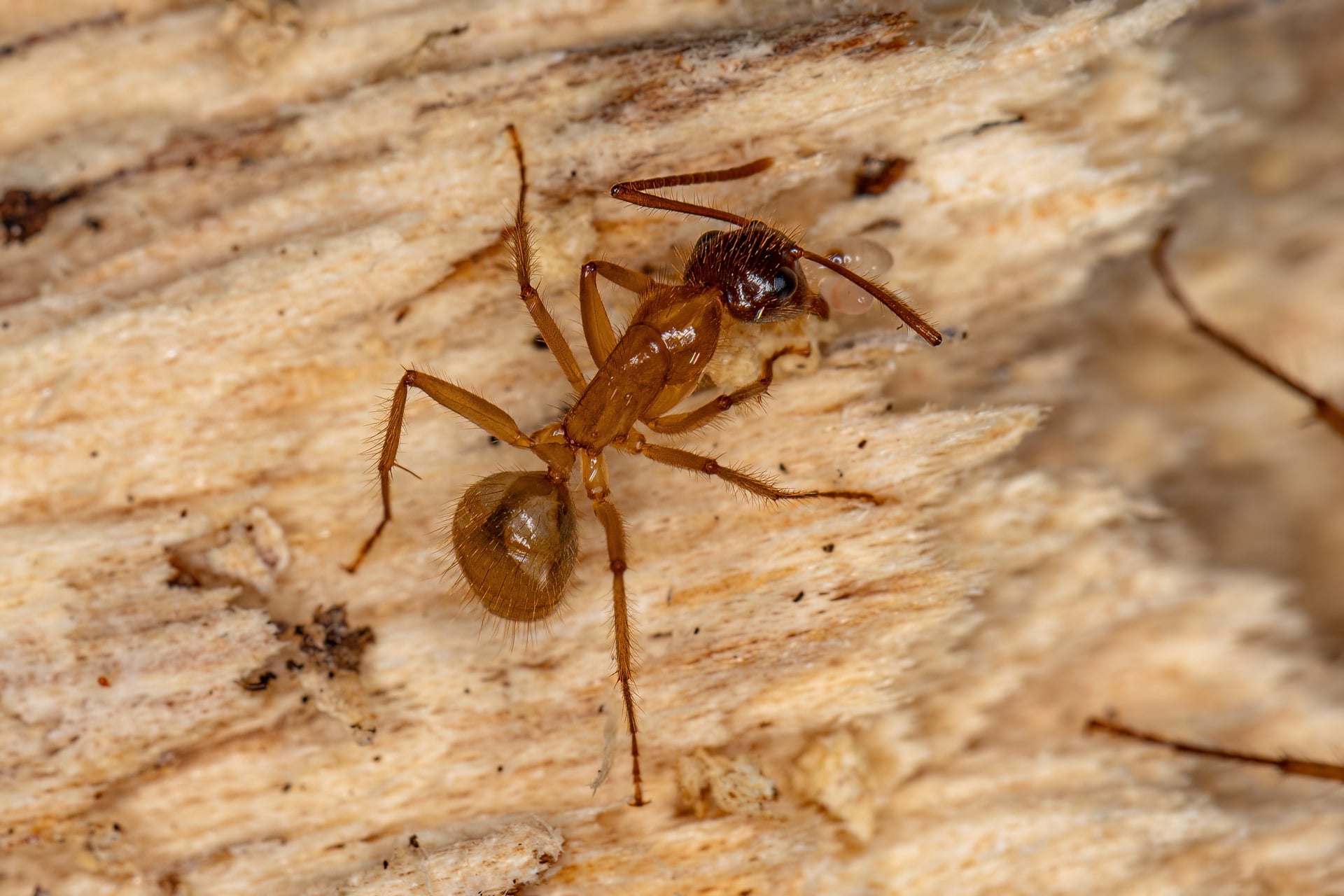
Carpenter ant swarmers display bent antennae, wings of unequal length, and distinctly pinched waists. Florida carpenter ants feature rusty-orange heads and thoraxes, paired with black abdomens—a distinctive combination that aids identification.
Damage Signs
Termite infestations produce mud tubes along foundation walls, hollow-sounding wood when tapped, and discarded wings near windows after swarms. Subterranean termites maintain contact with soil, so damage often starts at ground level and moves upward.
Carpenter ant damage appears differently. Sawdust-like piles near baseboards or in attics indicate active tunneling. Smooth, oblong slits in wood surfaces—called windows—mark exit points where ants expel debris. Rustling sounds within walls at night suggest established colonies.
Why Both Threats Matter This Spring
Subterranean termites swarm between February and June in Central Florida, typically emerging after afternoon rain showers. Drywood termites follow from May through September. Orlando homeowners may have already noticed termite swarmers in recent weeks.
Carpenter ants swarm during spring and early summer as well. Winged males and females leave established colonies to mate and start new nests. Properties with moisture issues, accessible food sources, or vegetation touching exterior walls face an elevated risk.
Here's the critical difference: termite colonies cause significant damage within a few years. Carpenter ant queens can live 25 years, meaning untreated colonies have decades to expand and tunnel through wooden structures. Both timelines demand attention.
The Spring Prevention Gameplan
Address Moisture First
Both termites and carpenter ants prefer wood softened by water damage. Fix leaky pipes under sinks and in bathrooms. Improve attic ventilation to reduce humidity. Repair damaged roof flashing and seal gaps around windows. Eliminating excess moisture makes properties less attractive to both pests.
Clear Vegetation From Structures
Firewood stacked against exterior walls, tree branches touching rooflines, and overgrown shrubs near foundations provide pathways directly into homes. Maintain at least 15 feet of clearance between the structure and organic materials.
Inspect for Warning Signs
Walk through the home looking for evidence of either pest. Check for mud tubes along foundation walls (termites), sawdust piles near baseboards (carpenter ants), hollow-sounding wood, and discarded wings near windows. Attics, crawlspaces, and areas under sinks deserve particular attention.
Schedule Professional Inspection
DIY identification can miss early-stage infestations of both pests. Professional inspectors know where to look and can distinguish between termite damage, carpenter ant galleries, and other wood-destroying organisms. Properties that haven't had recent inspections should schedule assessments before the spring population peaks.
Treatment Differences Matter
Termite treatment typically involves liquid barriers, bait systems, or fumigation, depending on species and severity. Termite control professionals apply targeted products that eliminate colonies and prevent reinfestation.
Carpenter ant treatment requires locating all nesting sites—both primary colonies and satellites—then applying products that reach the queen. Because colonies can span multiple wall voids and structural components, professional treatment proves far more effective than DIY approaches.
ABC Home & Commercial Services has protected Central Florida properties since 2006. Their technicians identify both termites and carpenter ants during comprehensive inspections and implement treatment plans that address whichever threat exists—or both if needed.
Act Before Peak Season
Spring represents the optimal window for addressing wood-destroying pests. Populations remain manageable, treatment costs remain reasonable, and property owners avoid the emergency situations that accompany peak-season infestations.
Orlando homeowners who noticed termite swarmers in recent weeks should also inspect for carpenter ant activity. Both pests exploit the same conditions—moisture, accessible wood, pathways into structures—making prevention efforts effective against multiple threats simultaneously.
Contact an Orlando exterminator for a professional assessment before the spring population peaks.
Content strategy by national digital marketing agency ASTOUNDZ.
ABC Home & Commercial Services Orlando
City: Orlando
Address: 823 East Colonial Drive
Website: https://www.abchomeandcommercial.com/orlando
Phone: +1 407 265 0665


Comments
Post a Comment