Best Analog Synth Under $1000: Top Paraphonic & Monophonic Models In 2026
Key Takeaways
- Monophonic synths excel at powerful basslines and lead sounds with focused single-note expression, while paraphonic architecture enables chord playing through shared filtering.
- Budget-conscious producers can find professional analog synthesis starting around $150 with options like the Behringer TD-3 series delivering classic acid house tones.
- Voltage-controlled oscillators and analog filter design are critical components that significantly determine sound character, alongside voice architecture, when choosing between models.
- Paraphonic options under $500 provide multi-note richness without the complexity and cost of full polyphonic systems.
- Musical goals should drive architecture choice - monophonic for focused performance elements, paraphonic for harmonic textures and chord work.
Understanding synthesizer voice architecture will be vital when building your home studio or expanding your live performance capabilities. The choice between monophonic and paraphonic designs directly impacts the musical expressions possible within budget constraints - so knowing the right architecture couldn't be more important if you want to make smart purchasing decisions.
Key Architecture Differences That Matter
Monophonic synthesizers generate one note at a time, channeling all synthesis power into creating rich, focused tones perfect for basslines, lead melodies, and arpeggiated sequences. This single-voice design allows manufacturers to dedicate processing power toward sound quality rather than voice management, often resulting in warmer, more characterful analog circuits.
Paraphonic synthesizers can play multiple notes simultaneously, but all voices share the same filter and amplifier envelope. When pressing multiple keys, each note triggers its own oscillator, yet they all pass through identical filtering and amplitude shaping. This creates unique harmonic interactions impossible with monophonic designs while maintaining the organic character of shared analog processing.
The distinction is important during actual music creation. Monophonic synths force deliberate note choices, encouraging expressive techniques like pitch bending and filter sweeps that define electronic music genres. Experts have written a curated list of analog synthesizers under $1000 to demonstrate how both architectures serve different creative purposes within budget-conscious setups.
Best Monophonic Analog Synths Under $1000
Monophonic designs dominate the affordable analog synthesizer market, offering exceptional sound quality through focused engineering approaches. These single-voice instruments provide the foundation for countless electronic music productions while maintaining accessible price points for emerging producers.
1. Behringer TD-3 Series: Classic Acid Bass
The Behringer TD-3 delivers authentic Roland TB-303 acid basslines through genuine analog circuitry at an entry-level price point. Its 18dB low-pass filter and sawtooth oscillator recreate the squelchy, resonant tones that defined acid house music throughout the late 1980s and early 1990s.
Built-in step sequencing captures the essence of classic acid programming, allowing pattern creation with accent control and slide functions. The TD-3's intuitive interface makes sound design immediately accessible, while multiple color options (including translucent variations) add visual appeal to studio setups. Temperature-compensated oscillators maintain tuning stability during extended performance sessions.
2. Moog MINITAUR: Professional Bass Power
The Moog MINITAUR brings authentic Moog bass synthesis into a compact desktop format through dual oscillators and the classic 24dB ladder filter. This monophonic powerhouse delivers deep, punchy bass tones with the musical precision that has made Moog instruments industry standards.
Dual oscillator design enables rich harmonic content through detuning effects, while extensive MIDI implementation supports modern production workflows. The MINITAUR's one-knob-per-function layout provides immediate sound shaping capabilities, eliminating menu diving during creative sessions. Preset storage functionality balances hands-on control with recall convenience for live performances.
Top Paraphonic Options for Multi-Note Richness
Paraphonic synthesizers occupy a unique middle ground between monophonic focus and polyphonic complexity, offering chord-playing capabilities through shared analog processing. This architecture creates distinctive harmonic interactions while maintaining the organic character of analog synthesis.
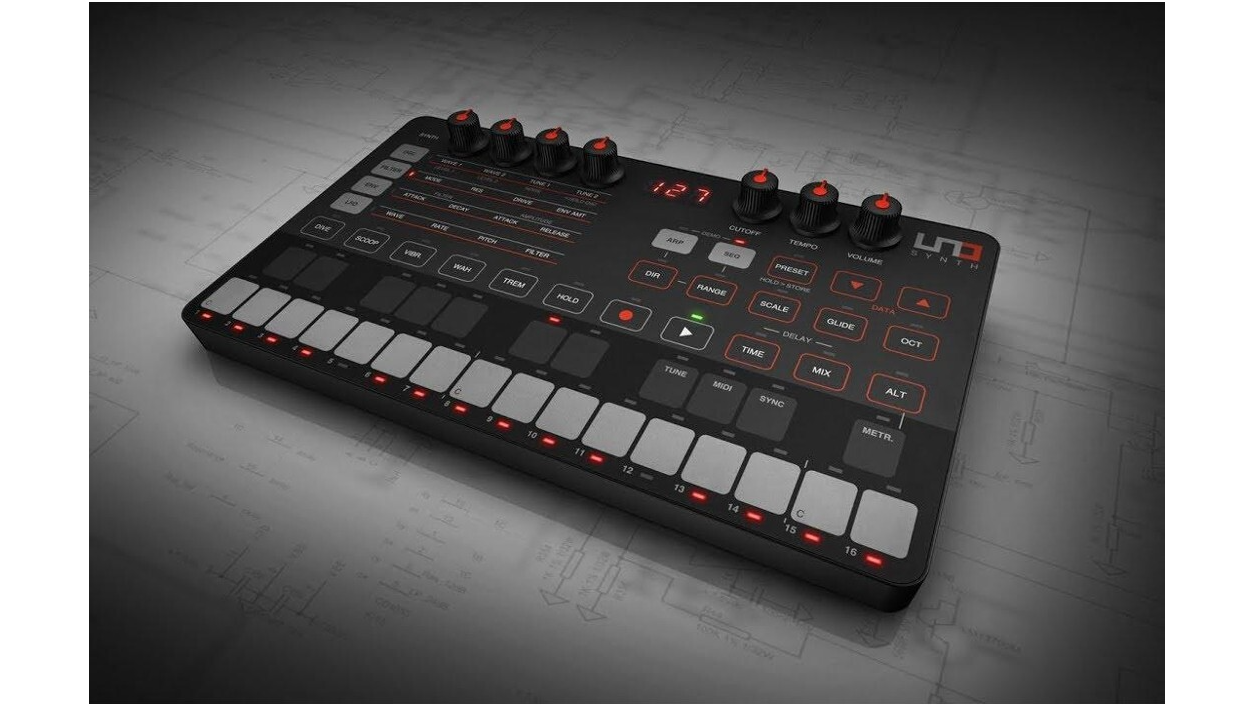
1. IK Multimedia Uno Synth Pro X: Advanced Paraphonic
The IK Multimedia Uno Synth Pro X delivers sophisticated paraphonic synthesis through three analog oscillators with wave morphing capabilities and extensive modulation routing. Its advanced architecture enables chord playing while maintaining authentic analog character through shared filtering and amplitude control.
Multiple sequencer lanes support complex pattern programming with independent parameter control, while integrated effects processing adds reverb, delay, and distortion without external equipment requirements. The expanded control surface provides immediate access to synthesis parameters, encouraging real-time sound manipulation during performances. Battery power capability ensures portability for mobile production scenarios.
Technical Components to Evaluate
Beyond voice architecture, specific technical components determine overall sound quality and musical usefulness within budget analog synthesizers. Understanding these elements enables informed purchasing decisions based on actual performance characteristics.
Voltage-Controlled Oscillator Quality
Voltage-controlled oscillators generate the fundamental waveforms that form the basis of synthesized sounds, making their quality vital for overall instrument character. Modern analog synthesizers use temperature-compensated circuits that maintain stable tuning across performance conditions, eliminating the unreliability issues that plagued vintage instruments.
High-quality VCOs provide clean waveform generation with minimal drift and excellent tracking across the keyboard range. Multiple waveform outputs (sawtooth, square, triangle) expand sonic possibilities, while sync and FM capabilities enable complex harmonic interactions. Oscillator quality becomes particularly important in monophonic designs where single voices carry entire musical lines.
Analog Filter Design and Character
Analog filters shape synthesized sounds by removing or emphasizing specific frequency ranges, contributing significantly to the warmth and character associated with analog synthesis. Low-pass, high-pass, and band-pass configurations offer different tonal shaping capabilities, while resonance control adds harmonic emphasis and potential self-oscillation.
Filter pole count affects rolloff characteristics, with 24dB (4-pole) designs providing steeper attenuation than 12dB (2-pole) alternatives. Classic designs like the Moog ladder filter and Curtis filter chips offer distinct sonic signatures that influence overall instrument character. Voltage control over cutoff frequency and resonance enables dynamic filtering needed for expressive synthesis techniques.
Choose Based on Your Musical Goals and Budget
Architecture selection ultimately depends on your specific musical requirements and creative goals rather than technical specifications alone. Monophonic synthesizers excel in genres requiring focused bass and lead elements, while paraphonic designs serve applications demanding harmonic content without polyphonic complexity.
Budget considerations should balance immediate needs against future expansion possibilities. Entry-level monophonic instruments like the Behringer TD-3 provide immediate access to classic analog synthesis, while semi-modular options like the Moog Mother-32 offer growth potential through modular system integration. Paraphonic designs fill the gap for producers requiring chord capabilities within analog synthesis workflows.
Consider workflow integration when making final decisions. MIDI compatibility, preset storage, and connectivity options affect long-term usefulness more than pure sound generation capabilities. Modern analog synthesizers balance authentic vintage character with contemporary reliability and features, making budget constraints less limiting than in previous generations.
Sam Ash
City: Hicksville
Address: 278 Duffy Ave
Website: https://www.samash.com/


Comments
Post a Comment