Pool Deck Repair: Why Concrete Resurfacing Is Safer & Cheaper Than Replacement
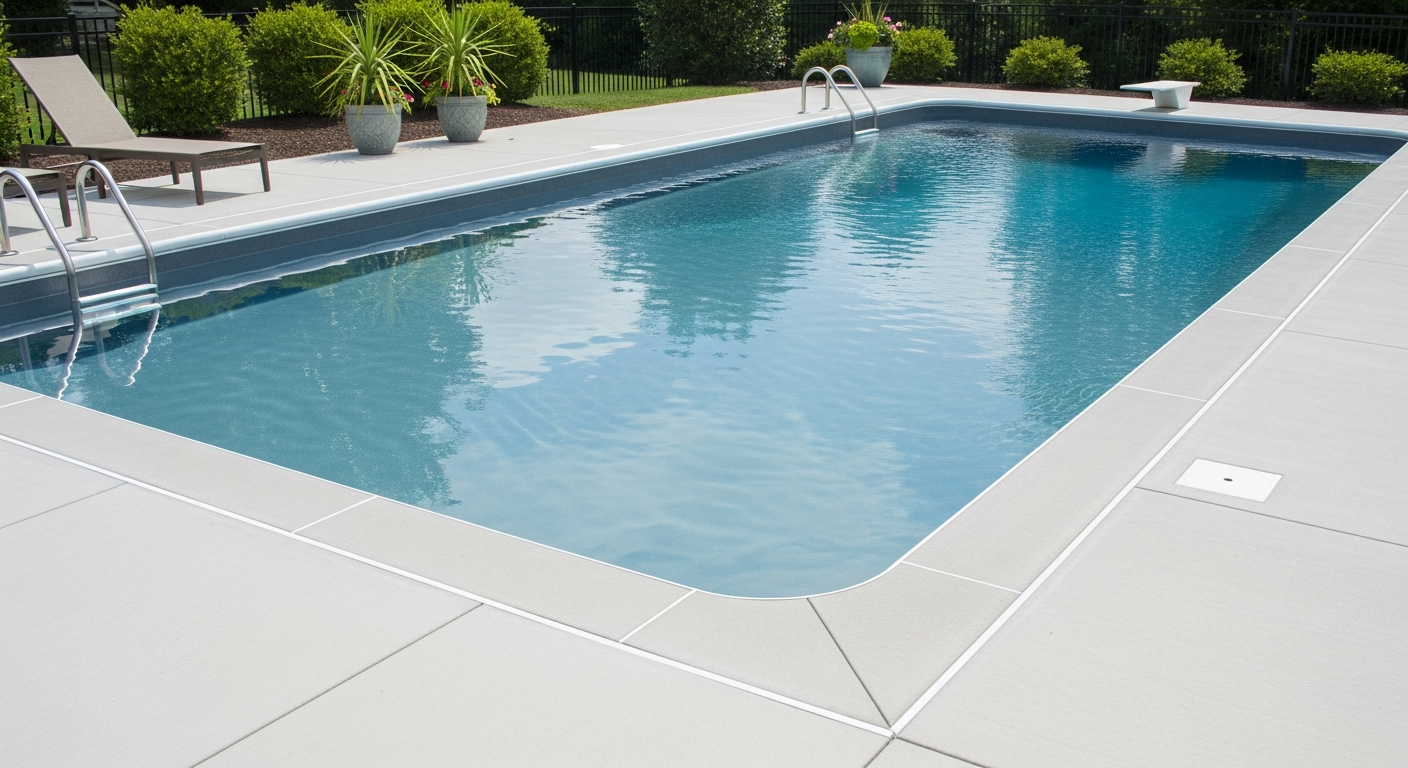
Key Takeaways
- Concrete resurfacing costs 40-60% less than full pool deck replacement while eliminating demolition mess and disposal fees
- Up to 100,000 people slip and fall near pools each year, many caused by slippery or damaged deck surfaces that resurfacing can fix
- Modern resurfacing materials can double concrete strength from 2,500 psi to 5,000 psi using advanced polymer additives
- Professional installation takes days, not weeks, with slip-resistant options that keep families safe for 10-20 years
- Three critical mistakes can turn a promising resurfacing project into a safety hazard or costly failure
Pool deck problems don't announce themselves with fanfare. That small crack near the diving board grows quietly through winter freeze cycles. The slightly rough texture becomes a genuine slip hazard after summer pool parties. What starts as a minor cosmetic issue transforms into a safety concern that threatens both family wellbeing and property value.
Pool Deck Resurfacing Costs 40-60% Less Than Replacement
Pool deck replacement projects involve extensive demolition, hauling away thousands of pounds of broken concrete, and starting from scratch with new foundation work. These factors drive costs up to $30-55 per square foot for complete replacement projects. Resurfacing typically ranges from $3-10 per square foot, delivering dramatic savings without sacrificing quality or durability.
As the experts at Concrete Trends and Innovations explain, The cost difference becomes even more significant when considering hidden expenses. Full replacement requires permits, extended construction timelines that disrupt family activities, and disposal fees for old concrete.
Beyond immediate savings, resurfacing preserves the existing structural foundation. This approach makes financial sense for pool decks with solid underlying concrete that simply needs surface renewal. Professional assessment determines whether the existing slab provides adequate support for overlay systems.
Why Pool Deck Safety Problems Are More Serious Than You Think
Up to 100,000 people slip and fall near pools each year, leading to various injuries.
Pool safety statistics reveal alarming trends that extend far beyond drowning prevention. Up to 100,000 people slip and fall near pools each year, with a significant portion involving deck surfaces. Slippery conditions around pools create liability concerns for homeowners and genuine danger for family members of all ages.
Children and elderly family members face particular risks on damaged or inadequately textured pool decks. Wet feet on smooth concrete create hazardous conditions even during casual poolside activities. Emergency room visits from pool deck falls often involve serious injuries including broken bones, head trauma, and back injuries that could have been prevented with proper surface preparation.
Aging Concrete Creates Hidden Hazards
Concrete deterioration follows predictable patterns that create increasingly dangerous conditions over time. Surface scaling creates rough, uneven areas that catch feet and pool equipment. Freeze-thaw cycles cause micro-cracks that expand into trip hazards. Chemical exposure from pool treatments gradually weakens surface integrity.
Hairline cracks seem harmless but allow water penetration that accelerates damage through repeated freeze-thaw cycles. What appears as minor surface wear often indicates more serious structural issues developing beneath. Professional evaluation identifies these hidden problems before they create safety emergencies or require expensive emergency repairs.
How Concrete Resurfacing Actually Works Better Than Replacement
Ultra-High Performance Concrete (UHPC) Offers Significant Strength Increases.
Advanced resurfacing materials dramatically outperform traditional concrete in both strength and durability. Concrete overlays with acrylic polymer additives can increase surface strength from 2,500 psi to 5,000 psi, effectively doubling the load-bearing capacity. Ultra-High Performance Concrete formulations provide even greater improvements in specific applications.
These strength improvements translate into real-world benefits including resistance to cracking, better freeze-thaw performance, and extended service life. Modern overlay systems bond chemically with existing concrete, creating a monolithic surface that performs better than the original installation.
Installation Takes Days, Not Weeks
Professional resurfacing projects typically complete within 3-5 days compared to 2-3 weeks for full replacement. The streamlined process eliminates demolition time, foundation preparation, and curing delays associated with complete reconstruction. Families can return to normal pool activities quickly without extended construction disruption.
Rapid installation doesn't compromise quality when proper surface preparation and application techniques are followed. Modern overlay materials cure faster than traditional concrete while achieving superior performance characteristics. Weather delays are minimized since resurfacing doesn't require extensive excavation or foundation work.
No Demolition Mess or Extra Disposal Costs
Resurfacing preserves existing concrete infrastructure while transforming surface appearance and performance. This approach eliminates the substantial mess, noise, and disposal costs associated with jackhammer demolition. Homeowners avoid the disruption of heavy equipment, debris removal, and reconstruction activities.
Environmental benefits include reduced waste generation and lower carbon footprint compared to complete replacement. Existing concrete provides a stable foundation for overlay systems, maximizing material efficiency while minimizing environmental impact. The renovation process respects both budget constraints and environmental responsibility.
The Slip-Resistant Options That Keep Families Safe
Cool-Deck Textures Stay Comfortable Underfoot
Spray texture overlays, commonly called cool deck finishes, provide excellent slip resistance while staying comfortable for bare feet in direct sunlight. These textured surfaces create microscopic grip patterns that improve traction without feeling rough or abrasive. The light-colored finishes reflect heat, maintaining comfortable surface temperatures even during peak summer conditions.
Cool deck systems combine safety and comfort through carefully engineered texture patterns. The surface provides adequate grip for wet conditions while remaining pleasant for extended contact during poolside relaxation. Multiple color options allow customization to complement existing landscape and architectural elements.
Rubber Concrete Overlays Work Even When Wet
Rubber concrete overlay systems offer naturally slip-resistant surfaces that maintain traction even when completely wet. These specialized materials incorporate rubber particles that create a softer, more forgiving surface particularly beneficial for families with young children or elderly members. The improved grip performance reduces slip and fall risks during typical pool activities.
The cushioning properties of rubber overlays provide additional safety benefits by reducing injury severity if falls do occur. These systems prove especially valuable around diving areas and steps where slip risks are naturally higher. Maintenance requirements remain minimal while safety performance exceeds traditional concrete surfaces.
Polyaspartic coatings can be formulated or improved with additives to provide built-in grip, making them a safe choice for pool decks.
Polyaspartic and polyurea coating systems provide rapid installation with inherent non-slip properties that can be further improved through specialized additives. These high-performance coatings cure quickly, often within hours, allowing faster project completion and return to service. The chemical resistance makes them ideal for pool environments with regular exposure to chlorine and cleaning chemicals.
Slip-resistant additives can be broadcast into wet coatings or pre-mixed into the material for consistent texture throughout. The resulting surface provides reliable traction while maintaining easy cleaning and maintenance. UV resistance ensures long-term color stability and performance in outdoor pool environments.
Don't Make These Common Pool Deck Repair Mistakes
Ignoring Surface Preparation
Proper surface preparation determines the success or failure of any resurfacing project. Inadequate cleaning, insufficient profiling, or failure to address underlying moisture issues leads to premature coating failure and safety hazards. Professional preparation includes thorough cleaning, crack repair, and surface profiling to ensure optimal adhesion.
Moisture testing prevents costly failures caused by water vapor transmission through concrete. Existing sealers must be completely removed to allow proper bonding of new overlay materials. Shortcuts in preparation work inevitably result in delamination, bubbling, or complete coating failure within months of installation.
Choosing Looks Over Safety Features
Aesthetic appeal shouldn't override safety considerations in pool deck renovations. Smooth, decorative finishes may look attractive but create dangerous conditions around water. The most beautiful pool deck becomes a liability if family members can't safely navigate wet surfaces.
Balanced design incorporates both visual appeal and functional safety features. Textured areas can be strategically placed in high-traffic zones while smoother decorative elements are used in areas with lower slip risks. Professional designers understand how to achieve attractive results without compromising safety performance.
Skipping Professional Assessment
DIY evaluation of concrete conditions often misses critical structural issues that affect overlay performance. Professional assessment includes core testing, moisture evaluation, and structural analysis that determines appropriate repair strategies. Attempting resurfacing over compromised concrete leads to premature failure and wasted investment.
Structural engineers and experienced contractors identify problems that aren't visible to untrained observers. Hidden issues like insufficient reinforcement, poor drainage, or chemical contamination require professional diagnosis and correction before overlay installation. Proper assessment prevents costly re-work and ensures long-term performance.
Your Resurfaced Pool Deck Will Last 10-20 Years With Expert Installation
Professional resurfacing with quality materials and proper installation techniques provides 10-20 years of reliable performance. The extended lifespan depends on material selection, climate conditions, and maintenance practices. Properly maintained surfaces often exceed expected service life while maintaining appearance and safety characteristics.
The durability advantage comes from modern overlay materials that outperform original concrete in key performance areas. Chemical resistance protects against pool treatment damage. UV stability prevents color fading and surface degradation. Freeze-thaw resistance ensures performance in challenging climate conditions.
Regular maintenance extends service life and preserves appearance throughout the warranty period. Simple cleaning and periodic resealing maintain optimal performance while protecting the investment. Professional maintenance programs ensure problems are identified and addressed before they require major repairs.
Concrete Trends and Innovations
City: El Lago
Address: 400 Lakeshore Drive
Website: https://concrete-setx.com


Comments
Post a Comment