Is Prototyping Necessary? Why Functionality & Production-Grade Materials Matter
Key Takeaways
- Prototyping prevents costly manufacturing disasters - design flaws can cost 5 to 100 times more to fix after tooling begins
- Functional prototypes are vital for investor pitches, user testing, and regulatory compliance in industries like healthcare and aerospace
- Production-grade materials in prototypes reveal hidden design flaws and ensure manufacturing alignment, preventing expensive tooling disasters
- Smart prototyping strategies involve different types at different stages - from alpha testing to production-ready samples
- Time-to-market delays compound revenue loss, making early prototype validation a critical investment rather than an optional expense
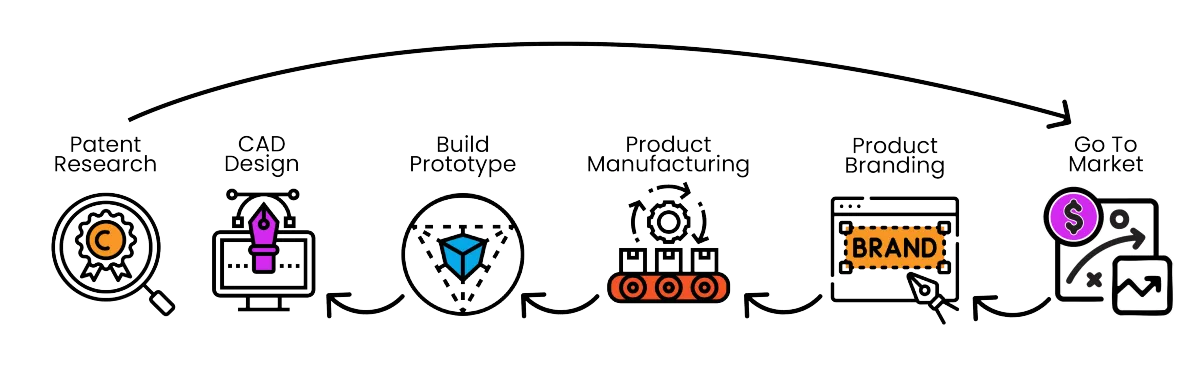
The question isn't whether prototyping is necessary - it's whether inventors and entrepreneurs can afford to skip it. Every successful physical product follows a similar path: concept, prototype, refinement, and production. Those who skip or shortcut the prototyping phase often discover their oversight when it's most expensive to correct.
Prototyping Prevents Costly Manufacturing Disasters
Manufacturing disasters don't announce themselves with fanfare. They arrive quietly - a tolerance issue discovered during first production runs, a material failure under real-world stress, or an assembly sequence that seemed logical on paper but proves impossible on the factory floor. These seemingly minor oversights can derail entire product launches and drain budgets faster than any other development mistake.
Consider the hidden costs lurking in every untested design decision. A snap-fit mechanism that works perfectly in CAD might bind when molded in actual production plastics. An ergonomic handle that feels comfortable in foam core could cause fatigue when manufactured in the intended material. A waterproof seal that holds during benchtop testing might fail when subjected to real-world temperature variations. Prototyping helps inventors identify these issues before they become expensive manufacturing problems.
When Functionality Matters Most in Prototypes
Not every prototype needs to work perfectly, but specific situations demand functional performance that goes far beyond appearance models or concept demonstrations. Understanding when functionality becomes critical can save months of development time and prevent costly missteps.
1. Investor Pitches Often Require Functional Prototypes or Proofs of Concept
Investors evaluate risk, not just potential. A functional prototype transforms an abstract idea into tangible proof that the concept works as promised. Early-stage companies that demonstrate working prototypes show technical feasibility and execution capability, securing funding that might otherwise remain elusive.
Functional prototypes create emotional connections that presentation slides cannot match. When investors can touch, manipulate, and experience a working product, they move beyond theoretical evaluation to practical assessment. The prototype becomes a shared reference point for discussions about scalability, manufacturing challenges, and market readiness.
2. User Testing Demands Real Performance
User feedback on non-functional prototypes often focuses on superficial elements - color preferences, button placement, or aesthetic appeal. Functional prototypes generate feedback about core user experience: Does the product solve the intended problem? Is the interaction intuitive? Does performance meet expectations?
Real-time collaborative design platforms demonstrate this principle perfectly. Early users could experience core functionality, providing feedback that shaped platform development. Without functional testing, companies might build elaborate features that users didn't want while missing critical capabilities they needed.
3. Regulated Industries Heavily Rely on Prototypes for Functional Validation
Healthcare, aerospace, and automotive industries don't treat prototyping as optional. Regulatory agencies require functional prototypes to verify safety claims, performance specifications, and compliance with industry standards. These prototypes must demonstrate actual performance under controlled conditions, not just theoretical capabilities.
A medical device prototype that looks correct but doesn't function properly provides no regulatory value. The prototype must prove biocompatibility, sterilization compatibility, user safety, and clinical effectiveness. Similarly, aerospace components require prototypes that withstand stress testing, temperature cycling, and fatigue analysis before any regulatory approval consideration.
Production-Grade Materials Transform Prototype Value
Material selection dramatically impacts prototype usefulness, yet many inventors default to whatever's convenient or inexpensive. This approach saves money upfront but often costs significantly more during later development stages when material-related issues surface.
Manufacturing Alignment Prevents Tooling Disasters
Prototypes built with materials that closely mirror production specifications reveal manufacturing constraints early. A prototype made from machined aluminum might perform beautifully, but if the production part will be die-cast, the material properties differ substantially. Die-cast aluminum has different strength characteristics, surface finish options, and design constraints than machined stock.
Testing with production-grade materials exposes tolerance issues, assembly challenges, and performance variations that prototype materials might mask. A plastic prototype 3D printed in ABS might fit perfectly, but the same design injection molded in polypropylene could have different shrinkage rates, flexibility, and durability characteristics.
Real Materials Reveal Hidden Design Flaws
Material properties affect every aspect of product performance - strength, flexibility, appearance, user interaction, and manufacturing feasibility. A prototype handle that feels comfortable when 3D printed might become slippery when molded in the intended production plastic. A hinge mechanism that operates smoothly in prototype materials might bind when manufactured with production-grade components.
Surface treatments, textures, and finishes also behave differently across materials. A textured surface that provides excellent grip on a prototype material might feel uncomfortable or wear poorly on the production material. These discoveries during prototyping prevent costly tooling modifications and product redesigns.
The Hidden Costs of Skipping Prototypes
The true cost of avoiding prototyping isn't immediately visible. It accumulates through delayed launches, manufacturing corrections, customer dissatisfaction, and missed market opportunities. Smart inventors treat prototyping as insurance against far more expensive problems.
1. Design Flaws Can Cost 5 to 100 Times More After Tooling
A design modification that costs $500 to implement during prototyping might cost $50,000 to correct after tooling begins. Injection mold modifications require machining changes, extended lead times, and often complete mold reconstruction. What seemed like a minor adjustment becomes a major engineering project with corresponding costs and delays.
Consider a simple example: a wall thickness that's too thin for reliable molding. During prototyping, this discovery leads to a quick CAD revision and a new printed part. After steel tooling, the same issue requires mold modifications, extended cooling times, potential material changes, and thorough retesting. The cost multiplication factor often exceeds 100:1.
2. Time-to-Market Delays Compound Revenue Loss
Product launches operate within market windows. Competitors advance, consumer preferences shift, and regulatory landscapes change. A six-month delay caused by manufacturing problems doesn't just postpone revenue - it can eliminate market opportunity entirely.
Early prototyping accelerates overall development timelines by identifying and resolving issues when solutions are faster and less expensive to implement. The prototype phase might add weeks to the front end of development but typically saves months from the back end by preventing manufacturing delays and redesign cycles.
3. Investor Confidence Plummets Without Proof of Concept
Investors fund execution capability, not just ideas. Without functional prototypes, investors must evaluate concepts based on presentations and promises. This uncertainty increases perceived risk and typically results in lower valuations, smaller funding rounds, or rejection altogether.
A working prototype demonstrates several critical capabilities simultaneously: technical feasibility, user desirability, and execution competence. These factors directly influence investor confidence and funding terms. The cost of prototyping often represents a fraction of the valuation improvement it enables.
Different Stages Demand Different Prototype Types
Effective prototyping isn't a single event - it's a progression of increasingly refined models, each serving specific validation purposes. Understanding which type of prototype to build when prevents wasted effort and accelerates development progress.
Alpha Prototypes Test Core Functionality
Alpha prototypes focus on fundamental questions: Does the core concept work? Can the primary function be achieved reliably? What are the major technical challenges? These early models prioritize function over form, often resembling laboratory setups more than finished products.
An alpha prototype for a new type of kitchen appliance might test heating elements, temperature control, and basic user interactions without any aesthetic considerations. The goal is proving technical feasibility and identifying major engineering challenges before investing in refined designs or manufacturing considerations.
Beta Prototypes Incorporate User Feedback
Beta prototypes integrate lessons learned from alpha testing with initial user feedback. These models typically include more realistic materials, improved ergonomics, and refined functionality. Users can interact with beta prototypes in ways that approximate actual use conditions.
Beta testing reveals usability issues that engineering testing might miss. Real users hold products differently, operate controls with varying skill levels, and have expectations that might differ from designer assumptions. Beta prototypes bridge the gap between technical feasibility and market readiness.
Production Prototypes Mirror Final Manufacturing
Production prototypes use final materials, manufacturing processes, and assembly methods. These models serve as final validation before tooling commitments and provide samples for regulatory testing, marketing photography, and sales presentations.
A production prototype should be indistinguishable from a manufactured unit in appearance, performance, and user experience. Any differences between the production prototype and final manufacturing output represent potential sources of problems during launch.
Smart Prototyping Accelerates Market Success
Strategic prototyping transforms development from a series of expensive experiments into a systematic validation process. Each prototype builds on previous learnings while targeting specific development milestones. This approach minimizes risk while maximizing learning efficiency.
Smart prototyping requires clear objectives for each iteration. Rather than building prototypes to "see what happens," successful inventors define specific questions each prototype must answer. This focus prevents scope creep and ensures each prototype delivers maximum value for the investment required.
Product design consulting firm Rabbit Product Design says that the most successful product launches combine multiple prototype types strategically throughout development. Early functional prototypes prove technical concepts. User-focused prototypes validate market assumptions. Production prototypes confirm manufacturing readiness. This layered approach catches problems early while building confidence in the final product.
Effective prototyping also considers the audience for each model. Investor presentations need different prototypes than user testing sessions. Regulatory submissions require different validation than manufacturing feasibility studies. Matching prototype characteristics to intended use ensures maximum impact from each development investment.
Rabbit Product Design
City: Palo Alto
Address: 2100 Geng Rd Ste 210
Website: https://www.rabbitproductdesign.com/


Comments
Post a Comment