Ductwork Sealing For HVACs: What It Is, Why It Matters, & How To Do It Right
Key Takeaways:
- Ductwork sealing involves closing gaps and leaks in air ducts to prevent 20-30% of conditioned air from escaping, dramatically reducing energy bills.
- Leaky ducts contaminate indoor air with dust, allergens, and potentially dangerous gases like carbon monoxide through backdrafting.
- Professional sealing methods like Aeroseal technology achieve up to 90% leak reduction, while DIY approaches using mastic sealant can address accessible problem areas.
- Proper duct sealing often pays for itself within two to three years through energy savings, with some homeowners saving over $600 annually.
- Regular duct tape fails under HVAC system pressure and temperature changes—only mastic sealant and UL-listed foil tape provide lasting results.
The HVAC System Is Wasting 20-30% of Its Energy Through Leaky Ducts
Behind the walls and above the ceiling, a hidden network of metal pathways carries heated and cooled air throughout every home. Yet in most residences, this ductwork system hemorrhages expensive conditioned air through countless small gaps, holes, and poorly connected joints. The numbers tell a sobering story: approximately 20% to 30% of all air moving through typical residential ductwork never reaches its intended destination.
This massive energy waste translates directly into higher utility bills month after month, year after year. Homeowners unknowingly pay to condition air that escapes into attics, crawl spaces, and wall cavities—areas where it provides zero comfort benefit. The financial impact compounds over time, making ductwork sealing one of the most cost-effective home improvements available.
Understanding the scope of this problem requires examining what happens when conditioned air escapes the intended pathway. Advanced sealing technologies like Aeroseal have revolutionized how professionals address these widespread leakage issues, offering solutions that reach even the most inaccessible duct sections.
What Ductwork Sealing Actually Does
The Hidden Network Losing Your Money
Ductwork sealing involves systematically closing gaps and leaks throughout the air distribution system to ensure conditioned air reaches its intended destinations. This process targets the vulnerable connection points where duct sections join together, as well as small holes that develop over time from settling, vibration, and normal wear.
The typical residential duct system contains dozens of joints, seams, and potential failure points. Each tiny gap may seem insignificant individually, but collectively they create substantial energy losses. Professional assessment often reveals leakage rates that shock homeowners—equivalent to leaving a window partially open year-round.
How Air Leaks Impact Your Entire System
When conditioned air escapes through ductwork leaks, HVAC systems must work significantly harder to maintain desired indoor temperatures. This increased workload creates a cascading effect throughout the entire system, from the heating and cooling equipment to the air handler and distribution network.
The strain extends beyond simple energy consumption increases. Equipment cycles more frequently, experiences higher operating pressures, and faces accelerated wear on critical components. Motors work harder, compressors face additional stress, and the entire system operates outside its designed efficiency parameters. This operational stress directly impacts system lifespan and reliability.
Why Leaky Ducts Cost More Than Energy Bills
1. Indoor Air Quality Deterioration
Poorly sealed ductwork creates a two-way street for contamination. While conditioned air escapes outward, unconditioned air infiltrates the system from surrounding spaces. This infiltrating air carries dust, allergens, mold spores, insulation fibers, and various pollutants directly into the living environment.
Attics and crawl spaces—common locations for ductwork—contain particularly problematic contaminants. Fiberglass insulation particles, construction debris, pest droppings, and moisture-related mold growth all become potential indoor air quality hazards when leaky ducts create suction effects in these areas.
2. HVAC System Strain and Shorter Lifespan
The additional workload from compensating for air losses forces HVAC equipment to operate beyond design specifications. Heating systems fire more frequently and for longer durations. Air conditioning units cycle constantly during peak demand periods. Heat pumps struggle to maintain efficiency when fighting massive air losses.
This excessive operation directly correlates with premature equipment failure. Components designed for specific duty cycles face double or triple their intended workload, leading to earlier replacement needs and higher lifetime costs for homeowners.
3. Dangerous Carbon Monoxide Backdrafting
Leaky ductwork creates negative pressure conditions that can cause backdrafting—a potentially deadly scenario where combustion gases from gas appliances reverse direction instead of venting outdoors. Carbon monoxide, an odorless and colorless gas, can accumulate to dangerous levels when backdrafting occurs.
This safety hazard particularly affects homes with gas water heaters, furnaces, or fireplaces located near return air ducts. The negative pressure created by leaky supply ducts can overpower natural draft venting systems, pulling combustion byproducts into living spaces.
4. Uncomfortable Temperature Variations
Rooms served by leaky ductwork rarely achieve consistent comfort levels. Supply ducts with significant leakage deliver insufficient airflow, leaving spaces chronically under-conditioned. Return ducts with leaks create uneven pressure distribution, affecting air circulation patterns throughout the home.
These comfort issues manifest as hot spots in summer, cold zones in winter, and persistent humidity problems. Some rooms may feel stuffy while others experience drafts, creating an environment where occupants constantly adjust thermostats without achieving satisfaction.
Professional vs DIY Sealing Methods
Mastic Sealant for Accessible Areas
Mastic sealant represents the gold standard for accessible ductwork repairs. This thick, flexible paste forms durable, airtight seals on duct seams and joints, effectively addressing small to medium-sized leaks. Unlike temporary solutions, mastic maintains its sealing properties through temperature cycles and system pressure fluctuations.
Application requires cleaning the area around leaks, applying mastic generously over gaps, and smoothing the material to ensure complete coverage. The paste remains workable long enough for proper application but cures to form a permanent, flexible seal that moves with duct expansion and contraction.
UL-Listed Foil Tape Applications
UL-listed foil tape provides another effective sealing option, particularly for quick repairs and flexible duct connections. The specialized adhesive and foil construction offer heat resistance and strong adhesion properties necessary for HVAC applications. This tape works well for seaming rigid ductwork and securing flexible duct connections.
Proper application involves thoroughly cleaning surfaces, applying tape with firm pressure to eliminate air bubbles, and overlapping tape edges for complete coverage. The UL listing ensures the tape meets performance standards for temperature resistance and adhesive longevity in HVAC environments.
Why Regular Duct Tape Fails
Despite its name, ordinary cloth duct tape represents one of the worst choices for sealing ductwork. The standard adhesive fails under temperature fluctuations common in HVAC systems, and the cloth backing deteriorates when exposed to moisture and dust. Most cloth duct tape installations fail within months of application.
The adhesive on regular duct tape wasn't formulated for the demanding conditions inside ductwork systems. Temperature swings from hot to cold cause the adhesive to lose bond strength, while the constant air pressure changes work against the tape's edges, eventually causing complete failure.
Advanced Aeroseal Technology Results
90% Leak Sealing Effectiveness
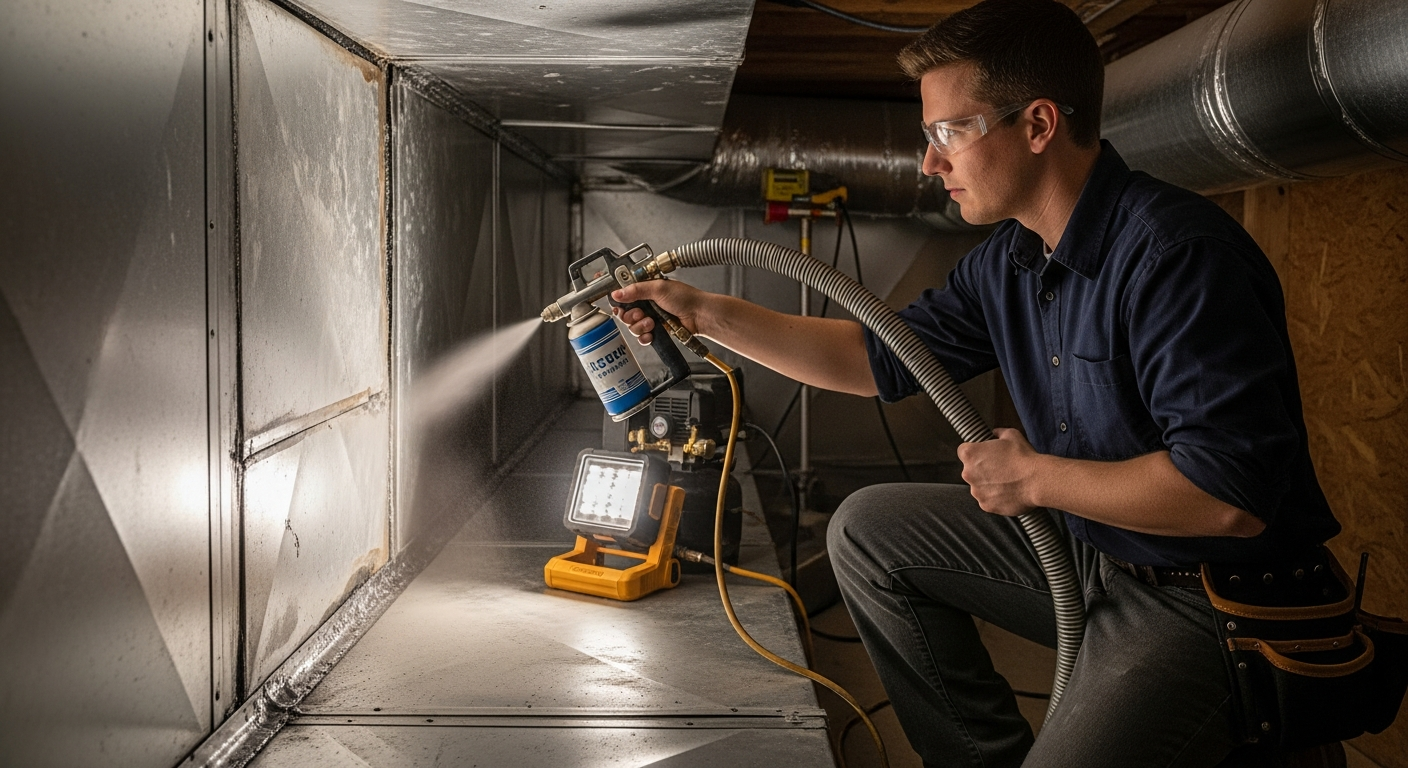
Advanced professional sealing methods utilize cutting-edge technology to address leaks throughout entire duct systems, including areas impossible to reach manually. Aeroseal technology involves injecting aerosolized sealant particles into pressurized ductwork, where they locate and seal leaks from the inside.
The process achieves remarkable effectiveness rates, with documented leak reduction levels reaching 90% in typical installations. This technology addresses not only large, obvious leaks but also countless micro-leaks that collectively contribute to significant energy losses but remain invisible to manual inspection methods.
Real Results: Over $600 Annual Savings
Documented results from professional duct sealing demonstrate substantial financial benefits for homeowners, with some achieving annual utility savings of over $600. These impressive reductions occur through improved system efficiency and reduced runtime requirements.
The savings calculation includes both heating and cooling season benefits, with the largest improvements occurring during peak demand periods when energy costs reach their highest levels. Homeowners typically achieve return on investment within two to three years, with continuing savings for the remaining system lifespan.
Professional Duct Sealing Delivers Measurable ROI Within Two to Three Years
The financial mathematics of duct sealing consistently favor homeowner investment, particularly when professional methods address system-wide leakage. Energy savings typically range from 15% to 30% of total HVAC operating costs, depending on initial leakage levels and system efficiency.
Beyond immediate energy cost reductions, sealed ductwork extends equipment lifespan, reduces maintenance requirements, and improves indoor comfort levels. The U.S. Environmental Protection Agency emphasizes proper duct sealing and insulation in unconditioned spaces for improved energy efficiency, indoor air quality, and to help prevent moisture issues and ensure optimal system functionality.
Professional assessment and sealing services provide the expertise needed to identify all leakage sources and apply appropriate solutions for long-term effectiveness. The investment in duct sealing typically recovers its cost through energy savings alone, while delivering additional benefits in comfort, air quality, and system reliability that continue for decades.
Engle Services
City: Sylacauga
Address: 40300 U.S. 280
Website: https://engleservicesheatingandair.com/


Comments
Post a Comment