Crawl Space & Attic Inspection | Tampa Bay Mold Inspection Specialist
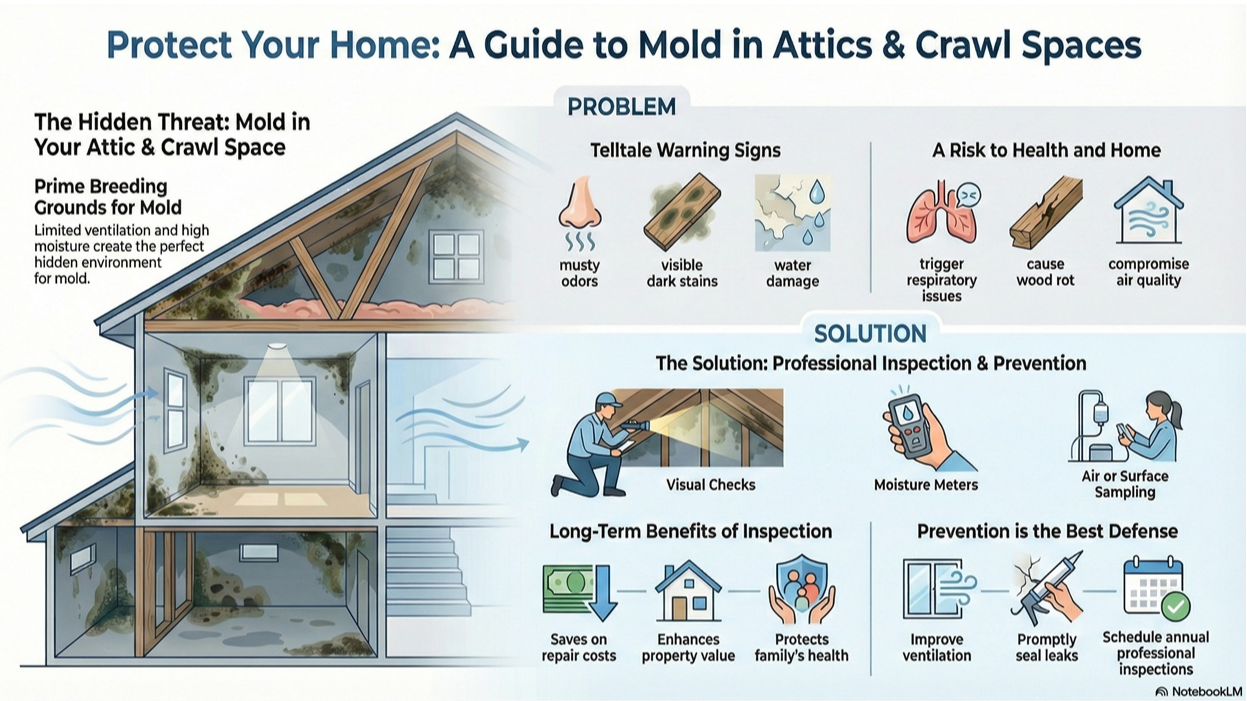
Key Takeaways
- Tampa's humid climate creates ideal conditions for mold growth in hidden spaces, with humidity levels frequently reaching 80-82% during summer months and averaging 74% annually
- Professional crawl space and attic inspections use thermal imaging and moisture detection tools that go far beyond what homeowners can see
- Up to 50% of indoor air originates from crawl spaces, making mold contamination a serious health threat that affects entire homes
- Florida law requires licensed mold assessors for professional inspections, ensuring compliance with ASTM D-7338 industry standards
- Early detection through specialized inspections can prevent thousands in structural damage and protect families from mycotoxin exposure
Tampa Bay homeowners face unique challenges when protecting their homes from mold growth. The region's subtropical climate creates perfect conditions for fungal contamination in the most vulnerable and overlooked areas of residential properties.
Tampa's Hidden Mold Risk: Why Your Home's Most Vulnerable Spaces Need Professional Attention
Attics and crawl spaces represent the forgotten battlegrounds in Tampa's ongoing war against mold. These hidden areas accumulate moisture, lack proper ventilation, and remain out of sight until problems reach critical stages. Unlike visible surfaces in living areas, these spaces operate as silent breeding grounds where mold colonies can establish themselves and spread throughout entire home systems.
The stack effect phenomenon compounds these risks significantly. Warm air naturally rises through homes, carrying airborne contaminants from lower levels upward. When crawl spaces harbor mold growth, spores travel directly into living areas through this natural air movement. Similarly, attic contamination can infiltrate HVAC systems and spread throughout ductwork networks.
Professional inspection services understand these hidden dynamics and target the specific vulnerabilities that Tampa's climate creates. Specialized attic and crawl space mold detection services use advanced diagnostic tools to identify problems before they become visible health hazards or structural disasters.
Health Threats From Invisible Enemies in Your Home
Respiratory Symptoms From Airborne Spores
Mold spores released from contaminated crawl spaces and attics create immediate respiratory threats for Tampa Bay residents. These microscopic particles trigger persistent coughing, throat irritation, and itchy eyes in otherwise healthy individuals. Asthma sufferers experience severe flare-ups when exposed to elevated spore concentrations, while children and elderly family members face heightened vulnerability to respiratory complications.
The invisible nature of airborne contamination makes early detection vital. Families often attribute symptoms to seasonal allergies or temporary illness, missing the connection between hidden mold growth and declining health. Professional air quality testing reveals spore concentrations that explain mysterious respiratory issues affecting multiple household members.
Mycotoxin Exposure and Neurological Effects
Certain mold species produce mycotoxins—toxic compounds that cause neurological symptoms including headaches, brain fog, and cognitive impairment. These microscopic particles penetrate deep into respiratory systems and affect central nervous system function. Tampa residents exposed to mycotoxin-producing molds report persistent fatigue, concentration difficulties, and unexplained mood changes.
Long-term mycotoxin exposure creates cumulative health effects that worsen over time. Individuals in the Tampa Bay area have experienced performance declines and health issues lasting months due to undetected mold growth in hidden home areas. Early identification through specialized testing prevents these debilitating long-term consequences.
How Stack Effect Carries Crawl Space Contamination Into Living Areas
Research demonstrates that up to 50% of indoor air originates from crawl spaces, making contamination in these areas a whole-house health threat. The stack effect draws moisture-laden air from crawl spaces upward through wall cavities, floor penetrations, and HVAC return systems. This natural air movement distributes mold spores throughout entire homes, affecting air quality in bedrooms, living rooms, and kitchens.
Tampa's climate contributes to stack effect dynamics through temperature differentials between cool crawl spaces and heated living areas. Professional inspectors understand these airflow patterns and target sampling locations where contaminated air enters living spaces.
Tampa's Climate Creates Perfect Storm for Attic and Crawl Space Mold
Humidity Levels Between 60-90% Fuel Rapid Growth
Tampa's humid subtropical climate maintains outdoor humidity levels that frequently reach 80-82% during summer months, with an annual average of 74%, creating ideal conditions for mold proliferation in hidden spaces. Crawl spaces and attics experience even higher humidity when poor ventilation traps moisture-laden air. These elevated humidity levels provide the perfect environment for mold spores to activate, colonize, and spread rapidly across building materials.
Indoor humidity control becomes critical when outdoor conditions consistently exceed optimal ranges. Traditional dehumidification strategies often fail to address hidden spaces where humidity accumulates unchecked. Professional moisture assessment identifies specific humidity problems that require targeted remediation approaches.
Mold Colonization Timeline When Humidity Exceeds 55-60%
Mold colonization begins within 24 to 48 hours when indoor humidity levels exceed 60%, making rapid intervention necessary in Tampa's climate. Initial spore activation occurs invisibly on organic materials like wood framing, insulation, and stored items. Within 3 to 12 days, visible growth typically appears on susceptible surfaces, indicating established colonies that require professional remediation.
The timeline accelerates when humidity remains elevated for extended periods. Tampa's rainy season creates sustained high-humidity conditions lasting weeks or months, allowing mold colonies to spread extensively before detection. Professional inspectors use this knowledge to identify high-risk periods and recommend preventive measures.
Professional Inspection Process: Beyond What You Can See
Visual Assessment of Hidden Problem Areas
Professional visual assessment targets areas where moisture accumulates and mold growth typically begins. Certified inspectors examine insulation conditions, wood framing integrity, and building material deterioration in spaces homeowners rarely access. These thorough visual evaluations identify early warning signs including discoloration, water staining, and organic material degradation.
Experienced inspectors recognize subtle indicators that untrained eyes miss entirely. Slight discoloration on floor joists, minor insulation compression, or small water stains signal developing moisture problems requiring immediate attention. Professional documentation captures these findings with detailed photography and location mapping.
Moisture Detection Using Thermal Imaging
Thermal imaging cameras reveal hidden moisture problems behind walls, under flooring, and within insulation systems. These advanced tools detect temperature differentials that indicate water intrusion, condensation patterns, and evaporative cooling from saturated materials. Professional inspectors use thermal imaging to map moisture distribution throughout hidden spaces without destructive testing.
Infrared technology identifies moisture problems before visible signs appear, enabling early intervention that prevents mold establishment. Tampa's climate creates complex moisture dynamics that require professional interpretation of thermal imaging data to distinguish between normal conditions and developing problems.
Air Quality and Surface Sampling Methods
Professional air sampling captures airborne mold spores using calibrated equipment positioned in crawl spaces, attics, and adjacent living areas. These samples reveal spore concentrations, species identification, and contamination severity. Surface sampling through swab tests and tape lift methods confirms suspected growth and identifies specific mold types requiring targeted remediation approaches.
Laboratory analysis provides definitive identification of mold species and quantifies contamination levels. Professional interpretation of sampling results guides remediation strategies and helps prioritize health protection measures for Tampa Bay families.
ASTM D-7338 Industry Standards Compliance
ASTM D-7338 represents the only industry standard for professional mold inspections, outlining protocols for background information collection, on-site inspection procedures, HVAC evaluation, and detailed reporting. Compliance with these standards ensures thorough assessment of all potential mold growth areas and contamination sources.
Professional inspectors following ASTM D-7338 protocols document findings systematically, providing legally defensible reports for insurance claims, real estate transactions, and remediation planning. These standardized procedures guarantee thorough evaluation of Tampa homes' unique mold risks.
Florida's Legal Requirements for Licensed Mold Assessment
Florida law mandates that anyone performing paid mold assessments, including inspections, remediation protocol writing, or sample collection, must hold current mold assessor licensing. This regulatory requirement protects Tampa Bay homeowners by ensuring qualified professionals conduct critical health and safety evaluations using established protocols and proper equipment.
Licensed mold assessors complete extensive training on Florida's minimum standards for mold assessment, including visual inspection requirements for identifying visible mold and excessive moisture intrusion. These standards specifically address hidden areas like crawl spaces and attics where most serious contamination develops undetected.
Professional licensing ensures accountability through state oversight and continuing education requirements. Tampa Bay residents benefit from these protections when selecting qualified inspection services for their homes' most vulnerable spaces.
Prevention Strategies That Actually Work in Tampa's Climate
Vapor Barrier Installation Benefits
Crawl space vapor barriers provide protection against ground moisture that fuels mold growth in Tampa's humid climate. Professional-grade polyethylene barriers block moisture migration from soil into enclosed spaces, dramatically reducing humidity levels that support fungal colonization. Properly installed barriers eliminate musty odors, prevent wood rot, and deter pest infestations that compound moisture problems.
Vapor barrier installation requires professional expertise to ensure complete coverage, proper sealing, and integration with existing drainage systems. DIY installations often fail due to inadequate overlap, insufficient sealing, or poor material selection that degrades in Tampa's climate conditions.
Improved Ventilation and Dehumidification
Strategic ventilation improvements address Tampa's unique humidity challenges through controlled air exchange that removes moisture before mold establishment occurs. Professional ventilation design considers prevailing wind patterns, seasonal humidity variations, and building orientation to optimize natural air movement through crawl spaces and attics.
Mechanical dehumidification provides moisture control during Tampa's rainy season when natural ventilation proves insufficient. Professional-grade dehumidifiers sized for specific space volumes maintain humidity below 60% consistently, preventing mold growth even during extended high-humidity periods.
Annual Inspection Scheduling
Annual professional inspections detect moisture problems and early mold growth before health threats or structural damage develop. Tampa's climate demands proactive monitoring because optimal mold growth conditions persist year-round, creating continuous contamination risks in vulnerable spaces.
Scheduled inspections following severe weather events, plumbing failures, or HVAC problems provide additional protection against moisture-related issues. Professional documentation creates valuable records for insurance purposes and property maintenance planning.
Get Professional Crawl Space and Attic Inspection Before Mold Costs You Thousands
Early detection through professional inspection saves Tampa Bay homeowners thousands in remediation costs and prevents irreversible structural damage. Established mold colonies require extensive remediation involving contaminated material removal, specialized cleaning, and structural repairs that cost far more than preventive measures.
Professional inspection provides peace of mind through thorough evaluation of your home's most vulnerable spaces using advanced diagnostic tools and expert analysis. Certified inspectors identify developing problems before they threaten family health or property value, enabling cost-effective intervention that preserves both safety and investment.
The documentation provided by professional inspection services supports insurance claims, real estate transactions, and legal protections that DIY assessment cannot provide. Tampa Bay families benefit from expert evaluation that identifies hidden risks and provides clear remediation guidance when problems are discovered.
For mold inspection services specializing in attic and crawl space detection throughout the Tampa Bay area, TampaBayMold.net provides expert assessment and remediation solutions tailored to the region's unique climate challenges.
TampaBayMold.net
City: Tampa
Address: 550 N. Reo St. Suite #300
Website: https://www.tampabaymold.net


Comments
Post a Comment